2
Step 16: Wet testing the dishwasher
1 Turn on the power supply (or plug the power cord into the outlet, if equipped).
2 Turn on your dishwasher (refer to the User Guide for instructions).
3
4 Make sure that water enters the dishwasher. If water does not enter the dishwasher, check to be sure that water and
power are turned on.
5 Check for leaks under the dishwasher. If a leak is found, turn the power supply off, then tighten connections. Restore
power after the leak is corrected.
6 Check for leaks around the door. A leak around the door could be caused by door rubbing or hitting against adjacent
cabinetry. Reposition the dishwasher if necessary. See “Step 10: Position the dishwasher under the countertop”
on page 18.
7 When the dishwasher is draining, check the drain lines. If leaks are found, turn power off at the breaker and correct
plumbing as necessary.
8 Restore the power after corrections are made. See “Step 13: Connecting the water supply line” on page 21.
9 Open the dishwasher door and make sure that most of the water has drained. If not, check that the disposer plug has
been removed and/or the air gap is not plugged. See “Step 14: Connecting the drain hose” on page 21. Also check the
drain line for kinking.
10 Run the dishwasher through another fill and drain cycle. Check for leaks and correct if required.
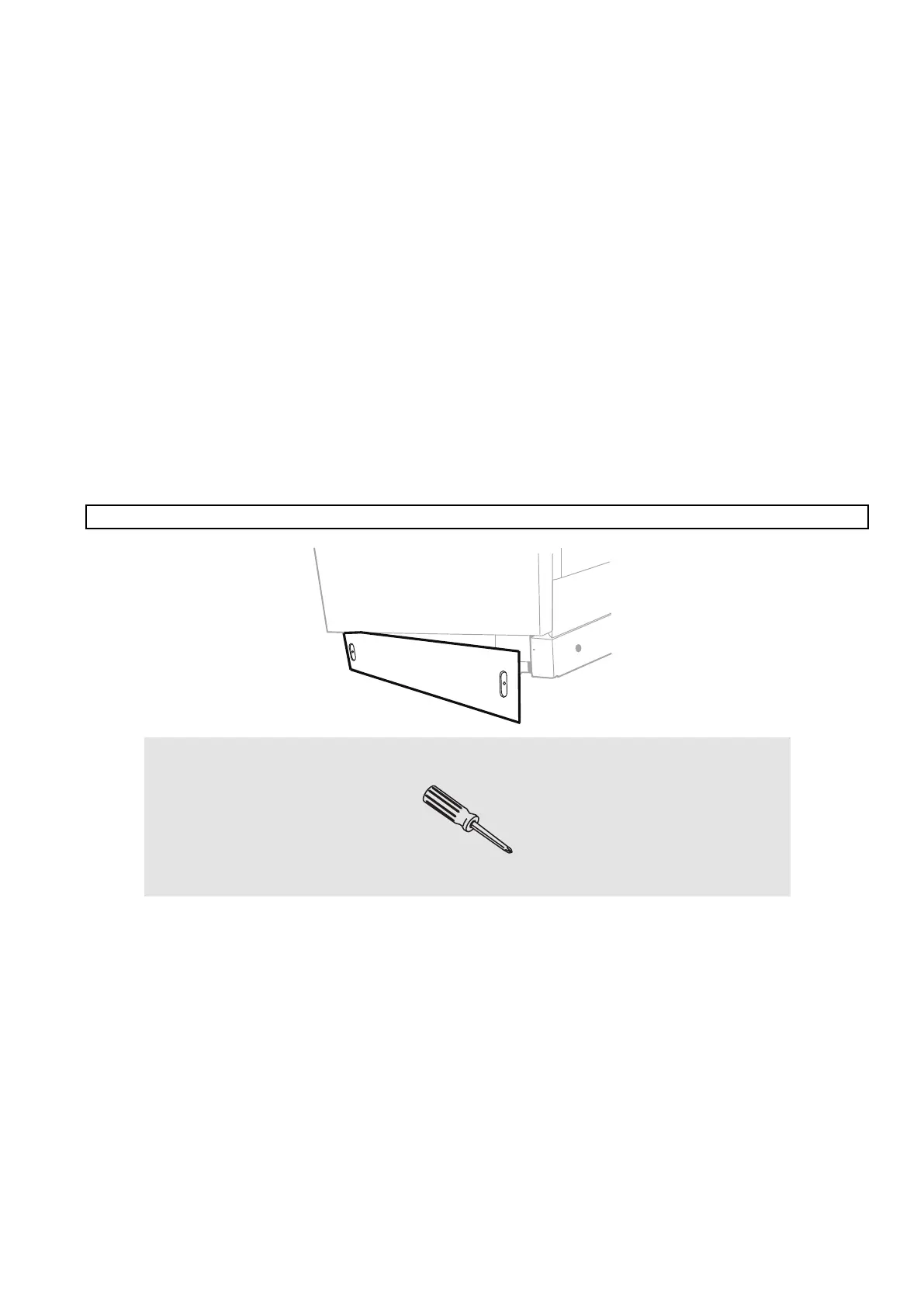
Step 17: Replacing the toekick
• Place the toekick against the legs of the dishwasher. The slots should align with the toekick bracket screw holes. Allow
the toekick to touch the floor. Install the toekick screws.
Note:
Make sure that you install the toekick in the correct direction. The toekick should be aligned correctly with the junction box.
You’ll need:
Phillips screwdriver
3
Open the door, select the Rinse only cycle, and press START/Cancel, close the door within four seconds of pressing
START/Cancel.


 To Previous Page