EasyManua.ls Logo

Fox F28-186A - User Manual

Fox F28-186A
28 pages
Print Icon
To Next Page IconTo Next Page
Loading...
INSTRUCTION MANUAL
BANDSAW
(FOX model F28-186A)
Question and Answer IconNeed help?

Do you have a question about the Fox F28-186A and is the answer not in the manual?

Summary

Safety Instructions

General Safety Instructions

Specific Safety Instructions for Bandsaws

Environment Protection

Information for Users

Information on disposal of electrical and electronic waste according to EU directives.

Symbols

Safety Symbols and Meanings

Explanation of symbols used in the manual and on the machine for safe operation.

Electrical Connection

Earthing Instructions

Guidance on proper earthing for electrical safety and shock prevention.

Extension Cables

Recommended Use

Technical Specifications

Noise Conditions

Removal of Package

Package Contents

Lists all components provided with the bandsaw in the package.

Machine Components - Front View

Machine Components - Back View

Assembly of the Saw Blade

Bandsaw Fastening

Procedures for securing the bandsaw to a surface or assembling it on its legs.

Workbench Assembly

Steps for assembling and horizontally adjusting the workbench using Fig. 2.

Fence Rail Assembly

Instructions for fixing the fence's rail onto the workbench as shown in Fig. 3.

Rip Fence Assembly

Dust Collection Device Connection

Protection of the Blade

Upper Blade Protection Adjustment

How to adjust the upper blade guide and protection height using Fig. 6.

Lower Blade Protection

Explanation of the lower blade protection's function and its proper use.

Functioning

ON;OFF Switch Operation

How to start and stop the bandsaw using the green and red buttons shown in Fig. 7.

Flywheels Doors Operation

Saw Blade Tension Adjustment

Blade Position Adjustment Knob

Blade Speed Adjustment

Workbench Inclination Adjustment

Rip Fence Usage

Cutting Procedures and Safety

Blade Assembly and Adjustments

Saw Blade Replacement

Detailed steps for safely removing and installing a new saw blade using Figs. 11-12.

Saw Blade Centering Adjustment

Upper Blade Guide Adjustment

Lower Blade Guide Adjustment

General Maintenance Regulations

Flywheel Coatings Replacement

Workbench Inlay Replacement

Malfunctions and Troubleshooting

Engine Does Not Work

Troubleshooting steps if the engine fails to start or operate.

Blade Off-Center Troubleshooting

Solutions for when the saw blade moves away from the cutting line.

Saw Blade Breakage Causes

Reasons for saw blade breakage, including tension and forcing issues.

After Sales Service

Exploded View of Bandsaw

Parts List

Wiring Diagram

Declaration of Conformity

Summary

Safety Instructions

General Safety Instructions

Specific Safety Instructions for Bandsaws

Environment Protection

Information for Users

Information on disposal of electrical and electronic waste according to EU directives.

Symbols

Safety Symbols and Meanings

Explanation of symbols used in the manual and on the machine for safe operation.

Electrical Connection

Earthing Instructions

Guidance on proper earthing for electrical safety and shock prevention.

Extension Cables

Recommended Use

Technical Specifications

Noise Conditions

Removal of Package

Package Contents

Lists all components provided with the bandsaw in the package.

Machine Components - Front View

Machine Components - Back View

Assembly of the Saw Blade

Bandsaw Fastening

Procedures for securing the bandsaw to a surface or assembling it on its legs.

Workbench Assembly

Steps for assembling and horizontally adjusting the workbench using Fig. 2.

Fence Rail Assembly

Instructions for fixing the fence's rail onto the workbench as shown in Fig. 3.

Rip Fence Assembly

Dust Collection Device Connection

Protection of the Blade

Upper Blade Protection Adjustment

How to adjust the upper blade guide and protection height using Fig. 6.

Lower Blade Protection

Explanation of the lower blade protection's function and its proper use.

Functioning

ON;OFF Switch Operation

How to start and stop the bandsaw using the green and red buttons shown in Fig. 7.

Flywheels Doors Operation

Saw Blade Tension Adjustment

Blade Position Adjustment Knob

Blade Speed Adjustment

Workbench Inclination Adjustment

Rip Fence Usage

Cutting Procedures and Safety

Blade Assembly and Adjustments

Saw Blade Replacement

Detailed steps for safely removing and installing a new saw blade using Figs. 11-12.

Saw Blade Centering Adjustment

Upper Blade Guide Adjustment

Lower Blade Guide Adjustment

General Maintenance Regulations

Flywheel Coatings Replacement

Workbench Inlay Replacement

Malfunctions and Troubleshooting

Engine Does Not Work

Troubleshooting steps if the engine fails to start or operate.

Blade Off-Center Troubleshooting

Solutions for when the saw blade moves away from the cutting line.

Saw Blade Breakage Causes

Reasons for saw blade breakage, including tension and forcing issues.

After Sales Service

Exploded View of Bandsaw

Parts List

Wiring Diagram

Declaration of Conformity

Overview

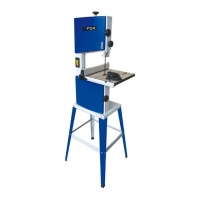
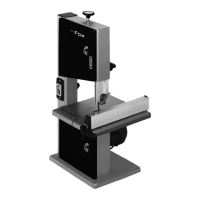
This document is an instruction manual for a FOX model F28-186A bandsaw. It provides comprehensive information on safety, assembly, operation, maintenance, and troubleshooting for the device.

Function Description:

The FOX F28-186A is a vertical bandsaw designed for cross-cutting and trimming plastics and wood. It is equipped with an electric engine and a saw blade that moves on flywheels. The machine includes various safety features such as blade protections, flywheel doors, and an ON/OFF switch with a minimum voltage relay to prevent accidental starts after power interruptions. It also features a dust collection coupling for connecting an external dust collector, which is recommended for wood processing to manage sawdust and shavings.

Important Technical Specifications:

  • Engine power: 420 W
  • Voltage and frequency: 230 V - 50 Hz
  • Blade rotational speed: 660/960 m/min (two speeds available)
  • Blade's length: 1790 mm
  • Blade's width: 6 - 13 mm
  • Gooseneck: 244 mm
  • Maximum cutting height: 120 mm (with workbench at 0°)
  • Workbench inclination capacity: from 0° to 45°
  • Workbench dimensions: 290x290 mm
  • Weight: 30 kg
  • Noise levels (measured according to EN 3744 and EN 11201):
    • Sound pressure level (LpA): 92.7 dB(A) with load
    • Sound power level (LWA): 102.3 dB(A) with load
    • Uncertainty of measurement K: 3 dB

Usage Features:

The bandsaw offers several adjustable features to optimize its use for different tasks:

  • Workbench Inclination: The workbench can be inclined from 0° to 45° for angle cuts. Adjustment is done by loosening a lock screw, setting the desired angle, and re-tightening.
  • Rip Fence: A rip fence (33) can be assembled on either the left or right side of the saw blade. It is locked in place by lowering a front lever (A) and positioned using a graduated scale.
  • Blade Tension: The saw blade's tension is adjustable via a handle (28). Proper tension is crucial for correct alignment, efficiency, and blade life, preventing breakage from excessive tension or slipping from insufficient tension.
  • Blade Position Adjustment: A knob (29) allows for adjusting the upper flywheel's inclination to center the saw blade on the flywheel rubber coatings.
  • Speed Adjustment: The bandsaw offers two different blade speeds (660 m/min and 960 m/min) by moving the belt on the engine and flywheel pulleys. The lower speed is suitable for hard wood, plastics, and metal, while the higher speed is for soft wood types.
  • Upper Blade Guide Height: The upper blade guide with its protection (48) can be adjusted in height (using knob 49) to be approximately 3 mm above the workpiece, ensuring maximum safety and preventing unintentional contact with the blade.
  • Safety Devices: The machine is equipped with upper (20) and lower (21) saw blade protections, and flywheel doors (22) that must be closed during operation.

Maintenance Features:

Regular maintenance is essential for the bandsaw's performance and safety:

  • Cleaning: Periodically remove sawdust and chips from inside the bandsaw by opening the flywheel doors. Clean the ventilation inlets of the engine and ensure the protective cap slides freely.
  • Blade Replacement: The saw blade can be replaced by loosening wing nuts, opening the flywheel doors, lowering the upper blade guide, loosening the blade tension, and then removing and inserting a new blade. Protective gloves are recommended during this process.
  • Blade Guide Adjustment: The upper and lower saw blade guides, consisting of support bearings and side wheels, need to be adjusted each time the blade is replaced or adjusted. This involves setting specific gaps between the bearing/wheels and the blade to ensure proper guidance without sticking.
  • Flywheel Coatings: The rubber coatings on the flywheels should be checked regularly and replaced if worn. This involves removing the saw blade, prying off the old coatings, and installing new ones.
  • Bench Inlay: The bench inlay (80) should be replaced if the hole for the blade passage becomes damaged. This is done by pushing the old inlay from below and inserting a new one.
  • Belt Conditions: Periodically check the tension and condition of the belt.
  • Electrical Cable: Regularly check the supply cable and extension cables for damage and replace them if necessary.
  • General Checks: Before each use, verify that all protection and safety devices are efficient. After work, perform a general cleaning. In case of damage or irregularities, repairs should be carried out by qualified personnel.

The manual emphasizes the importance of reading and understanding all safety instructions, wearing personal protective equipment (goggles, dust mask, ear protection, gloves), and disconnecting the machine from power before any adjustments or maintenance. It also highlights the dangers of certain wood dusts and recommends using an efficient dust collection device and working outdoors when possible.
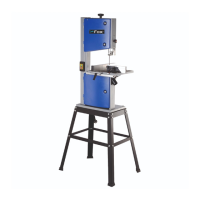
Fox F28-186A Specifications

General IconGeneral
BrandFox
ModelF28-186A
CategorySaw
LanguageEnglish

Related product manuals