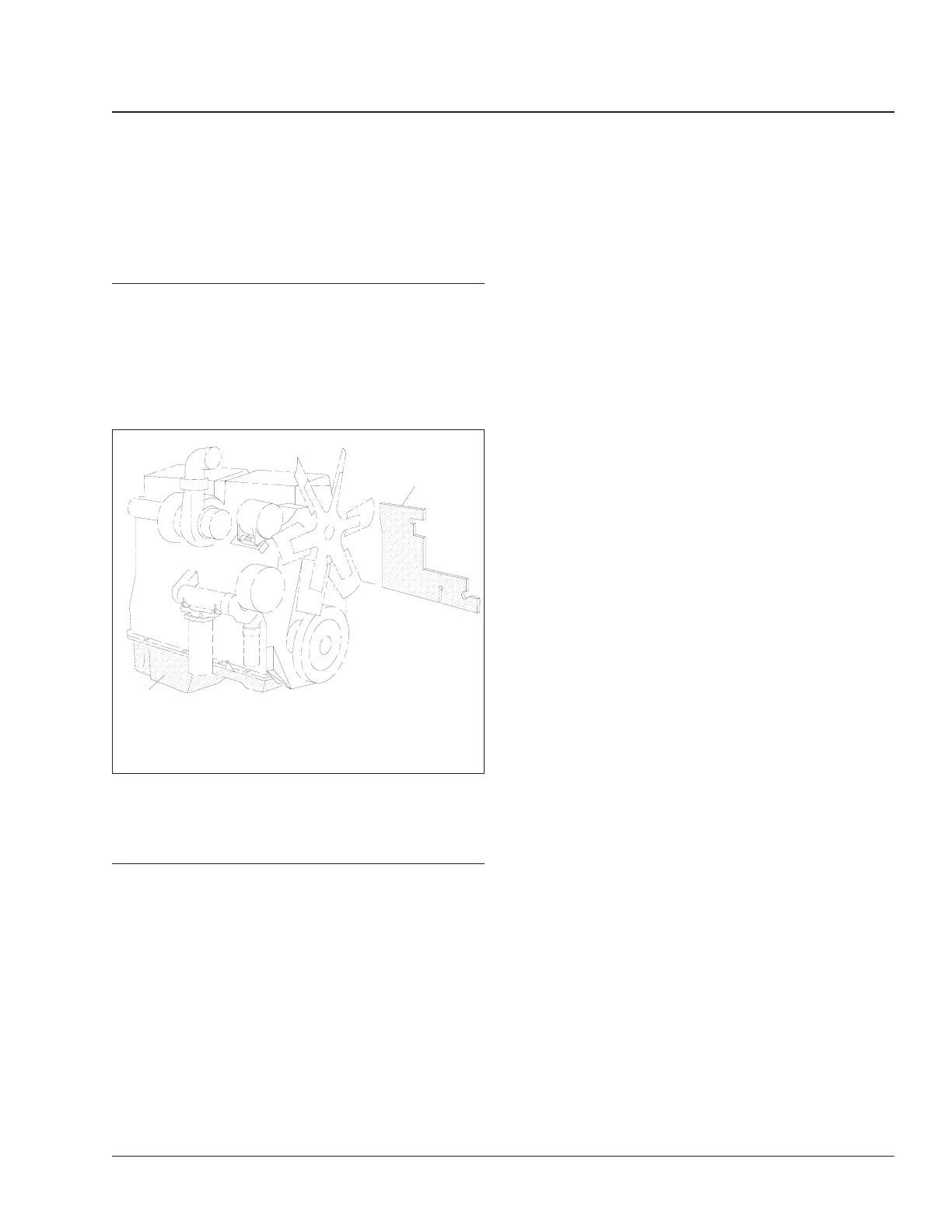
01–01 Engine Noise Panel
Inspection (Noise
Emission Control)
If equipped, inspect for torn engine noise panels.
See Fig. 1 for Caterpillar noise panel locations. If
panels are torn, replace them with new panels; see
Group 01 of the
Century Class Trucks Workshop
Manual
for procedures. Cummins M11 and N14 en-
gines, and Detroit Diesel Series 55 and Series 60
engines do not have engine noise panels.
01–02 Engine Drive Belt
Inspection
Worn or loose drive belts may cause premature
bearing failure or engine overheating. Excessive ten-
sion, or too little tension on the belt may result in ex-
cessive and premature belt wear. Poly-V belts, or
serpentine belts are retained by a belt tensioner that
requires no tension adjustment. Replace the belt if
any conditions described in "Visual Inspection" are
found. V-belts are installed as individual belts, and as
matched sets. When replacing matched sets of belts,
always replace both belts at the same time. Matched
belts must be from the same manufacturer. To in-
spect a belt, gently twist the belt to view the belt
sidewalls and bottom. Inspect all drive belts for the
following conditions, then perform the "Belt Tension
Inspection":
Visual Inspection
1. Inspect the belt for glazing. See Fig. 2, Ref. A.
Glazing is represented by shiny sidewalls, and is
caused by friction created when a loose belt slips
in the pulleys. It can also be caused by oil or
grease on the pulleys.
2. Check the belt for ply separation. See Fig. 2,
Ref. B. Oil, grease, or belt dressing can cause
the belt to fall apart in layers. Repair any oil or
coolant leaks that are affecting the belts before
replacing the drive belts. Do not use belt dress-
ing on any belt.
3. Check the belt for a jagged or streaked sidewall.
See Fig. 2, Ref. C. Jagged or streaked sidewalls
are the result of foreign objects, such as sand or
gravel in the pulley, or a rough pulley surface.
4. Check for tensile breaks; breaks in the cord
body. See Fig. 2, Ref. D. Cuts in a belt are usu-
ally caused by foreign objects in the pulley, or by
prying or forcing the belt during removal or instal-
lation.
5. Check for uneven ribs on serpentine (poly-V)
belts. See Fig. 2, Ref. E. Foreign objects in the
pulley will erode the undercord ribs, causing the
belt to lose its gripping power.
6. Check the drive belts for cracks. See Fig. 2, Ref.
F. Small irregular cracks are usually signs of an
old belt.
7. Inspect the pulleys for excessive play or wobble.
Excessive play or wobble indicates a failure of
the pulley bearing. Check for belt squealing or
squeaking. Replace bearings as needed.
NOTE: If it is difficult to distinguish the location
of a supposed bearing noise, place a stetho-
scope on the component being checked, not the
pulley, to isolate the area from outside interfer-
ence.
8. Inspect all pulleys for foreign objects, oil, or
grease in the grooves.
f011040
1
2
11/29/95
1. Oil Pan Noise Panel (C10 engine only)
2. Left-Side Noise Panel (3406 engine only)
Fig. 1, Caterpillar Engine Noise Panels
Engine 01
Century Class Trucks Maintenance Manual, January 2007 01/1



 To Next Page