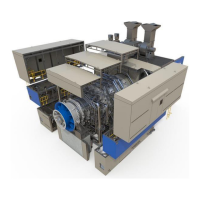
Inspection and Maintenance Instructions for 7FA.05 Gas Onl
and Dual Fuel Gas Turbine
GEK 116862
II. STANDARD MAINTENANCE ITEMS
A. Pressure Switches and Gauges
The setting of pressure switches and calibration of the gauges can be checked with a dead weight
tester, a regulated source of clean, dry, compressed air or a nitrogen cylinder and a calibrated pressure
gauge. The use of air pressure is generally more convenient and is recommended whenever the air
pressure is sufficient to check the specified switch setting and gauge calibration. To avoid the
possibility of oil contamination, it is preferable that air actuated switches and gauges not be tested
with the dead weight tester.
CAUTION
Pressure gauges on heavy fuel lines have a medium-separation diaphragm to keep heavy
fuel from solidifying in the sensing line. Removal of the pressure switch and loss of the
fluid will damage the diaphragm or allow air into the system. Both events will cause the
gauge or switch to read incorrectly.
B. Thermometers (Dial Type)
To calibrate a dial-type stem thermometer, immerse the sensor a minimum of two inches (5 cm) in an
agitated bath maintained at a temperature between 1/2 and 3/4 of its full-scale reading or near the
maximum temperature normally registered by that particular thermometer, if known. Allow reading
to stabilize for a few minutes. By means of an external adjusting screw, rotate the thermometer dial
face until the pointer registers the correct temperature. The bath temperature must be monitored by a
thermal sensing device known to be accurate.
C. Flowmeter
The mass flow is initially checked and calibrated by the manufacturer at a qualified facility. Any
subsequent mass flow calibration must also be completed at a qualified facility. In the field, the
pressure and temperature measurements may be calibrated. Note the accuracy of both the orifice and
venturi type devices vary with flow rate.
For additional information on the gas fuel flow meters, refer to the Operation and Maintenance
Manual under MLI 0639.
D. Vibration Detectors
Monitor the vibration levels during operation. Ensure each vibration detector is functional. Vibration
levels may be monitored directly on the turbine panel.
Physically check the mounting security of each vibration detector and detector leads.
Refer to the Control Specifications for complete operational checks.
E. Liquid Level Indicators
When the tank is drained of liquid, check that the linkages are free from binding and the float is in
good condition. Make sure the high and low level switches are set within the limits specified on the
Device Summary. Level transmitters should be calibrated if reading is in error.
© General Electric Company, 2011. GE Proprietary Information. All Rights Reserved.
17


 To Next Page