GEMORO AuRACLE
®
ANALYZER
GOLD & PLATINUM TESTER
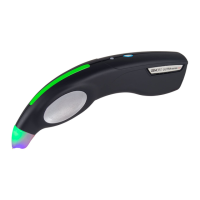
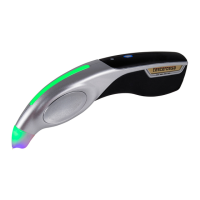
The pen probe contains a special saline solution that is safe, non-acidic, and non-
toxic. Remove salt crystal buildup by dabbing the pen probe’s felt tip with a clean
and dry paper towel. Salt crystal buildup is a natural occurrence with this device.
Using a paper towel, wipe o any salt crystal buildup from the 18K yellow gold
calibration piece and the ANALYZER testing plate area. Be aware that the pen
probe solution may potentially leave a stain on the testing plate if not wiped
o immediately aer it makes contact, so cleaning it right aer this occurs
is advised. While this staining may occur, it will not impact the accuracy of the
ANALYZER. Never expose the pen probe’s felt tip to water or other chemicals.
Always replace the pen probe cap until it snaps on when not in use.
FOR BEST RESULTS FILE ALL METAL BEFORE TESTING AND CLEAN THE
FILE: The ANALYZER is a surface tester, so consequently the tester may test
gold-plated and gold-filled as solid gold if not filed to expose the base metal.
Gold, platinum, gold-plated, gold-filled, tungsten and stainless steel must be
filed below the surface before testing to produce accurate results. Always wipe
o the file. Be aware that gold and other metal particles on the file could cause
contamination from the metal to spread to the next piece you are testing if it is
not regularly cleaned o. Do not file the metal over the ANALYZER testing plate,
as particles of the metal being filed will fall on it and potentially influence test
results.
NO MOVEMENT OF LEDs WHEN TESTING:
This is an indication that either the pen probe isn’t plugged into the ANALYZER all
the way or that the material you are testing is non-conductive (example plastic).
TEST RESULTS ARE TOO HIGH:
This is an indication that the ANALYZER is out of calibration, or perhaps there is a
high presence of silver, palladium, or rhodium on the gold you are testing.
OTHER PRECIOUS METALS
TUNGSTEN AND STAINLESS STEEL:
Be aware that if tungsten or stainless steel isn’t filed first it may test in the high
karat range or even as platinum, but if it is filed it will then test as NA. ALWAYS
FILE IT FIRST!
RHODIUM:
Be aware that rhodium will react as platinum on the ANALYZER. It is rarely used
as solid finished jewelry, but instead it is commonly used as a plating material to
make white gold or platinum appear brighter or whiter. If white gold is plated with
rhodium and filed, it will then test accurately or possibly as a higher karat than
marked since it is taking an average reading of the two metals. ALWAYS FILE IT
FIRST! If white gold tests higher than marked, it is probably rhodium plated.
PALLADIUM:
Be aware that pure palladium will test somewhere between 18K and 24K on the



 To Next Page
 Loading...