EN 3
TUNING YOUR GUITAR
There is a standard tuning for the strings
on a guitar. Generally, these are referred to
simply as E, A, D, G, B, high E.
E A D G B e
There are many free tuner apps available
for iOS, Android and online. Electronic
tuning devices that indicate string tuning
are also inexpensive and widely available.
Most tuner apps and programs work
similarly. When you play a string, the tuner
analyzes the sound and shows whether it
is flat (too low), sharp (too high), or on
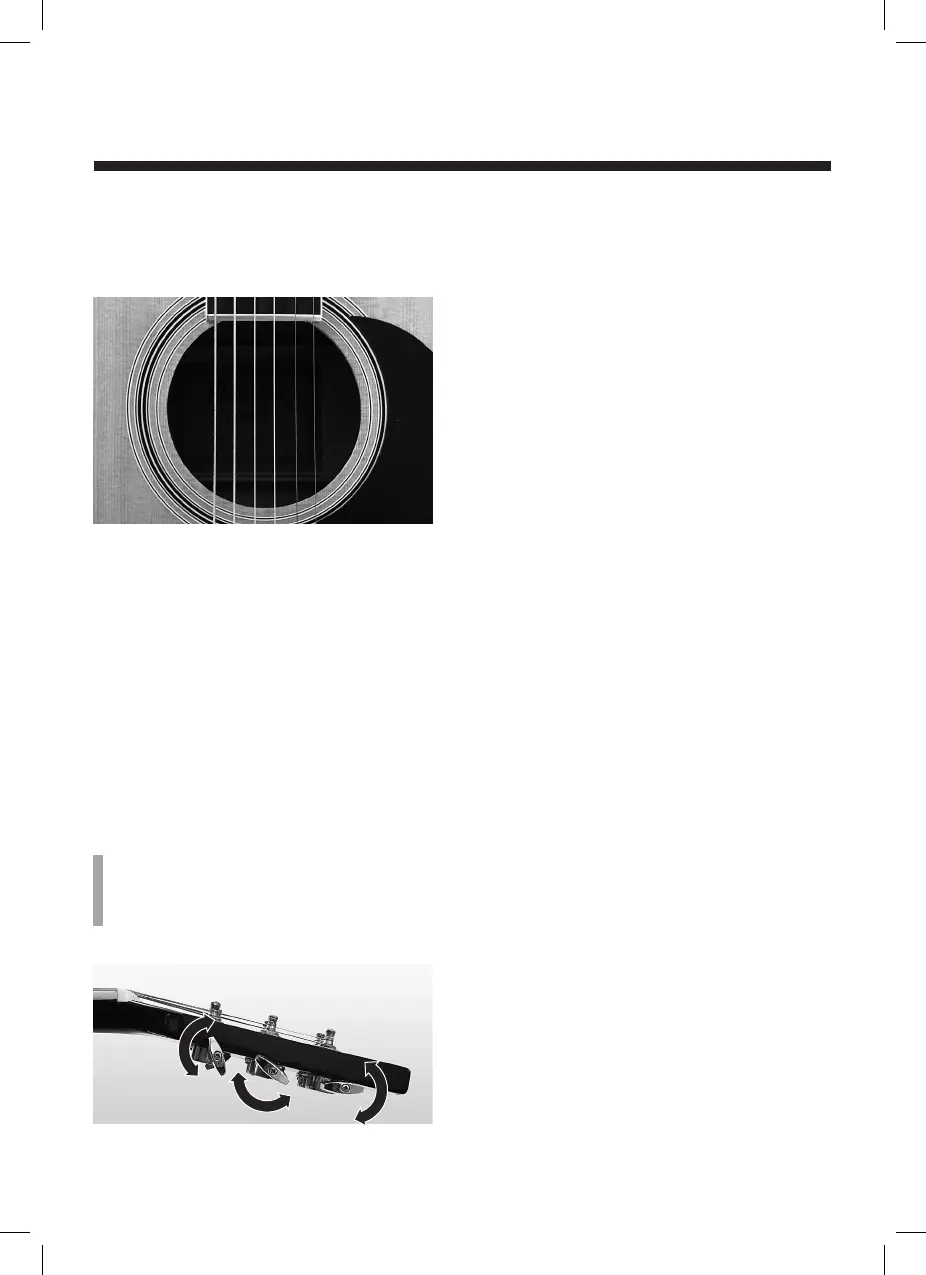
pitch (correct). If needed, you slowly rotate
the guitar’s tuning head as appropriate to
correct the pitch.
Note
The direction you turn depends on which string
you are tuning.
More About Tuning
The following tips will help you obtain
more accurate tuning.
• After changing a string, pull it upward
with moderate force to tighten the
string around the tuning head. The
string will likely go somewhat flat. Tune
up to pitch, then “stretch” the string
again. Repeat until the string no longer
goes flat when stretched.
• Strings retain correct pitch longer if
you tune up from flat to correct pitch.
If a string is sharp, tune it somewhat
flat, then tune it up to pitch.
• Old strings are hard to keep in tune.
Change them periodically.
• After tuning your guitar, check the
string pitches again. You may need to
tune a couple times before the tuning
“settles in”.
um_maestro_us_2L_170922.indd 3 22/09/2017 13:21:02


 To Next Page