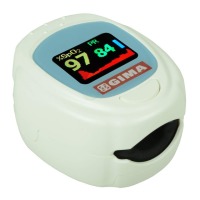
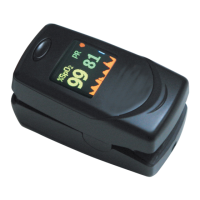
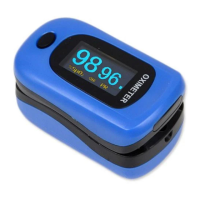
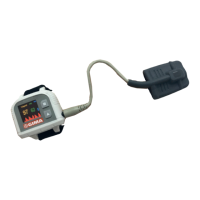
Figure 3.10 Neonate SpO
2
sensor placement
High ambient light sources such as surgical lights (especially those with a xenon light source), bilirubin lamps,
fluorescent lights, infrared heating lamps, and direct sunlight can interfere with the performance of a SpO
2
sensor. To
prevent interference from ambient light, ensure that the sensor is properly applied, and cover the sensor site with opaque
material.
Failure to take this action in high ambient light conditions may result in inaccurate measurements.
If patient movement presents a problem, verify that the sensor is properly and securely applied; move the sensor to a less
active site; use an adhesive sensor that tolerates some patient motion; or use a new sensor with fresh adhesive backing.
For reusable sensors, follow the sensor directions for use for cleaning and reuse. For single-patient use sensors, use a
new sensor for each patient. Do not sterilize any sensor by irradiation, steam, or ethylene oxide.
Safety Information for SpO
2
Monitoring
M Continuous use of the SpO
2
sensor may result in discomfort or pain, especially for those with
microcirculatory problem. It is recommended that the sensor should NOT be applied to the same pl
ace
for over two hours, change the measuring site periodically if necessary.
M The SpO
2
measuring site must be examined carefully for certain patient groups. Do NOT place the
SpO
2
sensor on the finger of a patient with edema or fragile tissue.
% If sterile packaging of a disposable SpO
2
sensor is damaged, do not use it.
% C
heck the SpO
2
sensor and cable before use. Do NOT use a damaged SpO
2
sensor.
% I
f the temperature of SpO
2
sensor is abnormal, do not use it any more.
M Please do not allow the cable to be twisted or bent.
M Do NOT put the SpO
2
sensor and pressure cuff on the same limb, otherwise the NIBP measuring will
affect SpO
2
measuring and cause an alarm error.
M Usi
ng nail polish or other cosmetic product on the nail may affect the accuracy of measurement.
M The fingernail should be of normal length.
M The SpO
2
sensor cannot be immerged in water, alcohol or cleanser completely, because the sensor has
no capability to resist the harmful ingress of water
3.4.4 TEMP Transducer Connection
Please follow the corresponding methods to make temperature measurement according to the temperature
transducer you selected.
u Connecting methods for thermal temperature transducer:
1. Securely attach the transducer to the patient;
2. Connect the cable to TEMP probe connector in the front
panel.


 To Next Page
 Loading...