COMPLiANCE
This device complies with AS/NZS 1053-CISPR13
This device complies with part 15 of the FCC rules. Operation is subject to the
condition that this device does not cause harmful interference.
LiSTENiNG TO FM iN YOUR BOAT
The majority of FM broadcasts are music programs. Compared with AM signals, FM
signals have a wider dynamic range, are relatively immune to noise and provide
virtually distortion free music reproduction. However, because of the nature of FM
signals and the fact that FM stations are usually positioned for shore based reception,
reception in a moving boat may be accompanied by problems.
FM programs are broadcast for local reception and may not be heard satisfactorily at
distant locations. To enjoy FM programs at their best, it is important that you tune to a
station that is broadcasting in your locality.
FM signals can reflect from solid objects such as buildings or hills. If these reflected
signals are received along with signals that are arriving directly from the transmitter,
they may mix together to produce what is known as ‘multipath distortion’. This
distortion is heard as noise. Often, moving as little as one metre from your position will
correct this problem.
FM signals travel in straight lines. Because the signals are reflected from or absorbed
by large solid objects, a signal ‘shadow’ may be present behind the object which may
result in poor reception in that area.
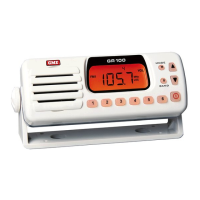
LCD DiSPLAY
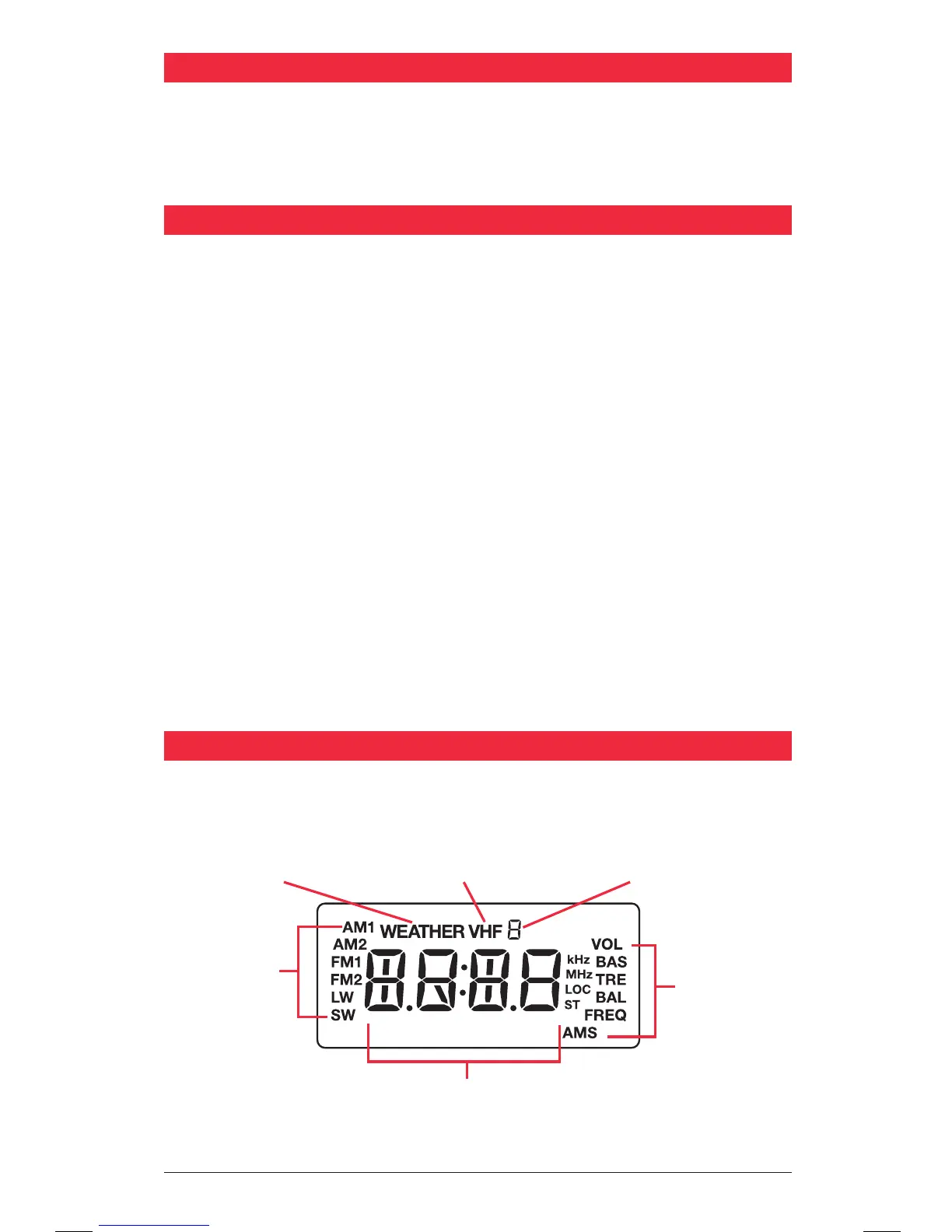
VHF Channels Memory number
Band Selection
Modes
Frequency
Weather Channels


 To Next Page