43
MAINTENANCE
Brakes
The front and rear brakes are hydraulic disc brakes. Press down on the brake pedal to engage the
brakes.
Brake Fluid
Inspect the brake system routinely. Inspect the level
of the brake uid before each operation.
WARNING
After opening a bottle of brake uid, always
discard any unused portion. Never store or use a
partial bottle. Brake uid is hydroscopic, meaning
it rapidly absorbs moisture from the air. The
moisture causes the boiling temperature of the
brake uid to drop, which can lead to early brake
fade and the possibility of accident or severe
injury.
Change the brake uid every two years and any
time the uid becomes contaminated, the uid level
is below the minimum, or if the type and brand of the
uid in the reservoir are unknown.
1. Position the vehicle on a level surface.
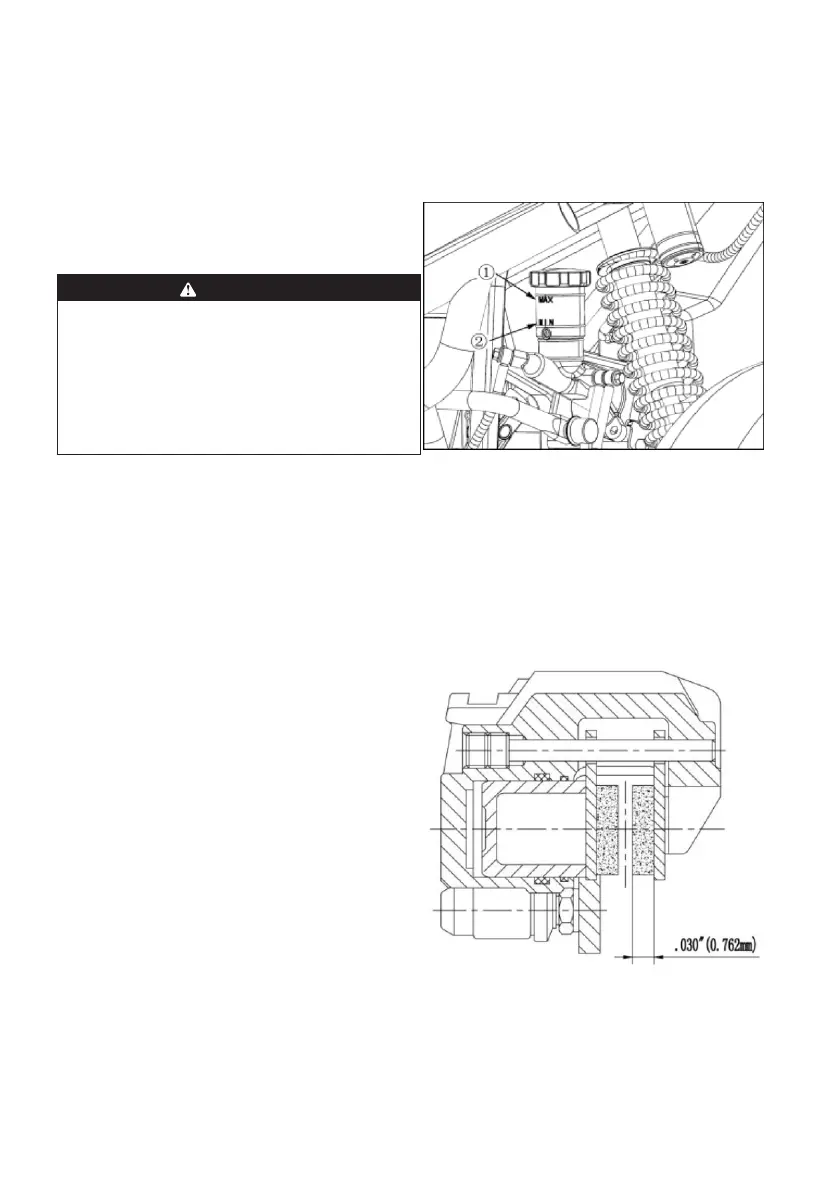
2. View the brake fluid level at the reservoir in the
driver’sside wheel well. The level should be
between the upper(MAX) and lower (MIN) level
lines.
3. If the fluid level is lower than the upper level line,
addbrake fluid to the upper (MAX) line.
4. Apply the brake forcefully for a few seconds and
checkfor fluid leakage around the fittings.
Brake Inspection
1. Check the brake system for fluid leaks.
2. Check the brake pedal for excessive travel or a
spongyfeel.
3. Check the friction pads for wear, damage
andlooseness.
4. Check brake discs for signs of cracks,
excessive corrosion,warping or other damage.
Clean any grease using anapproved brake
cleaner or alcohol.
5. Inspect the brake disc spline and pad wear
surface forexcessive wear. Change pads when
worn to .030” (0.762mm).



 To Next Page