EasyManua.ls Logo

Grizzly G1073/G1073Z - User Manual

Grizzly G1073/G1073Z
48 pages
Print Icon
To Next Page IconTo Next Page
Loading...
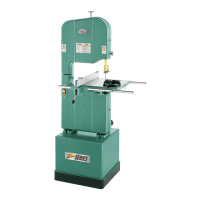
16'' BANDSAW
MODEL G1073/G1073Z
INSTRUCTION MANUAL
COPYRIGHT © 1993 BY GRIZZLY INDUSTRIAL, INC. REG #TX 3 562 349
WARNING: NO PORTION OF THIS MANUAL MAY BE REPRODUCED IN ANY SHAPE
OR FORM WITHOUT THE WRITTEN APPROVAL OF GRIZZLY INDUSTRIAL, INC.
REVISED OCTOBER, 2002. PRINTED IN TAIWAN
ONLINE MANUAL DISCLAIMER
THE INFORMATION IN THIS MANUAL REPRESENTS THE CONFIGURATION OF THE MACHINE AS IT IS CURRENTLY BEING SHIPPED. THE
MACHINE CONFIGURATION CAN CHANGE AS PRODUCT IMPROVEMENTS ARE INCORPORATED. IF YOU OWN AN EARLIER VERSION OF THE
MACHINE, THIS MANUAL MAY NOT EXACTLY DEPICT YOUR MACHINE. CONTACT CUSTOMER SERVICE IF YOU HAVE ANY QUESTIONS
ABOUT DIFFERENCES. PREVIOUS VERSIONS ARE NOT AVAILABLE ONLINE.
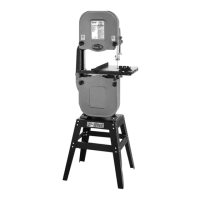
G1073
G1073Z

Questions and Answers

  • M
    Maria SchwartzAug 18, 2025
    What to do if my Grizzly G1073/G1073Z motor won't start and the fuses blow?
    • W
      William PaulAug 18, 2025
      If the fuses or circuit breakers blow when starting your Grizzly Saw, it could be due to several reasons. First, inspect the line cord or plug for damaged insulation and shorted wires. Second, check all connections on the motor for loose or shorted terminals, or worn insulation. Finally, the circuit might be overloaded, so reduce the load on the circuit.
  • L
    lowedanielAug 21, 2025
    What to do if my Grizzly G1073/G1073Z motor stalls and blows fuses?
    • J
      Jared WilliamsAug 21, 2025
      If your Grizzly Saw motor stalls, causing blown fuses or a tripped circuit, there are several potential causes. Inspect the motor connections for loose or shorted terminals, or worn insulation. Ensure that the voltage is not too low and correct any low voltage conditions. Verify that the fuses or circuit breakers in the power line are correct and install the correct ones if needed. Also, the motor may be overloaded, so reduce the load on the motor.
  • S
    sarahpierceAug 23, 2025
    Why does my Grizzly G1073/G1073Z motor overheat?
    • A
      Amanda WagnerAug 23, 2025
      If your Grizzly Saw motor overheats, it could be due to a couple of reasons. The motor may be overloaded, so try reducing the load. Also, check if the air circulation through the motor is restricted and clean out the motor to allow normal air circulation.
  • A
    Aaron MitchellAug 26, 2025
    Why Grizzly G1073/G1073Z Saw motor loses power?
    • A
      Amy DavenportAug 26, 2025
      If the motor of your Grizzly Saw fails to develop full power, it could be due to several reasons. The power line might be overloaded with lights, appliances, and other motors, so reduce the load on the power line. The wires or circuits might be undersized or too long, so increase wire sizes or reduce the length of wire. General overloading of power company facilities can also cause this issue; in that case, request a power check from the power company.
  • C
    Cassie TylerAug 28, 2025
    How to troubleshoot a Grizzly Saw motor that won't start?
    • M
      Matthew JordanAug 28, 2025
      If your Grizzly Saw motor will not start, it could be due to low voltage. Check the power line for proper voltage. Another possible cause is an open circuit in the motor or loose connections, so inspect all lead connections on the motor for loose or open connections.
  • D
    Deborah GoodmanAug 30, 2025
    Why is my Grizzly G1073/G1073Z Saw vibrating so much?
    • A
      Allison RiosAug 30, 2025
      Excessive vibration in your Grizzly Saw can stem from several causes. Ensure rubber pads are installed under the stand. Check and adjust the wheel alignment to ensure the wheels are coplanar. Verify that the tires are correctly installed and reinstall them if necessary. A worn-out V-belt or a bent/worn-out blade can also cause vibration, so replace these if needed. Finally, the wheels may be out of balance, requiring replacement.
  • N
    Nancy WrightSep 2, 2025
    Why does my Grizzly Saw blade not cut evenly?
    • J
      Jacqueline FerrellSep 2, 2025
      Uneven cutting with your Grizzly Saw blade can be caused by several factors. The blade may not be properly tensioned, so adjust the blade tension. The wheels might not be coplanar, so adjust the wheel alignment. The tooth set could be uneven, or the teeth may be sharper on one side than the other; in either case, skew the fence to compensate or replace the blade.
  • K
    kingmarkSep 5, 2025
    Why is my Grizzly Saw blade squealing and slowing down?
    • B
      Barbara HernandezSep 5, 2025
      If your Grizzly Saw blade slows down when cutting and makes a squealing noise, especially on start-up, it is likely due to a loose or worn-out V-belt. Try tightening the V-belt first. If the issue persists, replace the V-belt.
  • K
    krystal27Sep 7, 2025
    What causes a Grizzly G1073/G1073Z blade to run off the wheels?
    • C
      corey19Sep 7, 2025
      If the blade on your Grizzly Saw does not run evenly on the wheels or runs off, it could be due to improper tracking adjustment. Adjust the tracking. Another possible cause is that the wheels are not coplanar, so adjust the wheel alignment.
  • W
    whitemarySep 9, 2025
    What to do if my Grizzly Saw blade hits the table insert?
    • J
      Jennifer JimenezSep 10, 2025
      If the blade is contacting the table insert on your Grizzly Saw, it could be due to excessive side pressure when cutting, so reduce side pressure. The table may also be improperly adjusted, so adjust the table. Lastly, the opening in the insert might be too narrow, so file the opening in the table insert larger.

Summary

SAFETY

Safety Symbols and Warnings

Explains safety symbols (Danger, Warning, Caution, Notice) and general safety advice.

Power Tool Safety Guidelines

Lists essential safety rules for operating power tools safely.

Additional Power Tool Safety Guidelines

Continues listing essential safety rules for operating power tools safely.

Bandsaw Specific Safety

Provides crucial safety instructions specific to bandsaw operation.

CIRCUIT REQUIREMENTS

220 V Operation

Details electrical requirements and recommendations for 220V operation.

110 V Operation

Details electrical requirements and recommendations for 110V operation.

Extension Cords

Guidelines for selecting and using appropriate extension cords.

Grounding

Explains the importance of grounding and proper connection procedures.

GENERAL INFORMATION

Pre-Operation Advisory

Emphasizes reading the manual before assembly and operation for safety.

Product Overview and Company Information

Introduces the bandsaw models and provides company contact and information.

Manual Disclaimer

States that manual contents may change due to product improvements.

ASSEMBLY

Unpacking and Parts Inventory

Procedures for safely unpacking the machine and identifying all parts.

Cleaning the Machine

Guidance on cleaning the machine using appropriate solvents.

Site Considerations

Recommendations for workspace requirements and electrical setup.

COMPONENT INSTALLATION

Stand Assembly

Step-by-step guide for assembling the bandsaw stand.

Bandsaw to Stand Mounting

Instructions for securely mounting the bandsaw unit onto the assembled stand.

Motor Wiring

Instructions for wiring the motor for operation.

V-Belt Installation

Guide on how to slip and position the V-belt on the pulleys.

Pulley Alignment and Belt Tension

Details on aligning pulleys and adjusting V-belt tension.

Working Table Installation

Step-by-step guide for mounting the table and trunnion support assembly.

Fence Installation

Instructions for securing the fence rails to the table.

Guards and Dust Port

Guide for installing the belt guard and mounting the dust port.

ADJUSTMENTS

Blade Tension and Tracking

Procedures for correctly adjusting blade tension and tracking for optimal performance.

Blade Guides and Support Bearings

Instructions for positioning upper/lower blade guides and support bearings.

Guide Blocks and Table Stop

Adjusting guide blocks and setting the table stop for accurate positioning.

Table Parallelism and Tilt

Aligning the table parallel to the miter slot and adjusting the tilt angle.

Blade Changes and Guide Post

Steps for changing blades and adjusting the guide post.

Fence Adjustment and Blade Lead

Adjusting fence clamping, skew, and compensating for blade lead.

Wheel Alignment and Parallelism

Procedures for checking and adjusting wheel coplanarity and parallelism.

OPERATIONS

Blade Selections

Guidance on selecting appropriate blades for different cutting tasks.

Test Run

Steps for conducting a test run after assembly and adjustments.

Cutting Curves

Techniques for cutting curves smoothly and accurately.

Resawing

Instructions for performing resawing operations on lumber.

MAINTENANCE

V-Belts

V-belt maintenance and checks for cracks, fraying, and wear.

Miscellaneous

Routine checks for mounting bolts, switches, blades, and bearings.

Table

Recommendations for protecting the table from rust and pitting.

Lubrication

Guidance on lubricating machine parts and avoiding oil on belts.

TECHNICAL INFORMATION AND SUPPORT

Wire Diagram

Electrical diagrams for 110V and 220V power supply connections.

Machine Data Sheet

Detailed technical specifications for the bandsaw model.

Troubleshooting Common Issues

Solutions for common operational problems and mechanical failures.

Warranty and Returns

Details on the product warranty and procedures for returns.

Grizzly G1073/G1073Z Specifications

General IconGeneral
BrandGrizzly
ModelG1073/G1073Z
CategorySaw
LanguageEnglish

Related product manuals