EasyManua.ls Logo

Grizzly G1010 - User Manual

Grizzly G1010
48 pages
Print Icon
To Next Page IconTo Next Page
Loading...
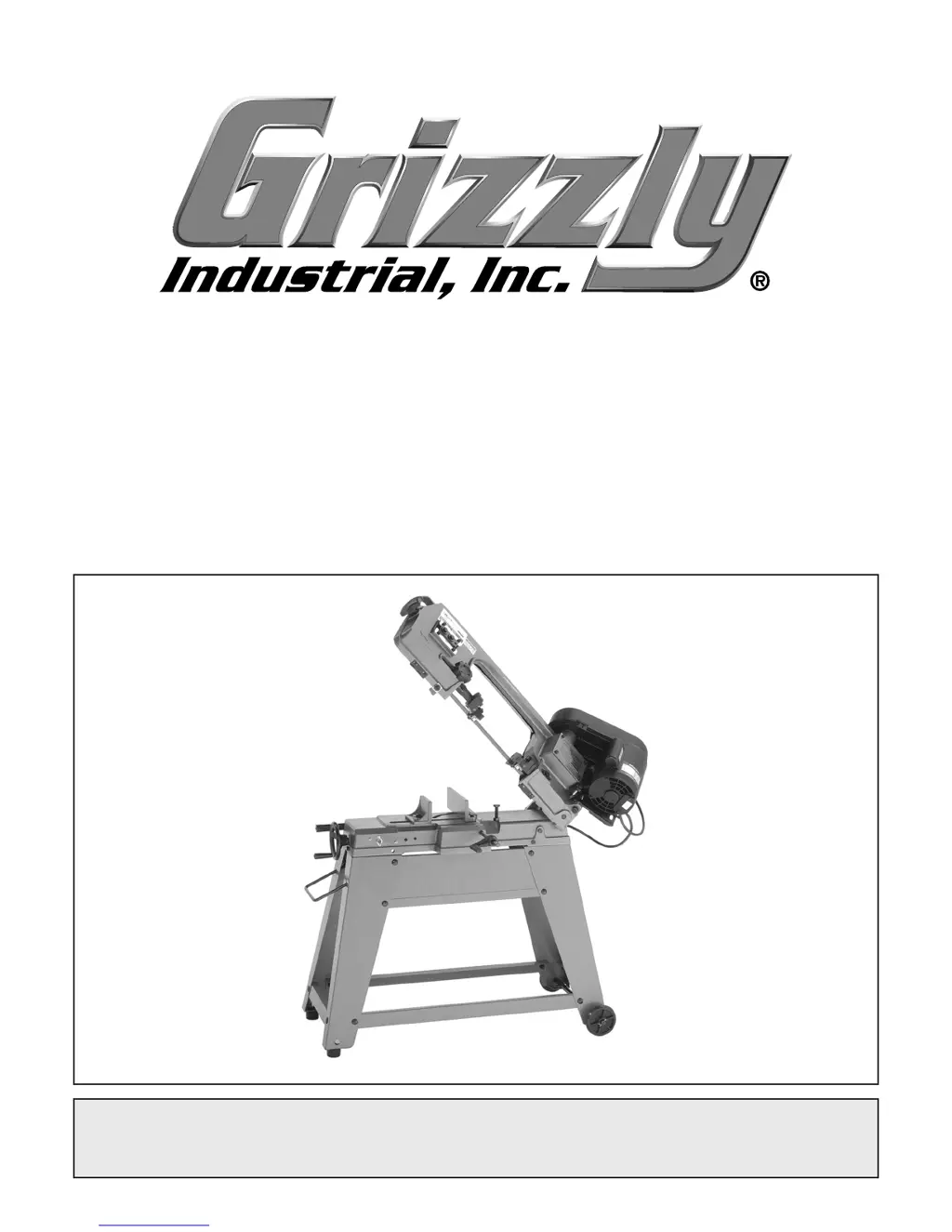
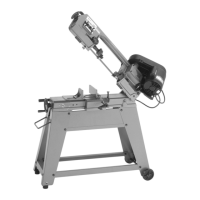
MODEL G1010
4"x 6" METAL-CUTTING
BANDSAW
INSTRUCTION MANUAL
COPYRIGHT © AUGUST, 2005 BY GRIZZLY INDUSTRIAL, INC. REVISED JULY, 2007 (TR)
WARNING: NO PORTION OF THIS MANUAL MAY BE REPRODUCED IN ANY SHAPE
OR FORM WITHOUT THE WRITTEN APPROVAL OF GRIZZLY INDUSTRIAL, INC.
#PC5506
PRINTED IN TAIWAN

Other manuals for Grizzly G1010

Questions and Answers

  • B
    brian22Aug 13, 2025
    What to do if my Grizzly G1010 blade dulls prematurely?
    • D
      Dawn OwensAug 13, 2025
      If the blade on your Grizzly Saw dulls prematurely, consider these factors: * The cutting speed might be too fast. * The blade TPI might be too coarse. * The blade feed pressure might be too light. * The workpiece might have hard spots, welds, or scale on the material. Increase the feed pressure and reduce the cutting speed. * The blade might be twisted. Replace the blade. * The blade might be slipping on the wheels.
  • A
    Amy SnyderAug 20, 2025
    Why does my Grizzly Saw stall or feel underpowered?
    • E
      erikadaughertyAug 20, 2025
      Your Grizzly Saw might stall or feel underpowered due to several reasons: * Using the wrong blade for the workpiece material (metal). Use a blade with the correct properties for your type of cutting. * Feeding the material too quickly. Decrease the feed rate. * The V-belt is slipping. Replace the bad V-belt and re-tension it. * The blade is slipping on the wheels. Adjust blade tracking and tension. * The pulley/sprocket is slipping on the shaft. Replace the loose pulley/shaft. * The motor bearings are faulty. Test by rotating the shaft; rotational grinding or a loose shaft requires bearing replacement. * The motor itself is faulty. Test, repair, or replace it.
  • K
    kayla69Aug 25, 2025
    How to fix vibration or noisy operation in my Grizzly Saw?
    • K
      Kimberly WarnerAug 25, 2025
      If your Grizzly Saw has vibration or noisy operation, check these: * The V-belt might be slapping the belt cover. Inspect the belt cover for proper installation. * The V-belt might be worn or loose. Inspect or replace the belt with a new one. * The pulley might be loose. Realign or replace the shaft, pulley, setscrew, and key as required.
  • F
    fitzgeraldthomasAug 28, 2025
    Why is my Grizzly G1010 loud when cutting or bogs down in the cut?
    • M
      Mrs. Gabrielle CaseyAug 28, 2025
      Your Grizzly Saw may be loud or bog down due to: * An excessive feed rate. * The blade TPI being too great, or the material being too coarse.
  • S
    Susan KeySep 1, 2025
    Why does the blade wear on one side of my Grizzly G1010 Saw?
    • K
      Kristen PowellSep 1, 2025
      If the blade on your Grizzly Saw wears on one side, it could be due to: * Worn or mis-adjusted blade guides. * A loose blade guide slide bracket. Tighten the blade guide bracket. * Wheels that are out of alignment.
  • M
    manuelbridgesSep 4, 2025
    Why are teeth ripping from the blade on my Grizzly G1010 Saw?
    • J
      Julie SmithSep 5, 2025
      Teeth might be ripping from the blade of your Grizzly Saw because: * The feed pressure is too heavy and the blade speed is too slow; or the blade TPI is too coarse for the workpiece. * The workpiece is vibrating in the vise. Re-clamp the workpiece in the vise, and use a jig if required. * The blade gullets are loading up with chips. Use a coarser-tooth blade.
  • A
    Amber ArellanoSep 8, 2025
    Why are the cuts crooked with my Grizzly Saw?
    • R
      Richard ChanSep 8, 2025
      Crooked cuts with your Grizzly Saw can be caused by: * The feed pressure being too high. * The guide bearings being out of adjustment or too far away from the workpiece. * Low blade tension. * A dull blade. * The wrong blade speed.
  • A
    Austin RussellNov 16, 2025
    What to do if my Grizzly Saw machine does not start or a breaker trips?
    • C
      Crystal ReedNov 16, 2025
      If your Grizzly Saw machine doesn't start or a breaker trips, there could be several reasons: * The plug/receptacle might be faulty or wired incorrectly. Test for good contact or correct the wiring. * The start capacitor could be at fault. Test and replace it if necessary. * The motor connection might be wired incorrectly. Correct the motor wiring connections. * The power supply might be faulty or switched off. Ensure all hot lines/grounds are operational and have the correct voltage on all legs. * The ON/OFF switch might be faulty. Replace the faulty ON button or ON/OFF switch. * The wiring might be open or have high resistance. Troubleshoot wires for internal/external breaks and check for disconnected/corroded connections; repair or replace the wiring. * The motor itself m...

Summary

INTRODUCTION

Foreword

Overview of the Grizzly Model G1010 Metal-Cutting Bandsaw and its features.

Contact Info

Contact details for Grizzly Industrial, Inc. for support and inquiries.

MACHINE DATA SHEET

Product Dimensions

Specifications for the machine's weight, length, width, and height.

Shipping Dimensions

Details on the dimensions and weight of the bandsaw when packaged.

Electrical Specifications

Information on the machine's electrical requirements and plug type.

Motor Specifications

Details about the motor's type, horsepower, voltage, and operating parameters.

Main Specifications

Key operational data including available blade speeds and standard blade length.

Identification

Main Machine Features Diagram

Visual guide identifying major components and features of the bandsaw.

SECTION 1: SAFETY

Safety Instructions for Machinery

General safety guidelines applicable to all industrial machinery operation.

Safety Instructions for Metal-Cutting Bandsaws

Specific safety precautions for metal-cutting bandsaws.

SECTION 2: CIRCUIT REQUIREMENTS

110;220 V Operation

Guidance on operating the bandsaw with different voltage power sources.

Wiring for 220 V

Instructions for reconfiguring the machine's wiring for 220V power.

Grounding

Explanation of the importance and methods for proper electrical grounding.

Extension Cords

Recommendations and requirements for using extension cords with the bandsaw.

SECTION 3: SET UP

Set Up Safety

Critical safety precautions to observe during the machine setup process.

Items Needed for Set Up

List of necessary tools, hardware, and accessories for assembly.

Unpacking

Procedure for safely removing the bandsaw and its components from the shipping container.

Inventory

Checklist to ensure all parts are accounted for after unpacking.

Hardware Recognition Chart

Visual guide to identify and differentiate various fasteners and hardware.

Clean Up

Instructions for cleaning the machine to maintain optimal performance and appearance.

Site Considerations

Factors to evaluate when selecting a location and preparing the workspace.

Stand Assembly

Step-by-step instructions for assembling the bandsaw's support stand.

Mounting the Bandsaw

Procedure for securely attaching the bandsaw unit onto its assembled stand.

Pulley Cover Installation

Steps for installing the protective cover over the saw's pulley system.

V-Belt Installation

Instructions for fitting the drive belt onto the pulleys and tensioning it.

Vise Handwheel Installation

Procedure for attaching the handwheel to the vise mechanism.

Work Stop Installation

Steps for installing the adjustable work stop for consistent cuts.

Vertical Assembly

Guide for setting up the bandsaw to perform vertical cutting operations.

Test Run

Procedure for performing an initial startup and operational check of the machine.

Recommended Adjustments

Key settings to verify after setup for optimal performance and safety.

SECTION 4: OPERATIONS

Operation Safety

Essential safety practices and precautions for operating the bandsaw.

Blade Speed Control

How to select and adjust the blade speed for different materials and cuts.

Blade Selection

Guidance on choosing the correct type and TPI of blade for specific cutting tasks.

Feed Rate Adjustment

Procedure for setting and adjusting the rate at which the blade feeds into the material.

Vise Operation

Instructions for clamping workpieces and adjusting the vise angle for cuts.

Blade Guides Adjustment

Procedure for properly setting the blade guides for accurate and stable cutting.

Operation Tips

Helpful advice and techniques for efficient and effective bandsaw operation.

SECTION 6: MAINTENANCE

Schedule

Maintenance checklist with recommended intervals for checks and lubrication.

Lubrication

Instructions on how and where to apply lubricants to the bandsaw components.

Cleaning

Procedures for cleaning chips and debris from the bandsaw.

Blade Change

Step-by-step guide for safely replacing a dull or damaged bandsaw blade.

Blade Tracking

Procedure for adjusting the blade's position on the drive wheels for optimal performance.

Blade Tension and Squaring

Methods for setting correct blade tension and ensuring the blade is square.

Blade Guide Bearings

Procedure for adjusting the blade guide bearings to proper clearances.

SECTION 7: SERVICE

Troubleshooting

Guidance for diagnosing and resolving common operational issues and malfunctions.

Parts Breakdown G1010

Parts Diagram

Exploded view illustrating the assembly and identification of all bandsaw parts.

Parts List G1010

Component Parts List

Comprehensive list of all parts with reference numbers, descriptions, and quantities.

WARRANTY AND RETURNS

Grizzly G1010 Specifications

General IconGeneral
BrandGrizzly
ModelG1010
CategorySaw
LanguageEnglish

Related product manuals