EasyManua.ls Logo

Grundig 400 PE - User Manual

Grundig 400 PE
30 pages
Print Icon
To Next Page IconTo Next Page
Loading...
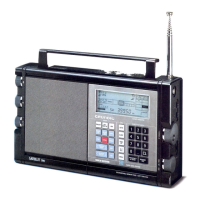
WORLD RECEIVER YACHT BOY 400 PE
Question and Answer IconNeed help?

Do you have a question about the Grundig 400 PE and is the answer not in the manual?

Summary

IMPORTANT NOTICE

QUICK SETUP

INITIAL SET-UP

SET-UP FOR NORTH AMERICAN USE

Instructions for configuring the radio for North American AM station spacing.

SUPPLYING POWER AND USING EXTERNAL ANTENNAS

HOW TO INSTALL BATTERIES

Detailed instructions on correctly inserting AA batteries into the radio.

EXTERNAL ANTENNA USAGE

Guidance on using the included reel antenna and external antenna socket.

GENERAL RADIO OPERATION

TUNING LOCAL AM AND FM STATIONS

Guide to tuning into local AM and FM broadcast stations.

DIRECT FREQUENCY ENTRY

OPERATION FEATURES

RESET FEATURE PROCEDURE

Procedure for resetting the radio in case of erratic operation.

SHORTWAVE STATION TUNING

HOW TO LISTEN TO SHORTWAVE STATIONS

Guide to tuning shortwave stations by frequency or by band.

UNDERSTANDING SHORTWAVE BANDS

Explanation of shortwave bands and how to identify them.

TUNING SHORTWAVE BANDS

Methods for tuning within a selected shortwave band.

SHORTWAVE BAND SELECTION AND TUNING

SHORTWAVE BAND AUTO TUNING RANGES

Table listing frequency ranges for auto-tuning specific shortwave bands.

CHOOSING THE BEST SHORTWAVE BAND

Guidance on selecting appropriate shortwave bands for listening.

STORING STATIONS INTO MEMORY

HOW TO STORE A FREQUENCY INTO MEMORY

Step-by-step instructions for saving a station frequency into memory.

HOW TO ACCESS STORED STATIONS

Procedures for recalling stored stations from memory.

CLOCK, ALARM, AND SLEEP TIMER FEATURES

SETTING THE ALARM CLOCK

Guide for setting the alarm time and mode on the radio.

SHORTWAVE LISTENING GUIDELINES

EVENING;NIGHT SHORTWAVE LISTENING

SHORTWAVE BAND FREQUENCIES

COUNTRIES HEARD ON SHORTWAVE RADIO

SHORTWAVE PROGRAMMING AND RECEPTION

SHORTWAVE PROPAGATION AND RECEPTION FACTORS

GETTING STARTED WITH SINGLE SIDEBAND (SSB)

ACTIVATING THE SSB FEATURE

Step-by-step guide to activating and using the SSB feature on the radio.

SSB FREQUENCY RANGES

MARITIME SSB WEATHER FREQUENCIES

TIME STATIONS AND MARITIME COMMUNICATION

MARITIME TWO-WAY CHANNELS

Frequencies and channels used for maritime two-way communication.

TECHNICAL INFORMATION

Summary

IMPORTANT NOTICE

QUICK SETUP

INITIAL SET-UP

SET-UP FOR NORTH AMERICAN USE

Instructions for configuring the radio for North American AM station spacing.

SUPPLYING POWER AND USING EXTERNAL ANTENNAS

HOW TO INSTALL BATTERIES

Detailed instructions on correctly inserting AA batteries into the radio.

EXTERNAL ANTENNA USAGE

Guidance on using the included reel antenna and external antenna socket.

GENERAL RADIO OPERATION

TUNING LOCAL AM AND FM STATIONS

Guide to tuning into local AM and FM broadcast stations.

DIRECT FREQUENCY ENTRY

OPERATION FEATURES

RESET FEATURE PROCEDURE

Procedure for resetting the radio in case of erratic operation.

SHORTWAVE STATION TUNING

HOW TO LISTEN TO SHORTWAVE STATIONS

Guide to tuning shortwave stations by frequency or by band.

UNDERSTANDING SHORTWAVE BANDS

Explanation of shortwave bands and how to identify them.

TUNING SHORTWAVE BANDS

Methods for tuning within a selected shortwave band.

SHORTWAVE BAND SELECTION AND TUNING

SHORTWAVE BAND AUTO TUNING RANGES

Table listing frequency ranges for auto-tuning specific shortwave bands.

CHOOSING THE BEST SHORTWAVE BAND

Guidance on selecting appropriate shortwave bands for listening.

STORING STATIONS INTO MEMORY

HOW TO STORE A FREQUENCY INTO MEMORY

Step-by-step instructions for saving a station frequency into memory.

HOW TO ACCESS STORED STATIONS

Procedures for recalling stored stations from memory.

CLOCK, ALARM, AND SLEEP TIMER FEATURES

SETTING THE ALARM CLOCK

Guide for setting the alarm time and mode on the radio.

SHORTWAVE LISTENING GUIDELINES

EVENING;NIGHT SHORTWAVE LISTENING

SHORTWAVE BAND FREQUENCIES

COUNTRIES HEARD ON SHORTWAVE RADIO

SHORTWAVE PROGRAMMING AND RECEPTION

SHORTWAVE PROPAGATION AND RECEPTION FACTORS

GETTING STARTED WITH SINGLE SIDEBAND (SSB)

ACTIVATING THE SSB FEATURE

Step-by-step guide to activating and using the SSB feature on the radio.

SSB FREQUENCY RANGES

MARITIME SSB WEATHER FREQUENCIES

TIME STATIONS AND MARITIME COMMUNICATION

MARITIME TWO-WAY CHANNELS

Frequencies and channels used for maritime two-way communication.

TECHNICAL INFORMATION

Overview

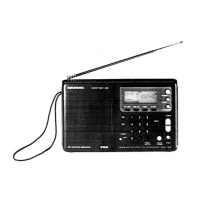
The Grundig Yacht Boy 400 PE is a world receiver designed for a wide range of radio listening, from local AM/FM broadcasts to international shortwave and specialized two-way communications. This portable radio is built to provide a versatile listening experience, whether you're at home or traveling.

Function Description

At its core, the Yacht Boy 400 PE serves as a comprehensive radio receiver. It can tune into standard AM (Medium Wave), FM, Longwave (LW), and Shortwave (SW) bands. The "PE" in its name signifies "Professional Edition," indicating a more advanced feature set compared to basic radios. Its primary function is to allow users to listen to various radio broadcasts from around the globe, including international news, music, and specialized communications.

For local listening, the radio handles both AM and FM bands. AM, referred to as Medium Wave (MW) on this device, covers frequencies typically used for local news, talk shows, and music. FM provides higher fidelity audio, especially when listening in stereo with earphones. The Longwave band is primarily used in Europe and other parts of the world for broadcast stations, though it's less common for broadcasts in the Americas.

The most distinctive feature of the Yacht Boy 400 PE is its shortwave capability. Shortwave radio allows for reception of broadcasts from distant international stations, often targeting specific regions like North America. This is made possible by the earth's ionosphere, which reflects radio waves over long distances. The radio can tune into various shortwave bands, identified by meter designations (e.g., 25m, 31m, 49m), each with its own characteristics regarding optimal listening times (day or night).

Beyond standard broadcasts, the Yacht Boy 400 PE also supports Single Sideband (SSB) reception. SSB is a more efficient modulation method used for two-way communications, such as amateur radio (hams), maritime, and aeronautical traffic. This feature allows users to listen in on conversations that would sound garbled or unintelligible on a conventional AM receiver. The radio includes a Fine Tuning control specifically for optimizing SSB reception.

Usage Features

The Yacht Boy 400 PE offers several features to enhance the user's listening experience:

  • Tuning Options: Users can tune to stations in multiple ways. Direct frequency entry allows for precise tuning if the exact frequency is known. Auto Tuning scans through frequencies within a selected band, stopping on active stations. Manual tuning provides granular control using dedicated buttons. For shortwave, users can also enter a specific meter band (e.g., 25m) and then tune within that range.
  • Memory Storage: The radio has 40 memory slots to store favorite stations. This allows for quick recall of frequently listened-to frequencies across all bands. Users can easily store a station, check for available memory slots, and access stored stations individually or by scanning through them. Memories can also be erased.
  • Clock and Alarm Functions: The device includes a 24-hour clock with two time settings (TIME I and TIME II). An alarm clock feature allows users to set a wake-up time, choosing between waking to the radio playing the last station or a beeper sound. The alarm also has a snooze function for an extra five minutes of sleep.
  • Sleep Timer: For those who like to fall asleep to the radio, a sleep timer can be set to automatically turn off the radio after a specified duration, ranging from 0 to 60 minutes.
  • Dial Light: A light button illuminates the display for easy viewing in low-light conditions. The light automatically turns off after 10 seconds or can be manually switched off.
  • Audio Controls: The radio features a volume control knob and a Tone switch (HIGH/LOW) to adjust the audio output to personal preference. A Wide/Narrow switch allows users to optimize audio fidelity (WIDE) or minimize interference from nearby stations (NARROW), useful for AM, shortwave, and longwave listening.
  • Stereo/Mono Switch: For FM listening, a Stereo/Mono switch is available. Selecting STEREO provides true stereo reproduction when using earphones and if the broadcast is in stereo. MONO is recommended for weaker or marginal FM signals.
  • DX/LOCAL Switch: This switch, typically set to DX (maximum sensitivity), helps optimize reception, especially for distant signals.
  • Lock Button: The LOCK button prevents accidental changes to settings or turning the radio on/off, particularly useful when the radio is packed away. When the radio is on, it locks all keys except ON/OFF and SNOOZE. When off, it locks all keys.
  • Antenna Options: The radio has a telescopic antenna for general reception. For enhanced shortwave reception, an external antenna socket is provided, compatible with the included "reel" antenna or professionally engineered outdoor antennas. The "reel" antenna should be fully unrolled and placed as high as possible, near windows, for best results.
  • Frequency Spacing: For North American AM stations, the radio can be set to 10 KHz spacing, differing from the 9 KHz spacing used in Europe. This setting is retained in memory unless batteries are removed for an extended period.
  • Last Station Memory (AM Button): Repeatedly pressing the AM button cycles through the last stations tuned in MW, SW, and LW, providing a quick way to revisit recent listening.

Maintenance Features

The Yacht Boy 400 PE includes a few basic maintenance and troubleshooting features:

  • Power Supply: The radio can be powered by six AA alkaline batteries or the included Grundig AC adaptor. When using the adaptor, it's safe to leave the batteries in the radio. The manual provides specific details on battery installation and AC adaptor usage, including polarity and plug dimensions to prevent damage.
  • Reset Feature: If the radio behaves erratically, a RESET hole is provided on the front. Gently poking this with a paper clip can restore normal operation. However, it's important to note that this procedure will erase all stored memories and reset the clock.
  • Technical Support: Grundig offers technical support via a toll-free hotline for assistance with operation, shortwave antennas, and other product-related inquiries.
  • Warranty: The device comes with a warranty card, and users are advised to refer to the serial number (located inside the battery compartment) when contacting Grundig for support.
  • Shortwave Guides: The manual recommends various shortwave guides and magazines available in bookstores for comprehensive listings of broadcast schedules and additional information on shortwave listening. It also suggests companies specializing in shortwave radios, accessories, antennas, and books for those looking to expand their setup.

Grundig 400 PE Specifications

General IconGeneral
TypeReceiver
Model400 PE
Wave bandsFM
FM Frequency87.5 MHz
Power typeAC
Voltage220 V

Related product manuals