If the brake adjuster is not maintaining the proper applied stroke, before removing
the brake adjuster, check the condition of the foundation brake (see pages 7 & 8). If
after inspecting the foundation brake no apparent problems are found, inspect the
automatic brake adjuster to determine if it is operating properly. The inspection can be
performed on or off the vehicle using the following procedures.
Note: Block wheels to prevent vehicle from rolling. Ensure system reservoir
pressure is at 90-100 PSI.
Check that push rod is fully retracted; apply air to release spring brake.
If air is not available, spring brake must be manually caged back.
Do not use air tools on brake adjuster!
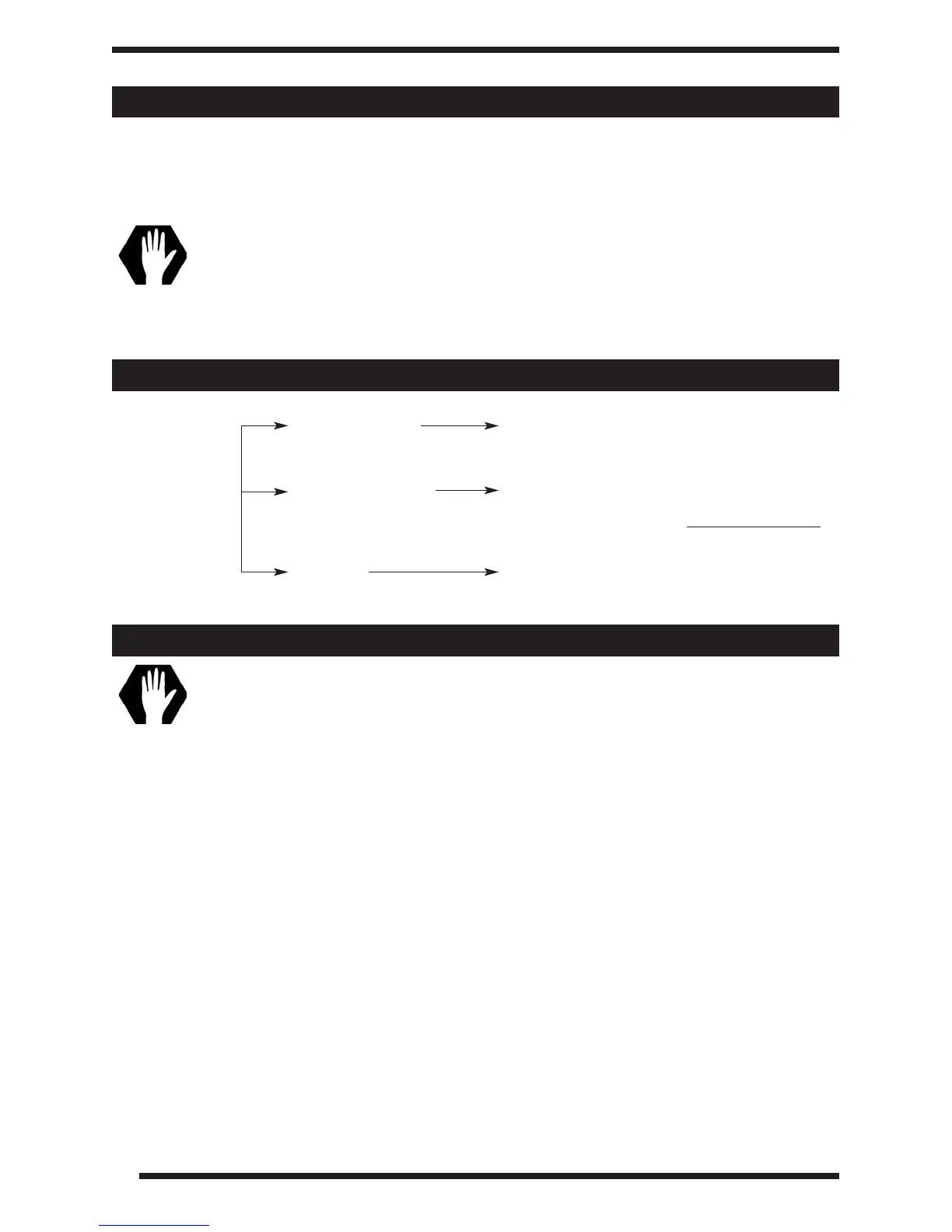
Component Cause Action
Excessive
chamber push
rod travel
Improper anchor If anchor bracket to control arm connection
bracket connection is worn, loose, bent or broken, it must be
to control arm re-secured or replaced.
Low clutch torque Rotate the 7/16” adjustment hex one full
turn counterclockwise. Replace brake
adjuster if the torque is less than 13 ft. lbs.
or no racheting sound occurs.
Unknown Perform automatic brake adjuster
operational check (see below).
Note: Functional operation of the brake adjuster can be performed on the
vehicle by using the following procedure:
Block wheels to prevent vehicle from rolling.
Ensure reservoir pressure is at 90-100 psi.
Check that the push rod is fully retracted; apply air to release spring brake.
If air is not available, spring brake must be manually caged back.
Manually de-adjust brakes (turn adjustment hex counterclockwise one full turn) to create an
excessive lining to drum clearance condition. (A ratcheting sound should occur.)
Make a full service brake application. On release, allow sufficient time for air chamber to fully
retract.
During the brake release, observe rotation of the adjustment hex (attaching a wrench on the hex
or scribing the hex will make this rotation easier to see).
This rotation indicates that an excessive clearance condition has been determined by the brake
adjuster, and it is making an adjustment to compensate. On each subsequent brake release,
the amount of adjustment and push rod travel will be reduced until the desired lining to drum
clearance is achieved.
If rotation of the adjustment hex is not observed, refer to Foundation Brake Operational Check
and Troubleshooting Procedures on Pages 7 & 8. If foundation brake assembly checks out okay and
hex still does not turn, check control arm and mounting bracket for possible worn, bent or broken
components. If the control arm and mounting bracket check out okay, replace the adjuster and
hardware per Installation Instructions on Pages 4 & 5.
9
Automatic Brake Adjuster Checking Procedures
On Vehicle Inspection
Automatic Brake Adjuster Checking Procedures



 To Next Page