EasyManua.ls Logo

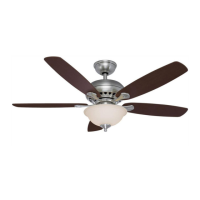
HAMPTON BAY SOUTHWIND II 50279 - User Manual

HAMPTON BAY SOUTHWIND II 50279
16 pages
Print Icon
To Next Page IconTo Next Page
Loading...
Item # XXXX XXX XXX
Model #50279
UL Model # 52-RMGII
USE AND CARE GUIDE
SOUTHWIND II 52-INCH CEILING FAN
Questions, problems, missing parts? Before returning to the store call
Hampton Bay Customer Service
8 a.m. - 7 p.m., EST, Monday-Friday, 9 a.m. - 6 p.m., EST, Saturday
1-855-HD-HAMPTON
HAMPTONBAY.COM
THANK YOU
We appreciate the trust and condence you have placed in Hampton Bay through the purchase of this ceiling fan. We strive to continually create
quality products designed to enhance your home. Visit us online to see our full line of products available for your home improvement needs.
Thank you for choosing Hampton Bay!
To view an instructional video on how to install this product:
1. Go to www.homedepot.com and enter either the Item or Model number, found in the top
right corner of the cover of this instruction manual, in the search eld.
2. Click on your product from the list of search results and click on the video link in the
“Product Overview” section.

Questions and Answers

Summary

Safety Information

Pre-Installation

Installation

Mounting Options

Describes various methods and considerations for mounting the fan's outlet box.

Assembly - Standard Ceiling Mount

Preparation for Mounting

Steps to prepare the mounting bracket and canopy for attachment.

Assembly - Hanging the Fan

Attaching the Fan to the Electrical Box

Steps for securing the mounting bracket to the ceiling electrical box.

Hanging the Fan

Procedure for safely lifting and seating the fan motor assembly onto the mounting bracket.

Wiring the Receiver to the Household Wiring

Detailed steps for connecting the receiver to the house's electrical supply wires.

Making the Electrical Connection

Describes connecting the receiver to the fan motor assembly wires using adapter plugs.

Assembly - Attaching the Fan Blades

Operating Your Fan and Remote Control

Troubleshooting

The Fan Will Not Start

Provides solutions for common issues preventing the fan from starting.

Overview

This document is a user and care guide for the Hampton Bay Southwind II 52-inch ceiling fan. It provides comprehensive instructions for installation, operation, and maintenance, ensuring users can safely and effectively utilize their new ceiling fan.

The primary function of this device is to provide air circulation and illumination in a room. As a ceiling fan, it is designed to be mounted on the ceiling and features rotating blades that create airflow. The fan is equipped with a light kit, offering both functional lighting and ambient illumination. Its design allows for year-round use, with a reversible motor that can be set to circulate air downward for a cooling effect in warm weather or upward to move warm air off the ceiling in cool weather.

Usage Features:

The Hampton Bay Southwind II 52-inch ceiling fan is designed for ease of use, primarily controlled by a remote control. This remote allows users to manage various aspects of the fan's operation from a convenient distance.

  • Speed Control: The remote control features dedicated buttons for selecting different fan speeds: Low, Medium, and High. There is also an "Off" button to turn the fan completely off. This allows users to adjust the airflow intensity to suit their comfort needs and room conditions. The fan speed button on the remote also includes LEDs that illuminate to indicate the currently selected speed, providing visual feedback to the user.
  • Light Control: The fan includes a light kit, and its operation is also managed via the remote control. A "Light/Dimmer" button allows users to turn the light on or off. Additionally, if dimmable bulbs are used and the O/D dip switch on the remote is set to "D," pressing and holding this button activates the dimming function, enabling users to adjust the brightness of the light. If non-dimmable bulbs are used, the O/D dip switch should be set to "0" to disable the dimming function.
  • Directional Rotation (Reversing Switch): A key feature for year-round comfort is the fan's reversible motor. The reversing switch, located in the fan's switch cup, allows users to change the direction of blade rotation.
    • Warm Weather (Forward): In warm weather, the fan should be set to circulate air downward, creating a cooling effect. This allows users to set their air conditioner to a higher temperature without compromising comfort.
    • Cool Weather (Reverse): In cool weather, the fan can be set to circulate air upward, which moves warm air off the ceiling. This helps to distribute heat more evenly throughout the room, potentially allowing users to set their heating unit to a lower temperature.
    • Important Note: To prevent damage or injury, the user must turn the fan off and wait for the blades to stop completely before operating the reversing switch.
  • Mounting Options: The guide details various mounting options, including standard ceiling mount and options for steep, sloped ceilings. It emphasizes the importance of using a UL-listed outlet box marked "acceptable for fan support of 35 lbs. (15.9 kg) or less" and using the screws provided with the outlet box. For sloped ceilings, a longer downrod may be necessary to maintain proper blade clearance.
  • Wiring and Electrical Connections: The manual provides detailed instructions for wiring the receiver to the household wiring and making electrical connections between the receiver and the fan motor assembly. It highlights the importance of adhering to the National Electrical Code and local electrical codes, recommending that electrical installation be performed by a qualified licensed electrician. Safety warnings regarding disconnecting power before wiring and using appropriate wire nuts are also provided.
  • Assembly of Components: The guide meticulously outlines the assembly process, from preparing the mounting bracket and routing wires through the downrod to assembling the fan motor, attaching the blades, and installing the light kit or a plastic plug if the fan is used without a light kit. Each step is accompanied by clear instructions and illustrations.

Maintenance Features:

Proper maintenance is crucial for ensuring the longevity and optimal performance of the Hampton Bay Southwind II 52-inch ceiling fan. The guide provides straightforward recommendations for care and troubleshooting common issues.

  • Regular Checks: Due to the fan's natural movement, connections may loosen over time. Users are advised to check the support connections, brackets, and blade attachments twice a year to ensure they remain secure. It is not necessary to remove the fan from the ceiling for these checks.
  • Cleaning: The fan should be cleaned periodically to maintain its appearance. It is important to note that water should not be used for cleaning, as this could damage the motor, the wood, or potentially cause an electrical shock. Instead, a soft brush or a lint-free cloth should be used to avoid scratching the finish. The plating is sealed with a lacquer to minimize discoloration or tarnishing. For models with wooden components, a light coat of furniture polish can be applied for additional protection and enhanced beauty, and small scratches can be covered with a light application of shoe polish.
  • Lubrication: The fan's motor is permanently lubricated with sealed ball bearings, meaning users do not need to oil the fan. This simplifies maintenance and reduces the need for frequent intervention.
  • Troubleshooting: The manual includes a comprehensive troubleshooting section to help users diagnose and resolve common problems.
    • Fan Not Starting: Solutions include checking circuit fuses/breakers, line wire connections, battery in the transmitter, ensuring the fan is within the normal range of the remote, and verifying that the dip switches on both the transmitter and receiver are set to the same frequency.
    • Noisy Fan: Recommendations include ensuring all motor housing screws are snug, checking that fan blade bracket screws are tight, verifying that wire nut connections are not rattling, allowing a 24-hour "breaking in" period for new fans, and ensuring light kit glassware and bulbs are secure. It also advises checking that the canopy is a short distance from the ceiling and that the outlet box is secure with rubber isolator pads.
    • Fan Wobble: The guide explains that most wobble problems are caused by unequal blade levels. Users are instructed to check the level of each blade by measuring the distance from a point on the ceiling to the tip of each blade. Any deviation should be within 1/8 inch. If wobble persists after running the fan for ten minutes, a balancing kit can be requested from customer service.
  • Battery Replacement: For the remote control, the manual advises replacing the 23A 12V battery when it weakens to prevent leakage, which could damage the hand unit. Used batteries should be disposed of properly and kept out of reach of children.

Overall, the Hampton Bay Southwind II 52-inch ceiling fan is designed as a user-friendly and low-maintenance appliance that provides both air circulation and lighting, with features tailored for comfort in various weather conditions. The detailed guide ensures that users have all the necessary information for safe installation, efficient operation, and proper care.

HAMPTON BAY SOUTHWIND II 50279 Specifications

General IconGeneral
BrandHampton Bay
TypeCeiling Fan
Number of Blades5
Reversible MotorYes
FinishBrushed Nickel
Indoor/Outdoor UseIndoor
Blade ColorDark Walnut
Fan Diameter (in.)52
Model50279
Blade Span52 inches
Motor Speed3 speeds
Blade MaterialWood

Related product manuals