EasyManua.ls Logo

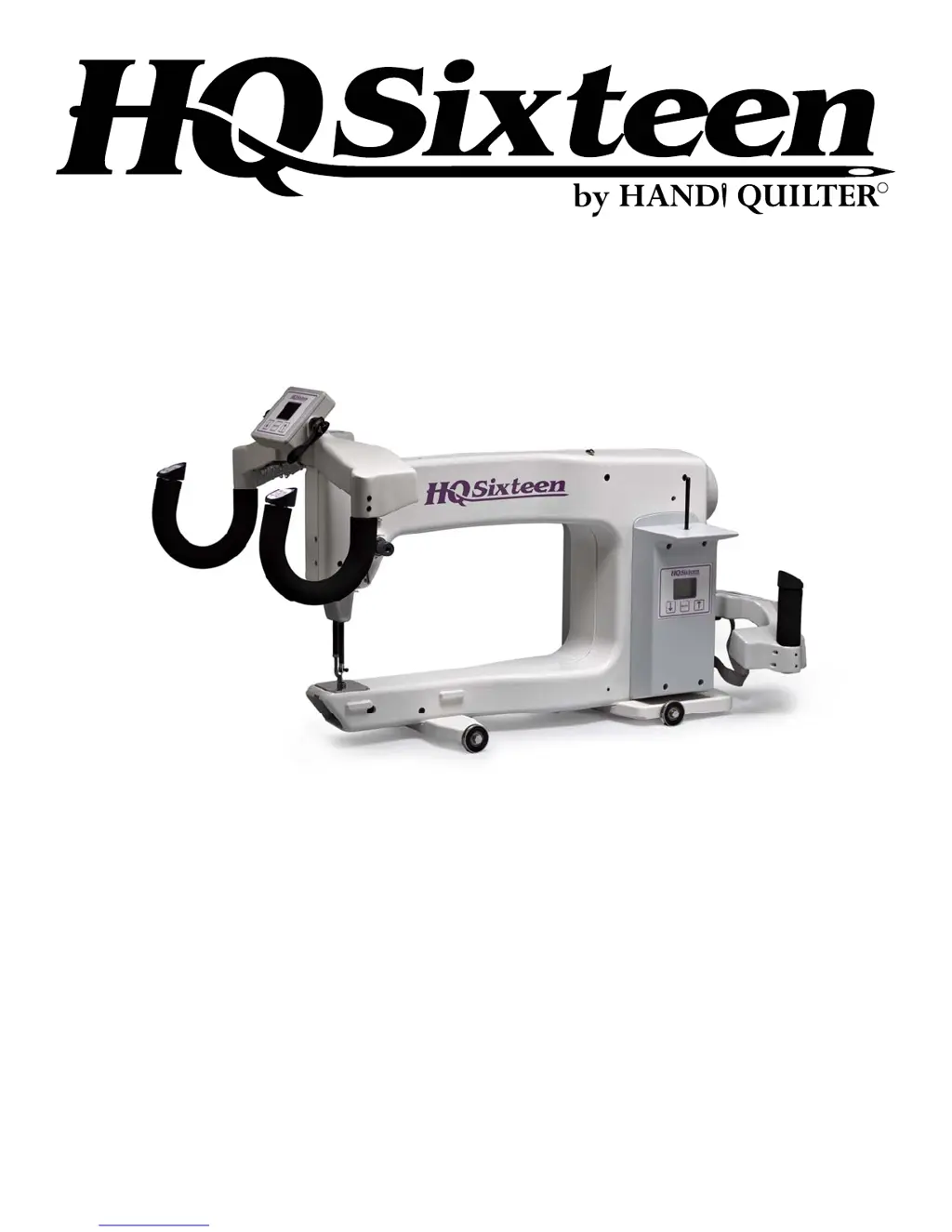
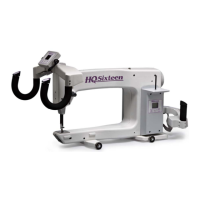
handi quilter HQSixteen - User Manual

handi quilter HQSixteen
24 pages
Print Icon
To Next Page IconTo Next Page
Loading...
R
Copyright© 2007 “All Rights Reserved”
No part of this manual may be reproduced in whole or part without
express written consent from Handi Quilter, LLC
User Manual
(v. 1.6)

Questions and Answers

  • R
    Robin WebbAug 17, 2025
    Why is my handi quilter HQSixteen needle thread breaking?
    • J
      Jonathan CurryAug 18, 2025
      Needle thread breaks can occur due to several reasons: * Poor quality thread or thread that is rotted or brittle. * Unbalanced top and bobbin tensions. * Incorrect threading or incorrectly positioned thread spools. * Particles in tension discs. * Bobbin rotation that is not smooth. * A burred, bent, dull, or incorrectly installed needle. Replace the needle at least once per quilt. * A needle not suited for the thread; replace it with one better suited. * Hesitating too long at one point in the pattern; begin moving immediately when starting the machine. * Improper needle/hook relationship; consult a repair technician. * Damage or a burr at the needle hole of the throat plate or other thread handling part; gently rub with metal cloth to remove the sharp edge.
  • M
    Mary GonzalezAug 20, 2025
    What to do if my Handi Quilter Sewing Machine stitches are skipping?
    • S
      Steven SandersAug 20, 2025
      Skipping stitches can be caused by: * A damaged, dull, bent, or improperly installed needle. Replace the needle often, normally once or twice per day for continuous quilting or at least once per quilt. Use HQ Sixteen™ recommended needles. * Incorrect needle size. Check for the proper size of needle for the work and thread being applied to the quilting operation. * The needle not positioned properly. Position the needle properly to the needle bar. * Fabric that is too tight on the frame. Loosen pole tension on the frame. * Thread tension that is too tight. Loosen top tension. * Improper threading. Inspect that the thread take-up lever, thread stirrup or tension spring are all threaded correctly.
  • F
    franksarahAug 23, 2025
    What to do if my handi quilter HQSixteen stitch quality is poor?
    • T
      Tiffany MorrisonAug 23, 2025
      Poor stitch quality can arise from several factors. First, ensure that the tension of the needle thread is adjusted correctly, especially after verifying the bobbin tension. Also, ensure the bobbin case is free of lint or any foreign material that might obstruct the thread's path through the machine. Finally, match the machine's movement and needle speed to achieve approximately 8-10 stitches per inch.
  • C
    Chase McbrideAug 26, 2025
    Why does my handi quilter HQSixteen Sewing Machine motor stall?
    • K
      Krystal LeeAug 26, 2025
      A motor stall can occur if the alarm indicates the motor isn't responding correctly to the speed controls. To resolve this, turn off the power to the machine and clear any thread from the bobbin area. It may also be caused by a mechanical obstruction or an electrical problem. In this case, turn the machine off and then back on again to reset the computer.
  • A
    Ana AdamsAug 28, 2025
    What causes the needle to break on my handi quilter HQSixteen Sewing Machine?
    • E
      Emma FreemanAug 28, 2025
      The needle may break if it is bent or not installed properly; replace or correctly change the needle. It can also break if it hits the throat plate; correctly position the needle, throat plate or hopping foot.
  • G
    Gina McdowellAug 30, 2025
    What to do if my Handi Quilter Sewing Machine thread nests under the quilt?
    • J
      Jennifer BakerAug 30, 2025
      If thread nests under the quilt, it could be due to not enough tension on the top thread; tighten the top tension by rotating the tension knob clockwise. It may also be due to improper threading. In this case refer to threading diagram and threading instructions.
  • S
    Sean SmithSep 1, 2025
    What causes puckered stitches on my handi quilter HQSixteen?
    • M
      Mark FrancisSep 2, 2025
      Puckered stitches can occur if the hopping foot applies too much pressure to the material; decrease the pressure on the hopping foot by loosening the nut at the base of the hopping foot shaft. It can also be caused by tension that is not balanced; balance the tension of the needle thread after ensuring the bobbin tension is adjusted correctly. Another cause is a needle that is too large for the material; replace the needle with a size better suited for the fabric.
  • A
    Audrey GarciaSep 4, 2025
    Why is the tension poor on my handi quilter HQSixteen Sewing Machine?
    • R
      Rebecca CowanSep 4, 2025
      Poor tension can be caused by “fuzz” caught under the tension spring in the bobbin. By inserting a needle under the spring and clearing out the lint, the bobbin tension will return fairly close to its preset tension.
  • C
    Carrie HowardSep 6, 2025
    What to do if it's hard to guide my Handi Quilter Sewing Machine?
    • J
      Jackson SharpSep 6, 2025
      Difficulty in guiding the machine can occur if the carriage wheels are not centered on the track; center the carriage wheels on top of the continuous track. It may also be caused by thread caught in the wheels; remove all thread or debris in wheels.
  • M
    Melissa SantosSep 9, 2025
    What to do if the hand wheel on my Handi Quilter Sewing Machine won’t rotate?
    • F
      fowlerhannahSep 9, 2025
      If the hand wheel won’t rotate, it might be because thread is entangled and caught in the hook. Lubricate the hook, strongly turn the hand wheel clockwise and if necessary counterclockwise several times, and then remove the thread caught in the hook.

Summary

Safety and Quick Facts

Safety Warnings

Important safety precautions and guidelines for operating the machine.

Machine Quick Facts

Technical specifications and operational details about the HQ Sixteen quilting machine.

Package Contents

Included Items

List of items included in the machine's packaging for setup.

Optional Accessories

List of optional accessories available for purchase to enhance functionality.

Machine Components: Front View

Front Side Diagram

Labeled diagram identifying front components of the machine for user reference.

Machine Components: Rear Views

Back Side Diagram

Labeled diagram identifying back components of the machine for user reference.

Rear Diagram

Labeled diagram identifying rear components of the machine for user reference.

Stitch Regulator Installation

Directional Conventions

Defines terms like Rear, Front, User Right, User Left for orientation during installation.

Carriage Placement

Instructions for correctly positioning the machine carriage on the table rails.

Stitch Regulator Installation (Continued)

Cable Connections

Details on plugging in ribbon cables for the encoder assembly.

Machine Removal Precautions

Cautionary note on disconnecting cables when removing the machine from the carriage.

Handle Installation

Front Handle Installation

Step-by-step guide for attaching the optional front handles.

Rear Handle Installation

Step-by-step guide for attaching the optional rear handles.

Peripheral Device Installation

Foot Controller Connection

How to plug the foot control into the electronic control pod.

Power Cord Connection

Instructions for connecting the power cord to the machine and power source.

Needle Insertion Guide

Detailed steps for correctly inserting a new needle into the machine.

Peripheral Device Installation (Continued)

Securing the Needle Clamp

Guidance on securely tightening the needle clamp screw.

Needle Insertion Verification

Important check for proper needle insertion depth to prevent damage.

Hopping Foot Adjustment Note

Note that the hopping foot is factory adjusted and shouldn't be moved.

Thread Mast Mounting

Instructions for attaching the thread mast to the machine.

Laser Stylus Installation and Use

Laser Stylus Mounting

Steps for mounting the laser stylus guide post on top and side.

Laser Stylus Operation and Safety

How to operate the laser stylus safely and correctly.

Threading the Machine

Initial Threading Path

Detailed instructions for threading the machine through guides A, B, and C.

Final Threading Path

Completes threading through take up lever, needle guide, and needle.

Threading the Machine (Continued)

Tension Disc Flossing

Explains the crucial step of flossing thread between tension discs.

Horizontal Spool Holder Use

How to install and use the optional horizontal spool holder.

Bobbin and Thread Tension

Inserting the Bobbin

Step-by-step guide for inserting the bobbin into the bobbin case.

Drawing Up Bobbin Thread

How to bring the bobbin thread up to the top of the quilt.

Bobbin and Thread Tension (Continued)

Bobbin Tension Adjustment

How to test and adjust the bobbin tension for correct stitch formation.

Top Tension Adjustment

How to adjust the top thread tension for balanced stitches.

Machine Maintenance

Cleaning and Lubrication

Instructions for cleaning lint and lubricating the bobbin assembly.

Machine Displays and Menus

Menu Navigation

Overview of the machine's settings menu and navigation.

Quilt Mode Selection

Explains Manual vs. Regulated Quilt Modes for operation.

Stitch Length Control

How to set stitches per inch for stitch regulation.

Machine Displays and Menus (Continued)

Needle Position and Stitch Type

Controls for needle positioning and stitch type (half/full).

Lighting Controls

Controls for adjusting machine lighting options (on, off, spot, part).

Diagnostic Mode

Access for authorized technicians to run diagnostics on the machine.

Machine Displays and Menus (Continued)

Setup Menu Options

Explains Alarm Mode, My Speed, and Counters settings for customization.

Walking Stitch Feature

How to use the walking stitch feature for tying off stitches.

Handle Button Functions

Needle Position Control

Function of the needle up/down buttons for precise positioning.

Machine Start;Stop and Speed

How to start, stop, and adjust machine speed using handle buttons.

Stitch Regulator Operation

Selecting Regulated Mode

Steps to select and use the stitch regulator mode for consistent stitching.

Regulation Mode Notes

Important information on overspeed conditions and regulation for optimal performance.

Quilting Preparation

Thread and Needle Selection

Recommendations for choosing suitable threads and needle sizes.

Free-Motion Quilting Basics

Basics of free-motion quilting and operator synchronization with the machine.

Quilting Preparation (Continued)

Manual Mode Operation

How to operate the machine in manual mode for comfort and control.

Stitch Regulator Mode Operation

How to operate the machine effectively in stitch regulator mode.

Starting and Stopping Procedures

Proper techniques for starting and stopping the machine to prevent needle damage.

Troubleshooting: Stitch Issues

Skipped Stitches

Common causes and solutions for skipped stitches.

Incorrect Needle Size

How incorrect needle size affects stitch formation.

Troubleshooting: Stitch Issues (Continued)

Needle Positioning Problems

Issues related to improper needle placement and its effects.

Thread Tension Imbalances

Causes and solutions for thread tension problems affecting stitch quality.

Troubleshooting: Stitch Issues (Continued)

Needle Breakage

Reasons why the needle might break and how to fix it.

Puckered Stitches

Causes and solutions for puckered stitches on the fabric.

Troubleshooting: Stitch Issues (Continued)

Poor Stitch Quality

Factors affecting overall stitch quality and how to resolve them.

Troubleshooting: Machine Operation

Tension Issues

General issues related to poor thread tension.

Hand Wheel Rotation Problems

Troubleshooting for a non-rotating hand wheel.

Troubleshooting: Machine Operation (Continued)

Thread Nests

Causes and solutions for thread nesting under the quilt.

Machine Guidance Issues

Issues affecting the machine's guidance on the track.

Troubleshooting: Machine Operation (Continued)

Motor Failure to Run

Troubleshooting steps for a machine that won't start or run.

Uneven Quilt Design

Causes of uneven quilt design and how to correct them.

Troubleshooting: Machine Operation (Continued)

Needle Thread Breaks

Reasons for thread breakage and how to prevent it.

Troubleshooting: Machine Operation (Continued)

Incorrect Needle Type

Problems associated with using the incorrect needle type.

Motor Stall Issues

Troubleshooting for motor stall alarms and causes.

Other Minor Issues

Various minor issues affecting machine performance.

handi quilter HQSixteen Specifications

General IconGeneral
Brandhandi quilter
ModelHQSixteen
CategorySewing Machine
LanguageEnglish

Related product manuals