SKU 92304 For technical questions, please call 1-800-444-3353. Page 7
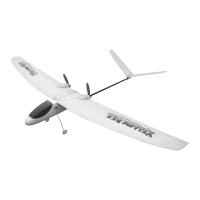
Operating and Flying the Airplane
1. Choose a day when the wind is light. The Ribbon (17) attached to the Remote Control antenna
should be blowing slightly (not greater than 30 degrees) and not be blowing straight out. Find
a wide-open field.
2. Face the Airplane into the wind. Move the left hand control stick all the way down so that both
motors are running at full power.
Note: It is recommended that two people work together to hand launch the Airplane. One
should control the Remote Control and one will launch the Airplane.
3. With the Airplane tilted at about 10 degrees, propel and release it into the wind.
4. Let the Airplane climb to and fly at about 50 to 300 feet high. By moving the right and left
control sticks you can change speed and direction.
5. If the Airplane rises too slowly, or dives, it indicates that the Nose is too tight. Adjust for this
by tightening the front Tail Wing Screw and loosening the rear Tail Wing Screw.
6. To steer the Airplane, move the right transmitter control stick to the left to steer to the left, and
right to steer it right. Move the right control stick slightly to adjust for minor changes in direction
and tilt of the Airplane.
7. If the Airplane continues to fly to far right or to far left, correct for it by moving the right transmitter
control the opposite direction. If flying left, move the control right. If flying right, move the control
left.
If adjusting the right control does not work, land the Airplane and adjust the Rudder on the
side it is leaning toward. If leaning left, adjust the left Rudder up slightly. If tilting right, move
the right Rudder up slightly.
8. Note that letting go of the control sticks will automatically bring them to a center position. This
will cause the Airplane to glide, unpowered.
9. Normal flight time for one full charge is about twenty (20) minutes. If the plane appears to be
losing power or climbs with difficulty, the batteries are low. Land the plane.
10. When the remote control’s battery begins to reach the end of its power, the red indicator light will
blink or it will make a warning noise. When this occurs, IMMEDIATELY LAND THE AIRPLANE.
If the remote control’s battery is allowed to die completely, the plane will be uncontrolled
and may cause damage to property or SEVERE PERSONAL INJURY.
11. To bring in the Airplane for landing, glide the Airplane down against the wind. Move the left
control stick toward the center to slow the Propellers (4). Move the right control stick to adjust
for direction. Continue to decrease the Propeller (4) speed and direction until you bring them
to a stop and land the Airplane. If airplane descends too quickly, press slightly harder on the
left control stick to compensate.
REV 03/05


 To Previous Page