EasyManua.ls Logo

Hitachi UST-9120 - User Manual

Hitachi UST-9120
60 pages
Print Icon
To Next Page IconTo Next Page
Loading...
i
Notes for operators and responsible maintenance personnel
★
Please read through this Instruction Manual carefully prior to use.
★
Keep this Instruction Manual together with the ultrasound diagnostic instru-
ment for any future reference.
© Hitachi, Ltd. 2013, 2017. All rights reserved.
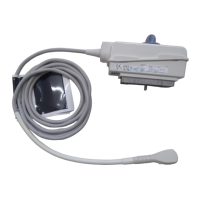
Intraoperative Electronic Convex
Probe
UST-9120 (Compatible with waterproof cover)
Instruction Manual
M N1-5531 Rev.10

Table of Contents

Question and Answer IconNeed help?

Do you have a question about the Hitachi UST-9120 and is the answer not in the manual?

Overview

This document is the Instruction Manual for the Intraoperative Electronic Convex Probe UST-9120, manufactured by Hitachi, Ltd. It is compatible with a waterproof cover and is identified by MN1-5531 Rev.10.

Function Description

The UST-9120 probe is an ultrasound transducer designed for intraoperative diagnosis. It is intended for use by a doctor when placed in direct contact with human internal organs during surgery to perform ultrasonic observations. For neurosurgery applications outside of Japan, the probe can be used with a recommended transducer cover. The probe, in conjunction with an ultrasound diagnostic instrument, enables image diagnosis using ultrasonic waves. It converts electric pulse signals into mechanical vibrations to emit pulse-shaped ultrasonic waves into the body or other medium. These waves are reflected by boundaries with different acoustic characteristics within the body, and the transducer then converts the received mechanical vibrations (echoes) back into electric signals. These signals are then processed for brightness modulation to form an image on the diagnostic instrument's monitor.

Important Technical Specifications

Model: UST-9120 Intraoperative Electronic Convex Probe Application Regions: Intraoperative diagnosis. Neurosurgery applications are possible outside Japan with a recommended transducer cover. Form of Application to Patient: Intraoperative. Neurosurgery applications are possible outside Japan with a recommended transducer cover. Connectable Instruments: SSD-α 5, SSD-α 10, Prosound α7, Prosound F75 Field of View: 65° Frequency: 4~10MHz Cable Length: 3.0 m Weight: 800 g Service Life: Three years Range of Applied Part: Probe tip itself and 20 cm of the cable near the probe tip. Parts Treated as Applied Parts: Whole parts of the probe (with waterproof cover attached). IPX7 Range: As shown in the figure in section 2-2 (waterproof cover MP-2790 unattached). Whole parts of the probe (waterproof cover attached). Classification of ME Equipment:

  • Degree of Protection Against Electric Shock: Type BF applied part
  • Protection Against Ingress of Liquids: IPX7 (Watertight equipment)
  • Operation Mode: Continuous operation
  • Method of Sterilization: See section 5 "Cleaning, disinfection and sterilization"

Environmental Conditions:

  • Operating Ambient Temperature: 10°C to 40°C (50°F to 104°F)
  • Operating Relative Humidity: 30% to 75%
  • Operating Atmospheric Pressure: 700 hPa to 1060 hPa
  • Operating Altitude: 3,000 m or less
  • Storage Ambient Temperature: -10°C to 50°C (14°F to 122°F)
  • Storage Relative Humidity: 10% to 90%
  • Storage Atmospheric Pressure: 700 hPa to 1060 hPa
  • Transportation Ambient Temperature: -10°C to 50°C (14°F to 122°F)
  • Transportation Relative Humidity: 10% to 90%
  • Transportation Atmospheric Pressure: 700 hPa to 1060 hPa

Standard Configuration:

  • Probe UST-9120: 1 set
  • Storage case CB-UST1-P1: 1 set
  • Instruction manual MN1-5531: 1 copy

Options:

  • Puncture Adapter: MP-2458, MP-2783 (for internal jugular vein puncturing)
  • CIVCO Bracket: 614-068
  • CIVCO Probe Cover / Biopsy Needle Guide Set: 610-608
  • Waterproof Cover: MP-2790 (enables soaking in liquid up to the connector)

Usage Features

Probe Connection and Removal: The probe connects to the ultrasound diagnostic instrument via a lock lever mechanism. To connect, the lock lever is turned to the RELEASE position, the connector is firmly inserted, and then the lever is turned clockwise to the LOCK position. Removal follows the reverse procedure. This must be done when the power switch is OFF or the image on the diagnostic instrument is frozen.

Puncture Operations: For puncture procedures, the probe can be used with a puncture adapter (MP-2458 or MP-2783) or a CIVCO bracket (614-068) and a CIVCO probe cover/biopsy needle guide set (610-608). Specific instructions are provided for attaching the transducer cover, puncture adapter, and CIVCO bracket, emphasizing the importance of proper attachment and ensuring the puncture needle does not touch the transducer cover. Sterilized echo jelly is recommended as the acoustic medium.

Safety Precautions: The manual highlights critical safety information using "Danger," "Warning," "Caution," and "Note" levels. Key precautions include:

  • Always follow the manual and supplied documentation.
  • Perform a start-up check for abnormalities before use.
  • Do not use the probe in direct contact with the heart or on the eyes.
  • Do not disassemble, modify, or repair the probe.
  • Clean, disinfect, and sterilize the probe before and after use.
  • Sterilize the probe if blood adheres.
  • Wear sterilized medical gloves during surgery.
  • Use sterilized physiological saline as the acoustic medium.
  • Dispose of probes used on Creutzfeldt-Jakob disease patients.
  • Handle the probe with care to prevent damage from impact.
  • Scan for the minimum necessary time and at the lowest suitable output to avoid adverse effects on internal tissues.
  • Do not use in continuous contact with the human body for more than 60 minutes.
  • Regularly perform maintenance inspections and safety tests.
  • For neurosurgery applications, always attach the recommended transducer cover.
  • Verify transducer cover packaging is unopened and undamaged, and check for any visible damage or discoloration.
  • Ensure no bubbles of acoustic medium are inside the transducer cover to prevent misdiagnosis.
  • Do not reuse transducer covers.
  • For puncture operations, use compatible needle sizes, straight needles, and display puncture guide lines on the monitor.
  • Constantly check the safety in the needle insertion direction and ensure no other organs lie in the puncture path.
  • Do not puncture the heart region.

Maintenance Features

Cleaning, Disinfection, and Sterilization: The manual provides detailed instructions for reprocessing the probe according to ISO 17664, including point-of-use pre-cleaning, containment and transportation, manual cleaning and disinfection, automated cleaning and disinfection (with waterproof cover), drying, maintenance, inspection, testing, packaging, and sterilization.

Applicable Methods:

  • Cleaning: Manual, Automated (with waterproof cover)
  • Disinfection: Manual, Automated (with waterproof cover)
  • Sterilization: Ethylene oxide (EtO) gas sterilization, STERRAD® sterilization, Liquid sterilization (USA only), STERIS® sterilization.
    • EtO Gas Sterilization: Requires 10% EO/90% HCFC gas, 50-60°C (122-140°F), >120 minutes exposure, 162-200 kPa pressurization, 13-8 kPa depressurization, 40-90% relative humidity, and minimum 12 hours aeration. The waterproof cover should not be used during this process.
    • STERRAD® Sterilization: Compatible with STERRAD® 50, 100S, 200, NX or 100NX systems using hydrogen peroxide (58% density). The waterproof cover should not be used. The probe must be wrapped with sterilization wraps before placing in the pouch.
    • Liquid Sterilization (USA only): Applicable sterilants include hydrogen peroxide (PERASAFE™), peracetic acid (Acecide®), glutaraldehyde (WAVICIDE®-01, STERANIOS), and glutaral (Cidex plus®). Thorough rinsing with sterile water after chemical sterilization is mandatory.
    • STERIS® Sterilization: Compatible with STERIS SYSTEM 1E® using peracetic acid. The waterproof cover (MP-2790) must be attached.

Cleaning Agents and Disinfectants: A list of applicable cleaners and disinfectants from various manufacturers is provided, including ENZOL®/Cidezyme®, Korsolex® Endo-Cleaner, Cidex® OPA, STERIHYDE®, Hyamine®, Cleanisept® Wipes, ANIOXYDE 1000, Gigasept® AF forte, Korsolex extra, PERASAFE™, Acecide®, WAVICIDE®-01, and STERANIOS.

Manual Cleaning Procedure:

  1. Immerse the submergible part of the probe in detergent solution (15-30°C, 1.6% concentration) and wipe with a soft, fluff-free cloth to remove soil.
  2. Wipe non-submergible parts with a detergent-dipped cloth.
  3. Rinse the submergible part with running tap water for 1 minute or deionized water for 5 minutes.
  4. Visually check for cleanness and repeat if necessary.

Manual Disinfection Procedure:

  1. Test disinfectant solution concentration (Cidex® OPA recommended, minimum 20°C).
  2. Wipe non-submergible parts with a disinfectant-dipped cloth.
  3. Immerse the submergible part in disinfectant for the recommended contact time (e.g., 5 minutes for Cidex® OPA).
  4. Rinse the submergible part with running deionized water for 1 minute or deionized water for 5 minutes.
  5. Visually check for disinfectant residue and repeat if necessary.

Cable and Connector Cleaning: Wipe the cable in 20 cm intervals with ethyl alcohol or water, then dry. Clean the connector similarly.

Drying: Wipe with a single-use, fluff-free wipe. If using a drying heater, the temperature limit is 60°C (140°F). Natural drying requires 15-30°C (59-86°F) for a minimum of 4 hours.

Periodic Inspection: Safety tests and testing of measurement tolerances should be conducted at least once a year by a qualified technician. Records must be kept.

  • Safety Tests: Include patient leakage current tests from patient connection to earth and from external voltage on an F-type applied part, adhering to IEC 60601-1:2005 standards.
  • Measurement Tolerances: Involve checking sensitivity and resolution using an ultrasonic phantom. Results are compared to previous tests to identify abnormalities.

Storage: After cleaning, disinfection, and sterilization, the probe should be stored in its storage case in a dustproof environment. The waterproof cover must be removed from the connector before storage to prevent packing deformation.

Moving and Transporting: For internal facility movement, the probe should be stored in its case after reprocessing. For external transportation (e.g., for repairs), the storage case should be placed in a cardboard box for additional protection, adhering to specified environmental conditions. The probe is precision equipment and vulnerable to physical impact, requiring proper packing.

Disposal: The device must be recycled or disposed of properly in compliance with Waste Management and Public Cleansing Law. Infection prevention measures must be taken before disposal. The WEEE Directive symbol indicates that the product should not be disposed of as general waste in EU nations; local offices or agencies should be contacted for proper disposal.

Hitachi UST-9120 Specifications

General IconGeneral
BrandHitachi
ModelUST-9120
CategoryAccessories
LanguageEnglish

Related product manuals