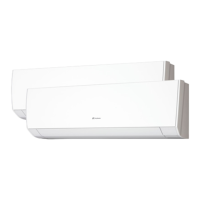
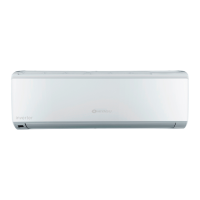
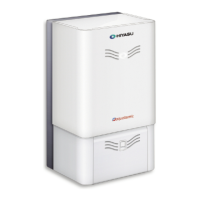
This document is a comprehensive user manual for a HIYASU air conditioner, covering its functions, technical specifications, usage, and maintenance. The manual is provided in multiple languages: Spanish, Portuguese, French, and English.
Function Description
The HIYASU air conditioner is designed to provide comfortable indoor climate control through various operating modes:
- Automatic Operation: The unit automatically selects the appropriate mode (cooling, heating, or fan only) based on the room temperature and desired settings. It adjusts fan speed and temperature to maintain comfort.
- Cooling/Fan Only Operation: This mode allows the user to set a desired temperature for cooling or to operate the unit as a fan only, circulating air without cooling or heating.
- Drying Operation (Dehumidification): This mode is specifically designed to reduce humidity in the room. The unit automatically selects a low fan speed and adjusts operation to effectively dehumidify the air.
- Heating Operation (where available): For models equipped with heating functionality, this mode allows the user to set a desired temperature for heating the room.
- Timer Operation: Users can program the air conditioner to turn on or off at specific times, allowing for automated operation and energy saving. This includes ON timer, OFF timer, and combined ON/OFF timer settings.
The air conditioner features a remote control for convenient operation, allowing users to select modes, adjust temperature, set fan speed, and program timers from a distance. The indoor unit also has a display panel with indicator lights for operation, automatic mode, timer, economic mode, pre-defrost, and infrared signal reception.
Important Technical Specifications
The manual provides general operating temperature ranges for the air conditioner across different modes:
- Cooling Operation: Outdoor temperature range is 18 to 43°C, and room temperature is 17 to 32°C.
- Heating Operation: Outdoor temperature range is -7 to 24°C, and room temperature is 0 to 27°C.
- Dry Operation: Outdoor temperature range is 11 to 43°C, and room temperature is 17 to 32°C.
Caution regarding humidity: Relative humidity above 80% may cause the air conditioner to produce condensation.
The air conditioner models covered by this manual include:
- ASE 9U2M (HS-9U2M HOS-18U2M)
- ASE 129U11M (HS-9U11M HS-12U11M HOS-21U11M)
These models are described as "Split Type Room Air Conditioners."
Usage Features
- Front Panel Control: The front panel can be opened to access controls and for maintenance. It clicks into place when fully open or closed.
- Airflow Direction Adjustment: The unit allows for both vertical and horizontal airflow adjustment.
- Automatic Swing: Pressing the SWING button on the remote control activates automatic vertical louver movement.
- Manual Adjustment: For horizontal airflow, users can manually adjust the levers on the air grilles. For vertical airflow, the AIR DIRECTION button on the remote control can be used to set the louver to a desired fixed position.
- Economic Operation (ECONO mode): This feature is available on some models and is designed to save energy during cooling or heating. In cooling, it raises the temperature by 1°C after 1 hour and another 2°C after 2 hours. In heating, it lowers the temperature by 1°C after 1 hour and another 2°C after 2 hours.
- Temporary Operation: In case the remote control is lost or its batteries are exhausted, the unit can be operated temporarily using the Auto/Cool switch on the indoor unit.
- Clock Setting: The remote control allows users to set the current time, which is displayed on the remote's screen.
- Lock and Reset Functions:
- LOCK button: Prevents accidental changes to settings by locking the remote control.
- RESET button: Resets all current settings to their initial factory defaults (e.g., clock to "0:00", fan speed to "AUTO", temperature to "24").
- Remote Control Usage: The remote control should be kept within 8 meters of the indoor unit and its signal receiver should not be obstructed by curtains or other objects. Direct sunlight on the receiver should be avoided.
Maintenance Features
Regular maintenance is crucial for optimal performance and longevity of the air conditioner.
- Cleaning the Indoor Unit and Remote Control:
- Use a dry, soft cloth to wipe the indoor unit and remote control.
- For stubborn dirt, a cloth dampened with cold water can be used.
- Avoid using chemical cleaners, solvents, or harsh abrasives (e.g., benzene, thinner, polishing powder) as they can damage the plastic surfaces.
- Never use a damp cloth on the remote control.
- Air Filter Cleaning:
- The air filter should be cleaned every two weeks.
- To clean, pull up the front panel, remove the air filters, and wash them with water or use a vacuum cleaner. Dry them in a cool, shaded place.
- Optional Active Carbon Filter: If present, these filters should be cleaned monthly by immersing them in lukewarm water with a neutral detergent for 20 minutes, rinsing, and drying in the sun for more than 3 hours (with the black side facing up).
- Pre-operation Checks: Before starting the air conditioner after a period of disuse, check that the wiring is intact, the air filter is installed, and the outdoor unit's air inlet/outlet are not blocked.
- Drying the Indoor Unit: If the unit is not planned for use for at least a month, operate the fan for about half a day to dry the inside of the unit before disconnecting power.
- Battery Replacement: The remote control uses two alkaline dry batteries (RO3/LR03X2). Replace old batteries with new ones, ensuring correct polarity.
- Three-minute Protection Feature: The air conditioner has a built-in protection feature that prevents it from restarting immediately after being turned off, typically imposing a 3-minute delay. This protects the compressor.
- Defrosting: During heating operation, if the indoor unit is frosted, the unit automatically initiates a defrosting cycle (approximately 5 to 10 minutes) to maintain heating efficiency. The "PRE-DEF" lamp will illuminate during this process.
- Snow Accumulation (Outdoor Unit): In areas with heavy snowfall, ensure the outdoor unit is not obstructed by snow or leaves, as this can impair performance.
- Power Failure: In case of a power failure, the unit will not restart automatically when power is restored. Users must press the ON/OFF button on the remote control to restart it.
- Troubleshooting: The manual provides a detailed section on common problems, their causes, and solutions, including issues related to the air conditioner's operation, remote control, and unusual noises or smells.

 Need help?
 General

 To Next Page