
 Need help?
Do you have a question about the Honeywell ST 3000 and is the answer not in the manual?
Introduces Gauge Pressure Models STG19L and STG99L with higher range and pressure ratings.
Details changes required in User Manual 34-ST-25-17A for new models, cross-referencing pages and sections.
Provides ambient and process interface temperature ranges for various ST3000 transmitter models, including new ones.
Lists Upper Range Limit, Maximum Working Pressure, and Overpressure Ratings for ST3000 transmitter types.
Details meter body part references and connections for ST3000 transmitter models, including new LGP models.
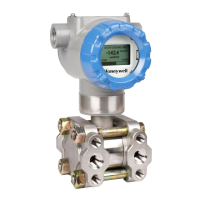
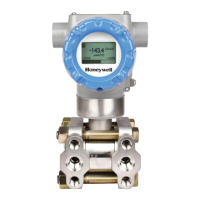
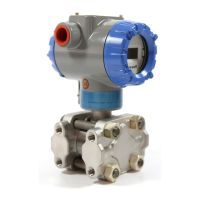
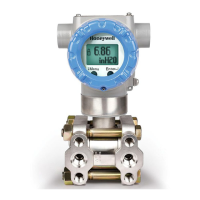
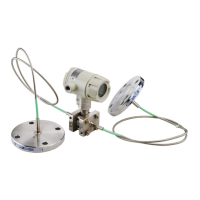
Illustrates various ST3000 transmitter configurations and their corresponding part references.
This document is an addendum to the User Manual for the Honeywell ST 3000 Smart Transmitter, specifically for Release 300 with HART® Communications Option (User Manual 34-ST-25-17A). It introduces two new Gauge Pressure models: STG19L and STG99L.
The ST 3000 Smart Transmitter is designed to measure pressure, and these new models extend its capabilities to significantly higher pressure ranges. The primary function of these transmitters is to accurately convert a measured pressure into a standardized output signal, typically for process control systems. The STG19L and STG99L models are specifically designed for applications requiring the measurement of high gauge pressures.
The new STG19L and STG99L models offer enhanced capabilities for high-pressure applications. They are designed to be used in environments where the upper range limit for pressure measurement is significantly higher than previously available models. These transmitters are suitable for processes involving very high working pressures and require robust overpressure protection.
Despite their extended pressure range, these new models maintain physical and functional features similar to other closely related family members, such as the STG1xL and STG9xL series. This similarity ensures a consistent user experience and simplifies integration into existing systems. The document explicitly states that, with the exceptions detailed in the addendum, all parts of the original User Manual (34-ST-25-17A) apply to these new models. This implies that the general operational procedures, configuration, and troubleshooting guidelines remain largely consistent.
A key usage feature is their potential as direct replacements for existing transmitters in scenarios demanding higher pressure capabilities. This "drop-in" compatibility simplifies upgrades and system modifications, reducing the need for extensive re-engineering or retraining.
The addendum provides specific updates to the original manual, guiding users on how to incorporate the new models' information. For instance, it details how to update Table 4 ("Operating Temperature Limits") and Table 5 ("Transmitter Overpressure Ratings") to reflect the new models' characteristics. This structured approach ensures that users can accurately understand the operational parameters and limitations of the STG19L and STG99L.
For operating temperature limits, the new models share the same ambient and process interface temperature ranges as other STG1xL and STG9xL series transmitters, indicating a consistent environmental robustness across the family. This means users can expect similar performance in various temperature conditions as with other related models.
The document also highlights updates to Figure 40 ("Major ST3000 Smart Transmitter Parts Reference"), specifically under the "LGP Models" section. This update helps users identify the correct replacement parts and understand the component breakdown for the STG19L and STG99L, which is crucial for maintenance and repair. The reference to Figure 48 (and corresponding Table 60) for LGP meter bodies, including the new models, further emphasizes the commonality of components and design principles across the LGP series. This commonality can simplify inventory management for spare parts and streamline maintenance procedures.
The addendum implicitly suggests several maintenance features through its emphasis on commonality and structured updates.
Firstly, the statement that "all parts of User Manual 34-ST-25-17A apply to these new models" (with noted exceptions) is a significant maintenance feature. It means that existing maintenance procedures, troubleshooting guides, and calibration instructions from the original manual are largely applicable to the STG19L and STG99L. This reduces the learning curve for maintenance personnel and ensures continuity in maintenance practices.
Secondly, the detailed updates to tables concerning operating limits and overpressure ratings are crucial for preventative maintenance. Understanding the precise limits helps maintenance teams ensure the transmitters are operating within their specified envelopes, thereby preventing premature failure and extending the device's lifespan. Knowing the burst pressure rating, for example, provides critical safety information for extreme fault conditions.
Thirdly, the updates to Figure 40, which outlines major parts and references other figures for specific components (like LGP meter bodies), directly support maintenance activities. By clearly identifying the model numbers of meter bodies and their corresponding figures, maintenance personnel can easily locate and order the correct replacement parts. The note that "the model number of the meter body is specified on its nameplate" is a practical detail that aids in accurate part identification during field maintenance.
The commonality of physical and functional features with other family members (STG1xL and STG9xL) also implies that many spare parts might be interchangeable or similar, simplifying inventory management for maintenance departments. This can lead to reduced stock levels for spare parts and faster repair times, as common components are more readily available.
In summary, the addendum ensures that while the new STG19L and STG99L models offer expanded capabilities, their integration into existing maintenance frameworks is seamless, leveraging the established procedures and documentation of the ST 3000 Smart Transmitter family.
 General
| Manufacturer | Honeywell |
|---|---|
| Category | Transmitter |
| Stability | ±0.01% of URL per year |
| Operating Temperature | -40 to 85°C (-40 to 185°F) |
| Communication Protocol | HART |
| Housing Material | Aluminum or Stainless Steel |
| Enclosure Rating | IP66/67, NEMA 4X |
| Measurement Type | Gauge, Absolute, Differential |
| Output Signal | 4-20 mA, HART |
| Process Temperature | -40 to 121°C (-40 to 250°F) |
| Hazardous Area Approvals | FM, CSA, ATEX, IECEx |
| Process Connection | 1/2" NPT |
| Material | 316L Stainless Steel, Hastelloy C |



 To Next Page


