GB
13
Using the Ceramic Hob
WARNING: DO NOT USE THE HOB IF IT IS
CRACKED. TO AVOID ELECTRIC SHOCK -
SWITCH OFF AT THE COOKER MAINS
CONTROL SWITCH IMMEDIATELY AND
CONTACT YOUR NEAREST SERVICE OFFICE
(see back page).
C367E
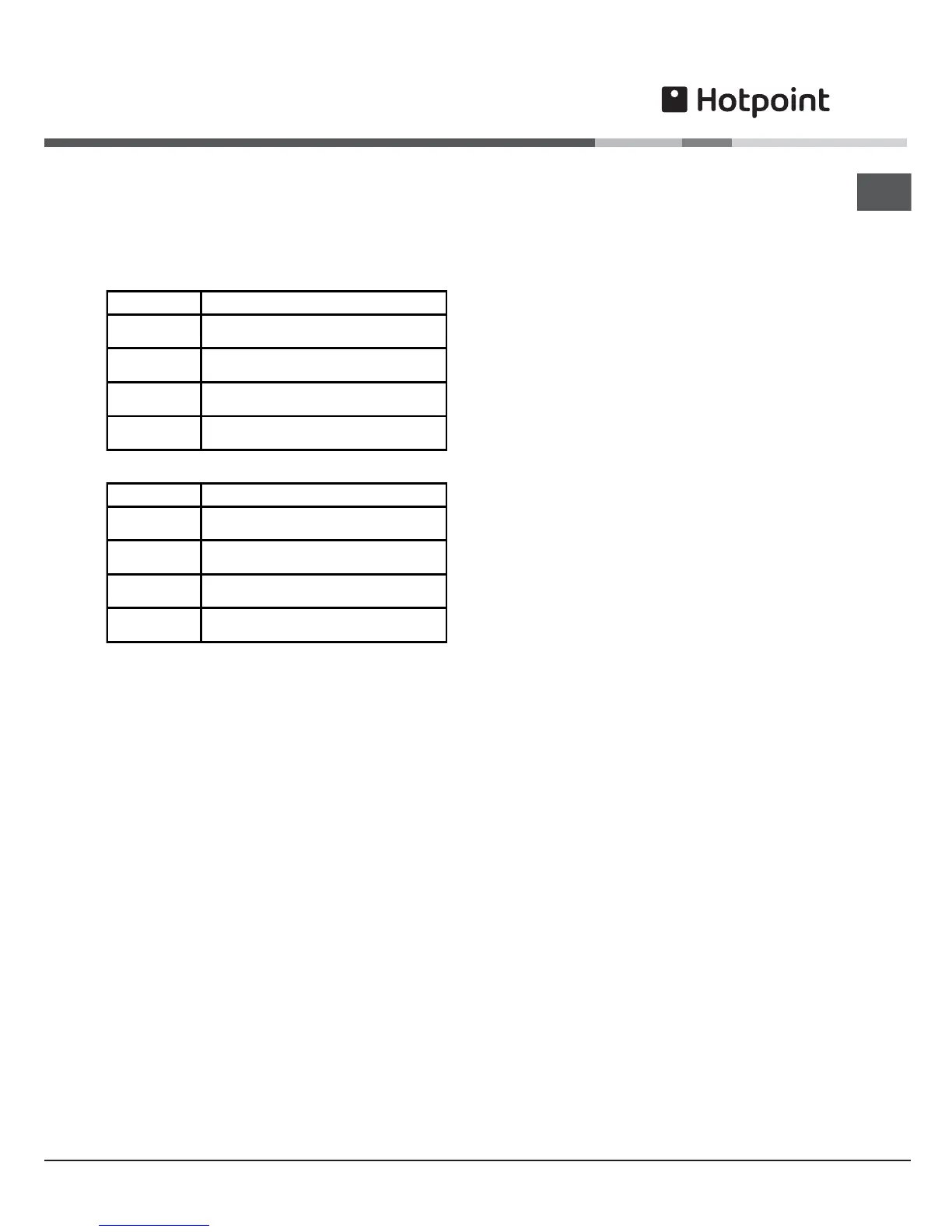
Front Right
6 Heat 1800W
Rear Left
Dual Circuit 1800W solarglo
Rear Right
6 Heat 1200W
Front Left
6 Heat 1200W
C368E, 61DC, ARC60
Front Right
6 Heat 1500W
Rear Left
6 Heat 1800W
Rear Right
6 Heat 1200W
Front Left
6 Heat 1200W
The Working of the Heating Zones
Heating only occurs within the marked circular
cooking zones. The zones heat up and cool down
quicker, providing greater controllability for sensitive
foods. Each heating zone is equipped with a thermal
limiter which is a safety cut-out which prevents the
ceramic glass from overheating. After several
minutes at full power without a pan on the heating
zone the thermal limiter will switch the heating
elements off and on automatically to avoid any
damage to the ceramic glass.
Rear Left Dual Circuit hotplate
(model C367E only)
This is a dual purpose hotplate with two elements.
The settings on the glass control panel will show 1 -
4 when the control knob is turned clockwise to
indicate that the whole hotplate is turned on and can
be used for a larger pan, 4 is the highest setting.
With the control knob turned anti-clockwise the
settings on the glass control panel will show 1 - 4 to
indicate that only the inner part of the hotplate is
switched on.
This is an energy saving feature and is useful for
cooking with smaller pans or for simmering. The
control will be OFF when the control knob is turned
to the O position.
Choice of saucepan's
It is essential that the saucepan's you use on the
ceramic hob are suitable.
ALWAYS USE:
• Good quality pans with smooth, flat, heavy
bases.
• saucepan's manufactured from aluminium
(enamelled or machined) or stainless steel.
• Correct size saucepan's. The base of the pan
must cover the heating zone completely.
• saucepan's with lids which are well fitting to
reduce cooking time and energy use.
NEVER USE:
• Pans with thin, distorted or uneven bases as
these will extend cooking times, waste electricity
and cause damaging, local hotspots on the
glass surface.
• Pans with ridged or recessed bases.
• Pans with damaged or rough bases which could
scratch the glass surface.
• Glass or glass ceramic utensils.




 To Next Page