Need help?
Do you have a question about the HP 22es and is the answer not in the manual?
Components containing circuit boards, with a surface greater than 10 sq cm, requiring selective treatment.
All types of batteries, including alkaline and lithium coin/button styles, for selective treatment.
Components containing mercury, such as in lamps or display backlights, requiring selective treatment.
LCDs with a surface area greater than 100 sq cm, including illuminated displays with gas discharge lamps.
Capacitors or condensers, particularly those containing PCB/PCT or larger than 2.5 cm, requiring selective treatment.
External electrical cables and cords identified for selective treatment.
Gas discharge lamps used in illuminated displays that require selective treatment.
Plastics weighing over 25 grams containing brominated flame retardants, excluding PCBs/PCAs.
Parts with toner or ink, including cartridges, print heads, tubes, or service stations.
Components or waste materials confirmed to contain asbestos, requiring selective treatment.
Parts or materials containing refractory ceramic fibers that require selective treatment.
Parts or materials containing radioactive substances that require selective treatment.
Specific screwdriver type required, identified as plum flower head.
General screwdriver tool for disassembly tasks.
Hex nut screwdriver of size M5 for specific screw types.
Steps for releasing and removing the base stand using a button and screws.
Instructions for removing the rear cover by unscrewing and detaching FFCs.
Procedure for removing shielding, tapes, and FFC connectors from the unit.
Steps to remove the rear cover supporter by detaching marked screws.
Final steps to release all materials and prepare them for ESD handling.
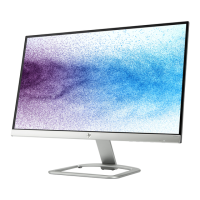
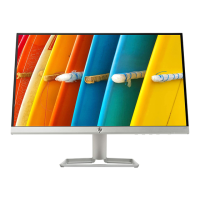
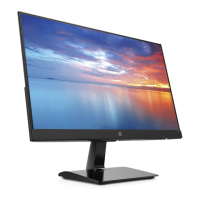
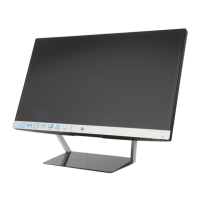
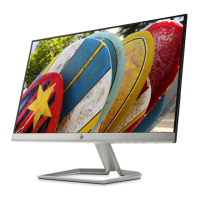
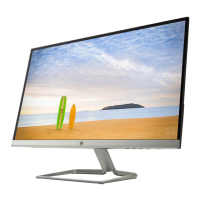
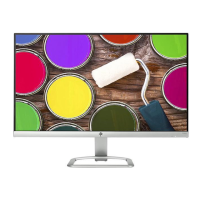
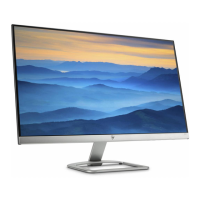
This document outlines the end-of-life disassembly instructions for the HP 22es 21.5-inch Display, a monitor designed for general use. The primary function of this document is to guide recyclers and treatment facilities in the proper selective treatment of components and materials, adhering to the EU directive 2002/96/EC on Waste Electrical and Electronic Equipment (WEEE).
The HP 22es 21.5-inch Display serves as a visual output device for computers and other compatible electronic equipment. Its core function is to render graphical and textual information, providing a user interface for various applications, entertainment, and productivity tasks. As a monitor, it is designed to be a passive display unit, receiving video signals from an external source and converting them into a visible image. The display utilizes Liquid Crystal Display (LCD) technology, which is a common method for creating flat-panel screens. This technology allows for a thin and relatively lightweight design compared to older display technologies like Cathode Ray Tubes (CRTs). The monitor is equipped with Printed Circuit Boards (PCBs) or Printed Circuit Assemblies (PCAs) that manage power distribution, video signal processing, and control the display's various functions. These internal electronic components are crucial for the monitor's operation, enabling it to interpret incoming data and present it visually. The display also incorporates external electrical cables and cords for power supply and data input, ensuring its connectivity and operational readiness.
The HP 22es 21.5-inch Display is designed for straightforward integration into a typical desktop computing environment. Its 21.5-inch screen size offers a comfortable viewing area for a wide range of activities, from office work and web browsing to multimedia consumption. The monitor's design likely includes standard video input ports, such as HDMI or VGA, allowing it to connect to various devices like desktop computers, laptops, and potentially gaming consoles. The presence of a base stand suggests that the monitor is intended for placement on a flat surface, such as a desk. The quick-release mechanism for the base stand indicates a user-friendly design for initial setup or relocation. This feature allows users to easily attach or detach the stand without requiring complex tools or extensive effort, enhancing the overall user experience. The monitor's aesthetic, as implied by the disassembly images, suggests a sleek and modern design, typical of contemporary display units. While specific user interface elements are not detailed, monitors of this type generally feature on-screen display (OSD) menus accessible via physical buttons, allowing users to adjust settings such as brightness, contrast, color temperature, and input source selection. These features contribute to a customizable viewing experience, enabling users to optimize the display for their specific preferences and environmental conditions. The internal structure, with its various components, is designed to provide stable and reliable performance throughout the product's lifespan.
From a user's perspective, the HP 22es 21.5-inch Display is largely a low-maintenance device. Routine maintenance typically involves external cleaning of the screen and casing to remove dust and smudges, using appropriate cleaning solutions and cloths to avoid damaging the display surface. The internal components are generally not user-serviceable, and any internal issues would typically require professional repair or replacement. However, the provided disassembly instructions are specifically tailored for end-of-life maintenance, focusing on the responsible recycling and disposal of the product. This detailed guide serves as a crucial maintenance feature for environmental sustainability. It outlines the necessary steps and tools for disassembling the monitor to isolate specific materials that require selective treatment, as mandated by environmental regulations. For instance, the instructions highlight the removal of Printed Circuit Boards (PCBs) or Printed Circuit Assemblies (PCAs) with a surface greater than 10 sq cm, as these often contain valuable or hazardous materials. Similarly, Liquid Crystal Displays (LCDs) with a surface greater than 100 sq cm are identified for selective treatment, acknowledging their unique material composition. The guide also specifies the handling of external electrical cables and cords, which are common components in electronic waste. The mention of tools like a SCREW DRIVER (Plum flower head), screwdriver, and Hex nut screwdriver (M5) indicates that the disassembly process, while detailed, is designed to be achievable with standard tools found in recycling facilities. The step-by-step instructions, including releasing the base stand, stripping screws from the rear cover, removing shielding, and separating the main board, provide a clear roadmap for efficient and environmentally sound processing. The emphasis on releasing materials and putting some by ESD (Electrostatic Discharge) underscores the importance of proper handling of sensitive electronic components during the recycling process to prevent damage or contamination. This comprehensive approach to end-of-life maintenance ensures that the monitor's components are managed responsibly, minimizing environmental impact and promoting resource recovery.
 General
| Display Size | 21.5 inches |
|---|---|
| Resolution | 1920 x 1080 (Full HD) |
| Panel Type | IPS |
| Aspect Ratio | 16:9 |
| Brightness | 250 cd/m² |
| Contrast Ratio | 1000:1 |
| Refresh Rate | 60 Hz |
| Viewing Angle | 178° horizontal / 178° vertical |
| Connectivity | VGA, HDMI |
| Color Support | 16.7 million colors |
| Response Time | 7 ms |

 To Next Page