This document, the "Windows Server® 2008 R2 and Windows Server® 2008 SP2 on HP Integrity Servers Hardware Administrator's Guide," provides comprehensive information for administering HP Integrity servers running the Windows Server operating system, specifically focusing on tasks and interfaces after installing Windows Solution 7.1.
Function Description:
The guide primarily covers hot-plug operations for PCI cards, management processor (MP) functionalities, and the Special Administration Console (SAC). Hot-plug operations allow for adding and removing PCI cards from HP Integrity servers without powering down the system. The Management Processor serves as a central control unit, providing access to the SAC console and EFI Shell, enabling machine configuration before OS installation, and offering various monitoring and control capabilities. The Special Administration Console is a primary Emergency Management Services (EMS) command-line environment within Windows Server, designed for managing system setup, installation, repair, and troubleshooting, especially in scenarios where the GUI is unresponsive.
Important Technical Specifications:
Hot-Plug Operations:
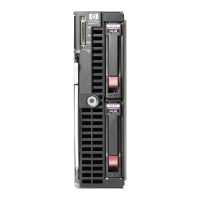
- Supported Servers: The guide details hot-plug procedures for various HP Integrity servers, including rx7640, rx8640, rx6600, BL860c, BL870c, and Superdome sx2000.
- Unsupported Servers: HP Integrity rx2660, rx2800 i2, BL860c, BL870c, and BL8x0 i2 servers do not support PCI card hot-plug addition or deletion.
- Card Compatibility: Some PCI cards, such as SA6402, SA6404, and SA5300, support hot-plug addition as a replacement, but not as a new installation. USB and VGA Graphics Combo Cards (A6869A, A6869B, and AD307A) do not support hot-plug addition at all.
- PCI Express Limitations: On rx3600 and rx6600 PCI Express-based Integrity servers, hot-plug operations on PCI Express slots 3 and 4 are disabled. Doorbell functionality for PCI-X slots 7, 8, 9, and 10 can be intermittent, requiring repeated attention button presses.
- Driver Requirement: For HP Integrity mid-range or high-end servers, the HPCSR OpRegion Driver (hpcsr2.sys, Version 1.1.0.0, dated 6/13/03 or later) must be installed for proper hot-plug functionality.
- Firmware Requirement: The server must have the latest version of the system firmware installed.
- Windows Native Support: Windows does not natively support I/O card online replacement; it requires a two-step process of hot-plug deletion followed by hot-plug addition.
- Hardware Location String (CBHSS): A numeric string indicating cabinet, bay, chassis, and slot number (e.g., 81107 for cabinet 8, bay 1, chassis 1, slot 07). For BL8x0 i2 server blades, a decimal value converts to hexadecimal to show slot and blade numbers (e.g., 0x0903018B for blade 1, slot 3).
Management Processor (MP):
- Access: Accessible via IP address using a terminal emulator (e.g., PuTTY), local RS-232C port, remote RS-232C port (with modem), or MP LAN port (Web Console or telnet).
- Serial Port Parameters (CA command):
- TERMINAL TYPE: Vt100 or HPterm.
- BAUD RATES: 300, 1200, 2400, 4800, 9600, 38400, 115200 bps (input and output data rates are the same).
- FLOW CONTROL: Hardware uses RTS/CTS; software uses Xon/Xoff.
- Modem Protocol (CA command): Bell (U.S. or simple mode) or CCITT (European standard, uses RTS/CTS signaling and Ring signal).
- LAN Configuration (LC command): Configures MP IP address, host name, subnet mask, gateway address, Web console port number, and link state.
- Inactivity Timeout (IT command):
- Maximum session inactivity timeout: 1,440 minutes (default 60 minutes).
- Maximum MP command interface inactivity timeout: 1,440 minutes (default 5 minutes).
- Flow control timeout: 0 to 60 minutes (0 for no timeout).
Special Administration Console (SAC):
- Environment: Primary EMS command-line environment hosted by Windows Server 2008 and Windows Server 2008 R2.
- Access: Through the Integrity iLO console menu, or via terminal emulation software like telnet and PuTTY for headless systems.
- Channels: Supports multiple channels for command prompts, setup logs (setuplog.txt, setupact.log, setuperr.log).
- Login: Command-prompt channels require valid login credentials.
Usage Features:
Hot-Plug Operations:
- Adding a PCI Card (Hardware Interface):
- Locate an empty slot.
- If power light is on, press the attention button to initiate power-off (LED blinks for 5 seconds; can be canceled by pressing attention button again).
- Wait for slot to power off (green power LED off).
- Open the Manual Retention Latch (MRL).
- Add the PCI card.
- Close the MRL.
- Press the attention button to initiate power-on (LED blinks for 5 seconds; can be canceled).
- Windows loads drivers or prompts for installation.
- Verify installation using Windows Device Manager.
- Removing a PCI Card (Software Interface - Preferred):
- Click "Safely Remove Hardware" icon in Windows.
- Wait for Windows notification that it is safe to remove.
- Open MRL.
- Remove the card.
- Close MRL.
- Removing a PCI Card (Hardware Interface):
- Locate the slot.
- Press the attention button (power LED flashes for 5 seconds; can be canceled).
- When green LED stops blinking and is off, it is safe to remove.
- Open MRL.
- Remove the card.
- Close MRL.
- Attention Button: Initiates hot-plug operations; location varies by server model (e.g., white bell-shaped on rx7640/rx8640, maroon on rx3600/rx6600/BL860c/BL870c).
- MRL Latch: Activates MRL sensor; opening turns off power to the slot.
- Power Indicator LED: Green LED indicates slot power status (on/flashing = powered, off = safe to add/remove).
- Attention LED: Solid orange indicates error if slot is already powered on; flashing indicates an empty slot.
Management Processor (MP) Commands:
- BP: Resets BMC passwords.
- CA: Configures local and remote serial port parameters (terminal type, baud rates, flow control, modem protocol, modem presence).
- CG: Generates RSA key pair or Self-Signed Certificate.
- CL: Views console log (up to 60 KB of history).
- CM: Enters command mode (switches from MP Main Menu to mirrored command interface).
- CO: Enters console mode (switches from MP Main Menu to mirrored console mode); CTRL+B returns to MP command interface.
- CSP: Connects to a remote MP over LAN; CTRL+] disconnects.
- DATE: Displays current date.
- DC: Resets all MP parameters to default (IP, modem, paging, command interface configurations).
- DF: Displays FRUID information (serial number, part number, model, name, version, manufacturer).
- DI: Disconnects remote/modem or LAN/WEB console users.
- FW: Activates MP firmware upgrade mode (via FTP).
- HE: Displays help for menu or command.
- ID: Displays and modifies SNMP contact/server information and SPU host name.
- IT: Configures inactivity timeout settings.
- LC: Configures LAN parameters (IP address, host name, subnet mask, gateway, Web console port, link state).
- LOC: Displays locator LED status.
- MA: Returns to MP Main Menu (same as CTRL+B).
- MR: Resets modem (sends AT Z command).
- MS: Displays modem status (DCD, CTS, DSR, RI signals).
- PC: Power Control (turns system power on/off; requires OS shutdown for graceful shutdown).
- PG: Configures pagers and sets triggering events.
- PS: Displays power management module status.
- RB: Resets BMC.
- RS: Resets system through RST signal (requires OS shutdown under normal operation; halts all processing).
- SA: Configures access options for LAN and remote/modem ports.
- SE: Logs in to the system on local or remote port (enters a system session).
- SL: Displays system event logs (SEL, forward progress, current boot, previous boot logs). Navigation: + (next block), - (previous block), Enter (next in selected direction), D (dump log), F (first entry), L (last entry), J (jump to entry), V (view mode config), ? (help), Q (quit).
- SMCLP: Switches to Server Management Command Line Protocol (SMASH) SM CLP interface (for rx2660, rx2800 i2, rx3600, rx6600, BL860c, BL870c, BL8x0 i2 only).
- SO: Configures security options and access control (login timeouts, password faults).
- SS: Displays system processor status.
- SYSREV: Displays firmware revision status.
- TC: System resets through INIT or Transfer of Control (TOC) signal (halts all processing, signals processors to dump state).
- TE: Sends messages to other terminals.
- UC: User Configuration (add, modify, re-enable, delete users; enable/disable security warnings; change passwords).
- VFP: Displays Virtual Front Panel summary.
- WHO: Displays list of MP connected users.
- X: Exits MP command interface and disconnects.
- XD: Diagnostics or Reset of MP (MP Parameter Checksum, I2C connection, LAN connectivity test, modem self-tests).
Special Administration Console (SAC) Commands:
- ch: Lists all channels.
- cmd: Creates Windows command-prompt channels (requires login credentials; ESC+TAB to switch; K to close unresponsive channels).
- crashdump: Manually generates a stop error message and forces a memory dump file.
- D: Dumps the kernel log.
- F: Switches between showing processes only or processes and threads in
t-list output.
- I: Sets or views IP address, subnet mask, and gateway for network interfaces.
- KPID: Ends a given process by PID.
- LPID: Lowers process priority.
- lock: Restricts access to EMS command-prompt channels.
- MPID MB-allow: Limits memory usage of a process.
- P: Switches paging on/off for
t command output.
- RPID: Raises process priority.
- reg_add: Allows registry edits from SAC.
- restart: Restarts the server.
- shutdown: Shuts down the server.
- T: Lists currently running processes and threads.
- ESC+TAB: Switches channels.
- ESC+TAB+0: Returns to the SAC channel.
- ch -?: Displays channel-management commands help.
- ? or help: Lists all available SAC commands.
Maintenance Features:
Hot-Plug Operations:
- Driver Verification: Crucial for successful hot-plug operations; the guide provides steps to verify and update the HPCSR OpRegion Driver via Windows Device Manager and the Online Reference page.
- Firmware Updates: Ensuring the latest system firmware is installed is a prerequisite for hot-plug additions/deletions.
- Error Handling: The guide describes expected behavior for attention LEDs (solid orange for powered-on slot error, flashing for empty slot) and warns against opening the MRL before the power LED stops blinking to prevent Machine Check Abort (MCA) errors.
- Troubleshooting: If hot-plug operations fail, verifying driver installation is the first troubleshooting step.
Management Processor (MP):
- Password Reset: BMC passwords can be reset using the BP command, the DC command (Reset Security Configuration), or by pressing the MP reset button on the server's back panel.
- Firmware Upgrade: The FW command activates firmware upgrade mode, allowing new MP firmware to be loaded via FTP.
- Diagnostics: The XD command provides simple checks for MP health and connectivity, including parameter checksum, I2C connection, LAN connectivity, and modem self-tests.
- Safe MP Reset: The XD command allows for safely resetting the MP without affecting server operation.
- Default Configuration: The DC command allows resetting all or a subset of MP parameters to their default values, useful for restoring known good configurations.
- Event Logging: The CL and SL commands allow viewing console output history and system event logs, which are critical for diagnosing system issues.
Special Administration Console (SAC):
- System Repair: SAC is designed for managing system setup, installation, and repair, especially when the GUI is unresponsive, offering a direct-to-kernel path.
- Troubleshooting: Commands like
crashdump, D (dump kernel log), and I (IP configuration) are vital for diagnosing and resolving system distress.
- Process Management: Commands like
KPID, LPID, MPID MB-allow, and RPID allow administrators to manage processes and their resource usage, which can be crucial for stabilizing a troubled system.
- Registry Edits: The
reg_add command enables registry modifications from SAC, providing a powerful tool for advanced troubleshooting.
- Setup Log Monitoring: SAC provides access to setup logs (
setuplog.txt, setupact.log, setuperr.log) during GUI-mode setup, allowing monitoring of progress and diagnosis of setup failures.

 Need help?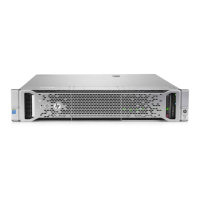



 To Next Page
 General