
 Need help?
Do you have a question about the HPE Aruba Instant On 1960 and is the answer not in the manual?
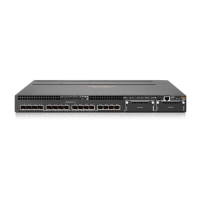
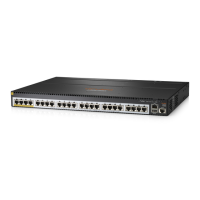
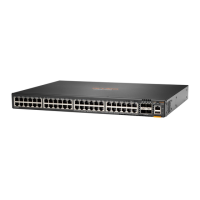
Graphic illustrations detailing disassembly steps and components requiring selective treatment.
This document outlines the disassembly procedures for the HPE Aruba Instant On 1960 48G 40p Class4 8p Class6 PoE 2XGT 2SFP+ 600W Switch (JL809A), a networking equipment product. The primary function of this document is to guide end-of-life recyclers and treatment facilities in the proper removal of components and materials that require selective treatment, adhering to the EU directive 2002/96/EC (WEEE). This ensures environmentally responsible disposal and recycling practices.
The HPE Aruba Instant On 1960 48G 40p Class4 8p Class6 PoE 2XGT 2SFP+ 600W Switch (JL809A) is a networking device designed to facilitate data communication within a network infrastructure. While the specific operational functions are not detailed in this disassembly guide, its classification as "Networking Equipment" implies its role in connecting various network devices, managing data traffic, and potentially providing Power over Ethernet (PoE) capabilities, given the "PoE" designation in its model name. The "600W Switch" further suggests a robust power delivery capacity, likely supporting numerous PoE-enabled devices. The presence of "2XGT" and "2SFP+" indicates support for high-speed uplink connections, essential for integrating into larger network backbones or connecting to servers. The "Instant On" branding typically implies ease of setup and management, catering to users who require straightforward deployment and operation without extensive IT expertise. The core function, therefore, revolves around providing reliable and efficient network connectivity, with a focus on ease of use and potentially advanced power delivery for connected devices.
While this document focuses on end-of-life disassembly, the implied usage features of the HPE Aruba Instant On 1960 switch can be inferred from its product category and model name. As a networking switch, its primary usage involves connecting multiple network devices such as computers, printers, IP phones, and wireless access points within a local area network (LAN). The "PoE" capability is a significant usage feature, allowing the switch to deliver both data and electrical power over a single Ethernet cable to compatible devices. This simplifies deployment for devices like IP cameras and wireless access points, eliminating the need for separate power outlets and adapters. The "Instant On" designation suggests a user-friendly interface and simplified configuration process, making it accessible for small to medium-sized businesses or users without dedicated IT staff. The presence of "48G" implies a high port density, enabling the connection of a large number of devices. The "2XGT" and "2SFP+" ports are likely used for high-speed uplinks to other switches, routers, or servers, providing robust bandwidth for demanding network applications. The "Class4" and "Class6" PoE classifications indicate support for different power levels, accommodating a wide range of PoE-powered devices. Overall, the switch is designed for reliable, high-performance network connectivity with an emphasis on simplified management and flexible power delivery options.
The document primarily details end-of-life disassembly, so it does not directly describe routine maintenance features. However, the structured disassembly process itself can be seen as a form of "maintenance" in the broader sense of product lifecycle management, ensuring that the device is handled responsibly at the end of its operational life. The selective treatment of specific components, such as Printed Circuit Boards (PCBs), batteries, and electrolytic capacitors, highlights the importance of proper handling to prevent environmental contamination and facilitate material recovery. The detailed steps for removing various parts, including the top cover, power supply, PoE board, fans, and main board, suggest a modular design that would likely simplify any potential repair or component replacement during the device's operational lifespan, although this is not explicitly stated. The requirement for specific tools like Phillips screwdrivers, diagonal pliers, and socket screwdrivers implies a standard approach to hardware maintenance and repair, allowing for common tools to be used. The emphasis on identifying and removing components requiring selective treatment underscores a commitment to sustainability, which can be considered a long-term maintenance aspect for the environment. While not traditional operational maintenance, the guide provides a framework for responsible end-of-life handling, which is a critical part of a product's overall maintenance lifecycle.
 General
| Model | HPE Aruba Instant On 1960 |
|---|---|
| Category | Switch |
| Ports | 24 or 48 Gigabit Ethernet ports |
| Layer | Layer 2+ |
| Uplink Ports | 4 SFP+ ports |
| PoE | Available on some models (PoE+) |
| Management | Cloud-managed with local web GUI |
| Features | VLAN, QoS |
| Mounting | Rack mountable |
| VLAN Support | Yes |
| Quality of Service | Yes |
| Security Features | Access control lists, 802.1X |
| Power Supply | Internal power supply |
| Operating Temperature | 0°C to 45°C (32°F to 113°F) |
| Operating Humidity | 5% to 95% non-condensing |



 To Next Page
