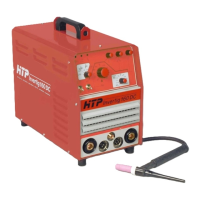
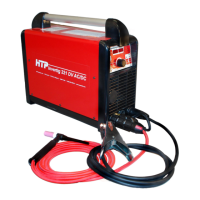
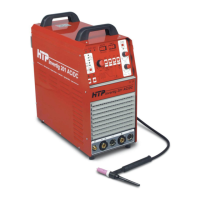
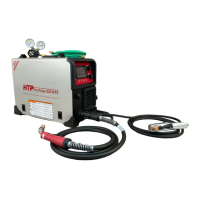
The InverArc 160 Plus is a versatile welding machine designed for both SMAW (stick) and GTAW (TIG) welding processes. It operates on single-phase power, accepting either 110V or 220V input, making it suitable for various power sources. For generator use, it requires a clean power generator with a minimum continuous rating of 6500 watts. When operating on 110/120V, a dedicated 20 amp circuit is recommended.
Technical Specifications:
- Input Power: 120V or 230V, Single Phase, 50/60Hz
- Maximum Input Amperage:
- 120V: 31.8A (Stick), 19.5A (TIG)
- 230V: 21.3A (Stick), 13.8A (TIG)
- Effective Input Power:
- 120V: 17.4A (Stick), 15.1A (TIG)
- 230V: 13.5A (Stick), 8.7A (TIG)
- Power Factor: 0.99
- Output Amperage:
- 120V: 10 to 125A
- 230V: 10 to 160A
- Max No-Load Voltage: 55V (80V)
- Duty Cycle (Stick & TIG):
- 120V: 30%@125A, 60%@95A, 100%@75A
- 230V: 40%@160A, 60%@125A, 100%@100A
- Protection Class: IP23
- Insulation Class: F
- Dimensions (L x W x H): 14.37" x 5.51" x 9.06"
- Weight: 17.64 Lbs.
General Characteristics & Usage Features:
The InverArc 160 Plus incorporates an IGBT (insulated gate bipolar transistor) power module and a microprocessor circuit. This advanced technology optimizes arc transfer regardless of load variation or welding cable impedance, resulting in several benefits:
- Lightweight and Compact Design: Enhances portability and ease of handling.
- Reduced Energy Consumption: Contributes to lower operating costs.
- Excellent Dynamic Response: Provides stable and responsive welding performance.
- Very High Power Factor and Yields: Maximizes efficiency.
- Better Welding Characteristics: Delivers smoother and more consistent welds.
- Ease of Use: Simplifies operation for both beginners and experienced welders.
The machine features forced air cooling with low-noise fans and sophisticated electronic overheat protection to prevent damage.
TIG Welding (Lift Start DC TIG):
The InverArc 160 Plus functions as a lift-start, DC TIG welder. To use this mode, you will need a TIG torch with a gas valve in the handle, a flowmeter, and a gas bottle. Amperage can be adjusted directly on the machine using the encoder knob, eliminating the need for a remote control.
Procedure for TIG Welding with Lift Start Ignition:
- Select TIG Mode: Use the Welding Mode Selection Switch (#5) to set the machine to TIG welding mode.
- Set Amperage: Use the encoder (#7) to select the desired welding amperage, which will be displayed on the Amperage Display (#6).
- Start Welding: Bring the tungsten electrode tip into contact with the workpiece at a slight slant. Touch the electrode against the workpiece, then lift the torch approximately 2 to 4mm away to initiate the arc.
- End Welding: Pull the arc away from the workpiece to stop the welding process.
Stick Welding:
The InverArc 160 Plus supports a wide range of stick welding electrodes for various material types and applications, including fast freeze, high elongation, high tensile strength, low tensile strength, easy slag removal, in-position, out-of-position, and high deposition rate rods. Most of these rods work on Direct Current.
Procedure for Stick Welding:
- Select Stick Mode: Use the Welding Mode Selection Switch (#5) to set the machine to Stick welding mode.
- Set Amperage: Use the encoder (#7) to select the desired welding amperage, displayed on the Amperage Display (#6).
- Striking an Arc: The InverArc 160 Plus offers two methods for striking an arc:
- Knocking Method: Hold the electrode upright, touch it to the workpiece, and quickly lift it by about 2 to 4mm to start the arc. This method is preferred for brittle or hard steel.
- Lifting Method: Scrape the electrode against the workpiece to strike an arc, then slightly lift it off the workpiece to weld.
- End Welding: Pull the arc away from the workpiece to stop the welding process.
- Amperage Selection: Electrode boxes typically provide amperage ranges. A good starting point is the middle of the recommended range. Increase amperage if the rod sticks, and decrease it if there's excessive spatter.
- Polarity: Specifications will indicate DCEP (Direct Current Electrode Positive) or DCEN (Direct Current Electrode Negative).
- DCEP (Reverse Polarity): Electrode holder and cable connected to the positive output receptacle (#8); ground clamp and cable connected to the negative output receptacle (#1).
- DCEN (Straight Polarity): Electrode holder and cable connected to the negative output receptacle (#1); ground clamp and cable connected to the positive output receptacle (#8).
- Rod Diameter and Amperage (7018 example): A general rule for 7018 rods is approximately 1 amp per 0.001" of rod diameter.
- 3/32" (0.094"): ~94 amps
- 1/8" (0.125"): ~125 amps
- 5/32" (0.156"): ~156 amps
- These are approximations and may vary slightly by manufacturer and welding position.
Common Stick Welding Electrode Types:
- 6010: Cellulosic coating, fast freeze puddle, deep penetration, hard slag removal, less elongation, not the most attractive welds. Runs All Position (including vertical up and down). Forgiving for contamination. Excellent for root passes.
- 7018: Low hydrogen coating, flows nicely, popular rod. Builds a thick, easy-to-remove slag layer, medium penetration, excellent bead appearance, puddle stays wet and fluid longer than 6010, higher tensile strength. Good for maintenance welding and X-ray quality structural welds.
- 6013: Cellulosic coating, runs on older AC stick welders. Often called "farmer's rod."
- 7014: Similar properties to 7018, but designed for older, simpler stick welders.
Controls & Connections:
The front panel features:
- Negative Output Receptacle
- Remote Control Connection
- Power LED
- Alarm LED
- Welding Mode Selection Switch
- Amperage Display
- Encoder (for amperage adjustment)
The rear panel includes:
8. Positive Output Receptacle
9. Power Switch
10. Power Cable
11. Fan/Fan Grid
Maintenance Features:
- Warranty: HTP America, Inc. provides a three-year warranty on the welding machine for defects in material and workmanship under normal use. The electrode holder and ground clamp have a ninety-day warranty. The warranty is void if the warranty card is not sent within fifteen days of purchase. The warranty can be transferred with HTP's approval and a transfer fee, requiring notification within fourteen days of sale and contact information for both original and new owners, along with the machine's serial number.
- Overheat Protection: Sophisticated electronic overheat protection prevents damage to the machine.
- Cable Inspection: Regularly inspect cables for wear, cracks, and damage. Replace cables with excessively worn insulation to prevent lethal shock.
- Power Supply Disconnection: Always disconnect the power supply before working on the welding machine or opening it. If opening the machine, wait five minutes for capacitors to discharge to avoid electric shock.
Safety Suggestions:
- Pacemakers: Individuals with pacemakers should not use or be near the InverArc 160 Plus when in use.
- UV Radiation: Electric arc welding produces harmful ultra-violet rays. Wear heavy, pocket-less, long-sleeved shirts, cuff-less trousers, high-topped work shoes, and a full-faced welding helmet with a number ten (10) or darker shade and a cap.
- Fire Hazards: Welding produces flying sparks and hot material. Wear non-oily/non-greasy, flameproof welding gloves. Do not weld on flammable surfaces (wood, plastic tile, carpeted floors). Concrete or masonry floors are safest. Do not weld on pressurized containers or containers that have held combustibles without proper cleaning (refer to AWS Standard A6.01). Keep a fire extinguisher nearby. Avoid carrying fuel (lighters, matches) on your person.
- Toxic Fumes: Ensure adequate ventilation. Do not weld on galvanized zinc, cadmium, lead, or beryllium materials unless ventilation is sufficient. Avoid welding near degreasing or spraying operations, as chlorinated hydrocarbon vapors can react with UV rays to form toxic phosphine gas. Stop welding immediately if eye, nose, or throat irritation occurs, as this indicates inadequate ventilation.
- Hearing Damage: Protect your hearing from noise.
- Burns: Keep the welding gun, torch, or arc welding clamp away from your body and others.
- Electric Shock: Disconnect power before working on the machine. Do not work with damaged cables. Do not touch bare electrical parts. Ensure all panels are secured. Insulate yourself from ground (workbench, floor) with insulating footwear and gloves. Keep the work area and equipment clean and dry. Replace damaged power cables immediately. If opening the machine, disconnect power and wait five minutes for capacitors to discharge.
Refer to ANSI Standards Z49.1, Z87.1, AWS Standard A6.0, NFPA Standards 51 and 51B, CGA Pamphlet P-1, and OSHA Standard 29 CFR, Part 1910, Subpart Q for more safety information.

 Need help?
 General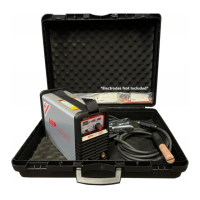

 To Next Page