29
8. If correct voltage is present, check the voltage at the right-hand side of the thermostat,
then the left-hand side of the thermostat above and continue this pattern to the
uppermost thermostat.
9. If at any point there is voltage on the left-hand side and there is no voltage on the
right-hand side of the same thermostat, replace that hi-limit thermostat.
10. If at any point there is voltage on the right-hand side of a thermostat and there is no
voltage on the left-hand side of the thermostat above it, check the wiring and
connections.
11. If all voltage readings are good and the contactor is not pulled in, check the wiring and
connections between the right-hand side of the uppermost thermostat and the magnetic
contactor coil.
12. If the wiring and connections are good, replace the magnetic contactor.
Check the Thermistor:
1. The thermistor is a temperature sensing device that changes resistance with changes in
temperature. It is designed to register 150,000Ω at 25°C (77°F).
2. Set the unit to diagnostic mode by pressing and releasing the UP and DOWN buttons
simultaneously.
3. With a thermometer, measure the temperature of the cold water and hot water at a
fixture.
4. Compare the displayed inlet temperature (i###) to the measured cold water
temperature and the displayed outlet temperature (o###) to the measured hot water
temperature. If either of these readings is significantly different, continue with the
next step. Otherwise, proceed to Check the Flow
Meter.
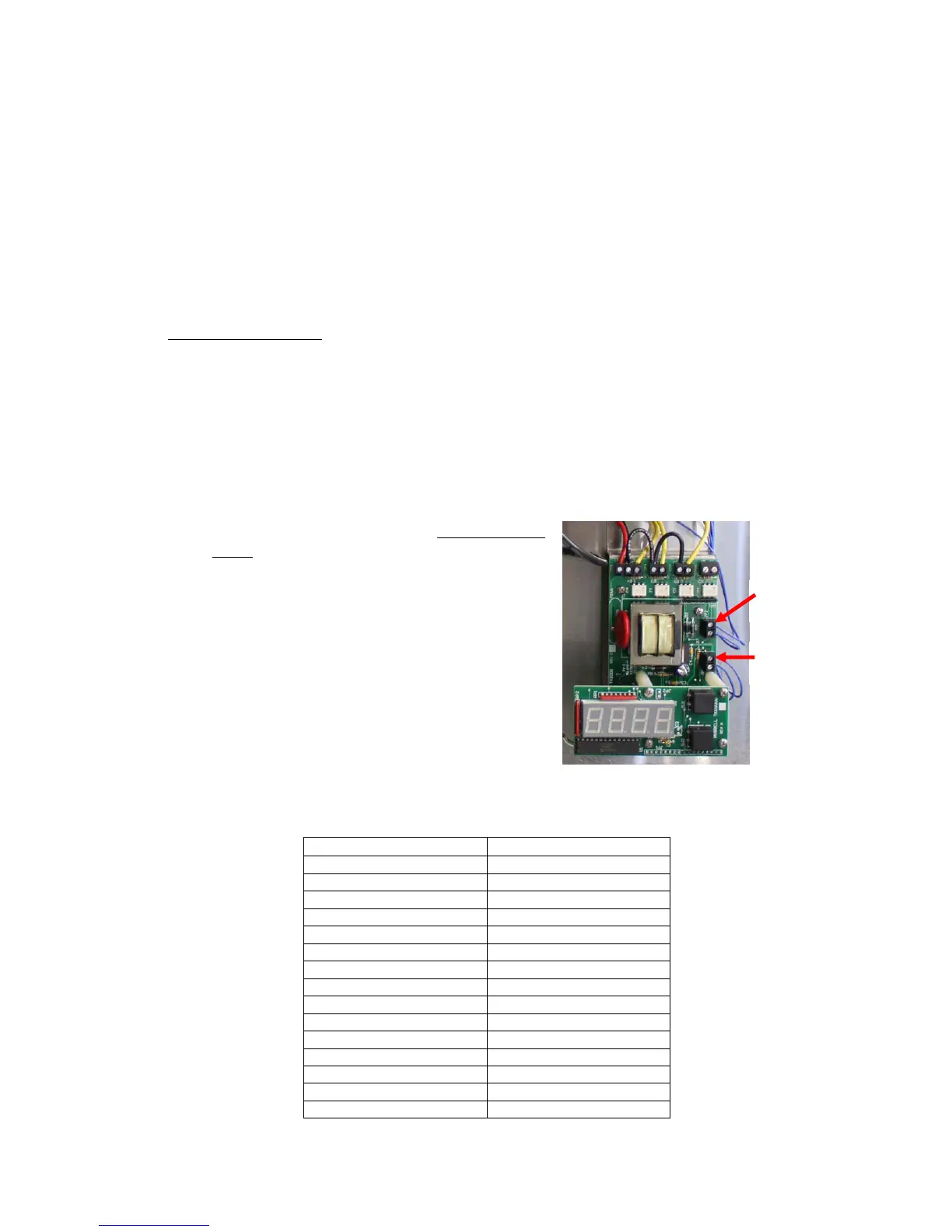
5. At the right hand side of the temperature
controller are two terminal blocks. Disconnect
the wires from the uppermost terminal block
(outlet thermistor). Using the multi-meter probes
with the setting at OHMS or Ω, place one probe
on the end of one wire and the other probe on the
end of the other wire. An ohms reading
consistent with the chart below for the
approximate temperature of the water should be
indicated. NOTE: Alligator clips should be used.
Holding the wires in your hands will give a false
reading. Reconnect the wires.
Thermistor Chart (150,000Ω @ 25°C (77°F))
Temperature, °F (°C)
Ohms,


 To Next Page