EasyManua.ls Logo

Husqvarna DRT900H - User Manual

Husqvarna DRT900H
28 pages
Print Icon
To Next Page IconTo Next Page
Loading...
Owner's Manual / 96093001200 / 2009-12
DRT900H
532 43 08-18

Other manuals for Husqvarna DRT900H

Questions and Answers

Summary

Safety Rules and Guidelines

Training and Preparation

Safety guidelines for operator training and pre-operation checks.

Operation Safety Practices

Essential safety rules and precautions during tiller operation.

Maintenance and Storage Safety

Safety precautions for maintaining and storing the tiller.

Important Safety Symbols

Explanation of safety symbols and warnings used in the manual.

Product Information and Responsibilities

Product Specifications Overview

Details on gasoline capacity, oil type, and spark plug specifications.

Customer Responsibilities

User obligations for safe operation, maintenance, and adherence to manual.

Assembly Instructions

Tools and Operator Position

Lists required tools and defines operator's position for assembly.

Hardware and Unpacking Procedures

Details hardware pack contents and safe unpacking instructions.

Handle Assembly Installation

Step-by-step guide to attach and secure the tiller handle assembly.

Connecting Cables and Shift Rod

Instructions for attaching clutch cable and connecting shift rod.

Final Assembly Checks and Adjustments

Removing from crate, setting tire pressure, and adjusting handle height.

Operation Guide

Tiller Controls and Symbols

Familiarization with tiller components, controls, and operational symbols.

Using and Stopping the Tiller

Instructions on operating controls, starting, and stopping the tiller.

Tine, Depth, and Drag Stake Control

How to operate tines, adjust depth stake, and drag stake.

Tilling and Cultivating Techniques

Effective methods for tilling, cultivating, turning, and handling.

Transporting and Engine Starting

Procedures for transporting the tiller and starting the engine.

Fueling and Tilling Tips

Guidance on adding fuel and helpful tilling hints for performance.

Wheel Adjustment for Cultivating

Instructions for adjusting wheel position during cultivation.

Maintenance Procedures

Maintenance Schedule and Checks

Overview of maintenance tasks, schedule, and pre-use checks.

Engine Lubrication and Air Filter

Procedures for engine oil, lubrication, and air filter maintenance.

Engine Oil Change and Cooling System

Steps for changing engine oil and maintaining the cooling system.

Spark Plug, Transmission, and Cleaning

Spark plug replacement, transmission lubrication, and general cleaning.

Service and Adjustments

Handle and Carburetor Adjustments

Instructions for adjusting handle height and carburetor.

Wheel and Belt Guard Service

Procedures for tire care, wheel removal, and belt guard service.

Drive Belt Replacement and Adjustment

Steps for replacing and adjusting the ground drive belt.

Tine Replacement and Care

Guide to inspecting, replacing, or straightening tiller tines.

Storage Instructions

Tiller and Engine Storage Preparation

Preparing the tiller, engine oil, and cylinder for storage.

Fuel System Storage Precautions

Critical instructions for safely storing the fuel system.

Troubleshooting Guide

Starting and Performance Issues

Diagnosing and resolving starting, power, and overheating problems.

Tilling and Handling Problems

Addressing bounce, laboring, and tine rotation issues.

Gear Shifting and Shut-off Issues

Resolving gear shifting problems and unexpected engine shut-off.

Repair Parts Identification

Handle Assembly Parts

List and diagram of parts for the handle assembly.

Mainframe and Transmission Parts

Parts diagrams for mainframe (left/right) and transmission.

Tine Shield and Assembly Parts

Parts for the tine shield and tine assembly.

Decals Identification

List of all decals and their locations on the tiller.

Service Notes

General Service Information

Miscellaneous notes and information pertaining to service.

Summary

Safety Rules and Guidelines

Training and Preparation

Safety guidelines for operator training and pre-operation checks.

Operation Safety Practices

Essential safety rules and precautions during tiller operation.

Maintenance and Storage Safety

Safety precautions for maintaining and storing the tiller.

Important Safety Symbols

Explanation of safety symbols and warnings used in the manual.

Product Information and Responsibilities

Product Specifications Overview

Details on gasoline capacity, oil type, and spark plug specifications.

Customer Responsibilities

User obligations for safe operation, maintenance, and adherence to manual.

Assembly Instructions

Tools and Operator Position

Lists required tools and defines operator's position for assembly.

Hardware and Unpacking Procedures

Details hardware pack contents and safe unpacking instructions.

Handle Assembly Installation

Step-by-step guide to attach and secure the tiller handle assembly.

Connecting Cables and Shift Rod

Instructions for attaching clutch cable and connecting shift rod.

Final Assembly Checks and Adjustments

Removing from crate, setting tire pressure, and adjusting handle height.

Operation Guide

Tiller Controls and Symbols

Familiarization with tiller components, controls, and operational symbols.

Using and Stopping the Tiller

Instructions on operating controls, starting, and stopping the tiller.

Tine, Depth, and Drag Stake Control

How to operate tines, adjust depth stake, and drag stake.

Tilling and Cultivating Techniques

Effective methods for tilling, cultivating, turning, and handling.

Transporting and Engine Starting

Procedures for transporting the tiller and starting the engine.

Fueling and Tilling Tips

Guidance on adding fuel and helpful tilling hints for performance.

Wheel Adjustment for Cultivating

Instructions for adjusting wheel position during cultivation.

Maintenance Procedures

Maintenance Schedule and Checks

Overview of maintenance tasks, schedule, and pre-use checks.

Engine Lubrication and Air Filter

Procedures for engine oil, lubrication, and air filter maintenance.

Engine Oil Change and Cooling System

Steps for changing engine oil and maintaining the cooling system.

Spark Plug, Transmission, and Cleaning

Spark plug replacement, transmission lubrication, and general cleaning.

Service and Adjustments

Handle and Carburetor Adjustments

Instructions for adjusting handle height and carburetor.

Wheel and Belt Guard Service

Procedures for tire care, wheel removal, and belt guard service.

Drive Belt Replacement and Adjustment

Steps for replacing and adjusting the ground drive belt.

Tine Replacement and Care

Guide to inspecting, replacing, or straightening tiller tines.

Storage Instructions

Tiller and Engine Storage Preparation

Preparing the tiller, engine oil, and cylinder for storage.

Fuel System Storage Precautions

Critical instructions for safely storing the fuel system.

Troubleshooting Guide

Starting and Performance Issues

Diagnosing and resolving starting, power, and overheating problems.

Tilling and Handling Problems

Addressing bounce, laboring, and tine rotation issues.

Gear Shifting and Shut-off Issues

Resolving gear shifting problems and unexpected engine shut-off.

Repair Parts Identification

Handle Assembly Parts

List and diagram of parts for the handle assembly.

Mainframe and Transmission Parts

Parts diagrams for mainframe (left/right) and transmission.

Tine Shield and Assembly Parts

Parts for the tine shield and tine assembly.

Decals Identification

List of all decals and their locations on the tiller.

Service Notes

General Service Information

Miscellaneous notes and information pertaining to service.

Overview

This document is an owner's manual for the Husqvarna DRT900H walk-behind powered rotary tiller, providing comprehensive instructions for its safe operation, assembly, maintenance, and troubleshooting.

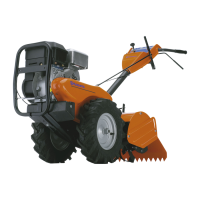
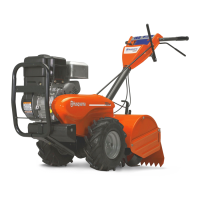
The Husqvarna DRT900H is a robust walk-behind powered rotary tiller designed for various soil preparation tasks, from deep tilling to light cultivating. Its primary function is to break up, turn over, and aerate packed soil, making it suitable for preparing garden beds, cultivating between rows, and clearing unwanted vegetation. The tiller is equipped with both forward and counter-rotating tine drive positions, offering versatility for different soil conditions and desired results.

For operation, the tiller features a SHIFT LEVER to select transmission gears, including "F" (forward), "N" (neutral), and "R" (reverse). The THROTTLE CONTROL allows the operator to adjust engine speed, which directly influences tilling depth and speed. A CHOKE CONTROL is provided for starting a cold engine. The DRIVE CONTROL BAR engages the tines and wheels, initiating movement and tilling action. Releasing this bar immediately stops the tiller, a crucial safety feature.

The DEPTH STAKE is a key component for controlling how deep the tiller digs. It can be raised for increased tilling depth or lowered for shallow cultivating and easier transport. The DRAG STAKE works in conjunction with the depth stake, particularly in forward rotating till mode, to control forward speed and prevent the tiller from running away. For leveling the tilled soil, the tiller includes a LEVELING SHIELD. OUTER SIDE SHIELDS are adjustable to protect small plants from being buried during cultivation. The RECOIL STARTER HANDLE is used to manually start the engine.

The manual emphasizes several usage features for optimal performance and safety. Before starting, operators are instructed to thoroughly inspect the work area for foreign objects and ensure all controls are disengaged and in neutral. Fueling should be done outdoors with extreme care, using an approved fuel container, and never near a hot or running engine. The manual highlights the importance of wearing appropriate footwear and safety glasses during operation.

When tilling, the operator can choose between counter-rotating and forward-rotating tine positions. Counter-rotating tines are generally used for breaking new ground or hard-packed soil, while forward-rotating tines are better suited for cultivating or tilling pre-tilled or softer ground. The manual advises against overloading the machine by tilling too deep or too fast. It also provides tips for turning the tiller, suggesting releasing the drive control bar, moving the throttle to "SLOW," shifting to "F," lifting the handle to raise the tines, and swinging the handle in the desired direction. For cultivating, it recommends using the forward rotating tine drive for soft ground and cultivating up and down rows at a speed that uproots weeds effectively.

The tiller's design allows for handle height adjustment to suit different operators and tilling conditions. The wheels can also be adjusted outward on the axle for increased stability, especially in rough conditions or during cultivation.

Maintenance is crucial for the longevity and safe operation of the DRT900H. The manual provides a detailed maintenance schedule, including checks for engine oil level, oil pivot points, spark arrester/muffler, air screen, air cleaner cartridge, engine cylinder fins, and spark plug replacement.

Engine oil maintenance involves checking the oil level frequently and changing the oil every 25 hours or at least once a year. The manual specifies the use of high-quality detergent oil with API service classification SG-SL and provides an SAE viscosity grade chart based on ambient temperature. Instructions for changing the engine oil include warming the engine, using a funnel to prevent spills, removing the drain plug, tipping the tiller to drain the oil, and refilling with new oil.

The air filter should be serviced more often in dusty conditions, with replacement recommended every 100 hours or annually. Cleaning involves removing the cover and cartridge, gently tapping the cartridge to remove dirt, and replacing it if very dirty. The manual explicitly warns against using petroleum solvents, pressurized air, or oiling the cartridge.

The cooling system, being air-cooled, requires frequent cleaning of the air screen with a stiff-bristled brush, and periodic removal of the blower housing to clean cylinder fins and ensure they are free of dirt and chaff. The spark plug should be replaced at the beginning of each tilling season or every 50 hours.

Transmission maintenance includes lubricating the right-hand side gear case grease fitting once a season with EP #1 Grease. Cleaning the tiller is recommended when the engine and transmission are cool, avoiding pressurized water on gasket areas, engine muffler, air filter, and carburetor.

Tine replacement is addressed, with instructions to check tines for sharpness, wear, and bending. If the gap between tines exceeds 3-1/2 inches, they should be replaced or straightened. The manual also suggests switching bolted tine and hub assemblies between sides to extend their life.

Belt maintenance involves checking and adjusting the ground drive belt tension. Instructions are provided for replacing the ground drive belt, emphasizing the correct placement of the belt in the grooves of the transmission and engine pulleys, and around the idler pulley.

For storage, the manual advises preparing the tiller if it won't be used for 30 days or more. This includes draining the fuel tank, running the engine until the fuel lines and carburetor are empty (unless using a fuel stabilizer), draining and replacing engine oil, and preparing the cylinder(s) by removing the spark plug, adding oil, and slowly pulling the starter handle. The tiller should be cleaned thoroughly, inspected for damage, and stored indoors under a protective cover that allows for air circulation. It is crucial never to store the tiller with gasoline in the tank inside a building where ignition sources are present, and to allow the engine to cool before storing.

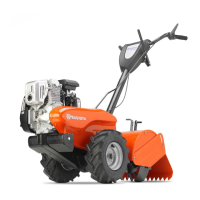
Husqvarna DRT900H Specifications

General IconGeneral
Engine BrandHonda
Engine Displacement160 cc
Engine ManufacturerHonda
Engine Type4-Cycle
Fuel TypeGasoline
Number of Tines4
Number of Forward Speeds1
Number of Reverse Speeds1
Tilling Width17 inches
Transmission TypeBelt / Chain

Related product manuals