E & OE Instructions Part number IN1141 Ed B
5
© EUROHEAT DISTRIBUTORS (H.B.S) LTD. Nov 2006
Choice Of Fuels
Wood
All wood will burn slightly differently, but the most important differences between woods is their moisture
content. Until the moisture has been driven off from the wood it will remain below its combustion temperature.
When the outer skin has dried and beginning to burn, much of this heat energy will be wasted having to boil
off the water remaining in the core of the wood. Copious amounts of water vapour, in all but the most insulated
flue, will condense, and mix with the products of combustion to form creosote and other undesirable substances
which will eat away the fabric of the flue, and eventually build up to block the flue. At any time this build up of
tar will be capable of causing a chimney fire.
The advice to burn only "dry" wood is sometimes confusing because the atmospheric moisture will prevent wood
ever becoming "dry". It is acceptable to burn wood with a moisture content of less than 20%, which can be
achieved by splitting the wood, stacking it so as to allow air to circulate within the stack and storing it under cover
for between 18 months and 30 months, depending on prevailing climatic conditions. The use of a wood moisture
content meter will confirm the amount of water remaining in the wood easily. The practice of drying wood by the
stove should be discouraged, firstly because it should be unnecessary, and secondly because stored wood will
invariably become the home to many varieties of insects, many of whom enjoy eating wood. To introduce them
into your house and encourage them with heat and time to make new homes in your furniture and structural
timbers is not recommended.
Smokeless Coal
We recommend burning deep mined anthracite, a natural hard coal which is classified as being a smokeless
fuel; specifying the sizes of “small nuts” or “large nuts” will give most visually attractive and efficient burning.
Smaller sizes than this will tend to choke the air flow too easily making long burning times without attention
problematic. Various manufactured smokeless coals are available giving differing burning characteristics and the
manufacturers or your coal merchant will advise you as to their suitability for stoves. The difficulties and dangers
associated with burning ordinary bituminous coal (house coal) with its relatively high volatile content make it
totally unsuitable and potentially dangerous for burning in any stove.
Lignite (also known as solid mineral fuel)
Lignite is obtainable in briquette form and is best described as young coal. It behaves very much like coal and
should be burned as smokeless manufactured coal. However it is not considered an approved smokeless coal.
Peat
Peat burns very well, but it is bulky and its distinct aroma will pervade your home and everything in it, but
otherwise peat can be burned as wood.
DO NOT BURN petroleum based fuels such as petro-coke, they may seriously damage your stove. The manufacturers
of other blended coal products, containing a proportion of petro-coke, should be approached to confirm the
suitability of the product for use within an enclosed appliance that does not have a chrome steel grate.
Smoke control area`s
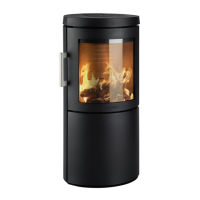
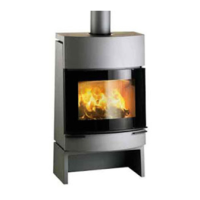
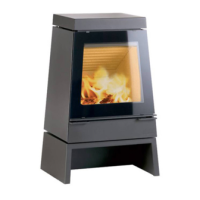
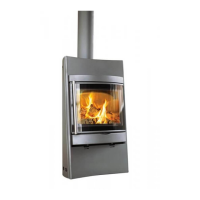
The Hwam models Beethoven, Vivaldi, Mozart, Ravel and Hwam 30 are only considered suitable for exemption
under the Clean Air Act when burning untreated dry wood. The appliance should only be used to burn wood or
authorised fuels. For details of authorised fuels that are suitable for the appliance please contact your appliance
distributor.
Always riddle the grate before putting on loadings of coal to give the initial release of gases sufficient air with
which to burn; failure to do so may allow the stove and flue to fill with gases ready to ignite.
A stove is very much safer than an open fire, but if you have children or infirm people in the house please ensure
it is suitably guarded, and consideration should also be given to accidental contact with the stove if you are
entertaining with a busy house full of guests.



 To Next Page