If, while trying on the helmet, it does not perform satisfactorily for just one of these criteria, you should try
another size or another model.
When compared with the jet, or open-face helmet, a full-face helmet also guarantees protection for the chin
area. Consider this carefully when you are choosing your helmet.
Never purchase a second-hand helmet, even it the price is good. There is no way of discerning its real
conditions (whether it has been involved in an accident, etc.).
How to try on a helmet with headset
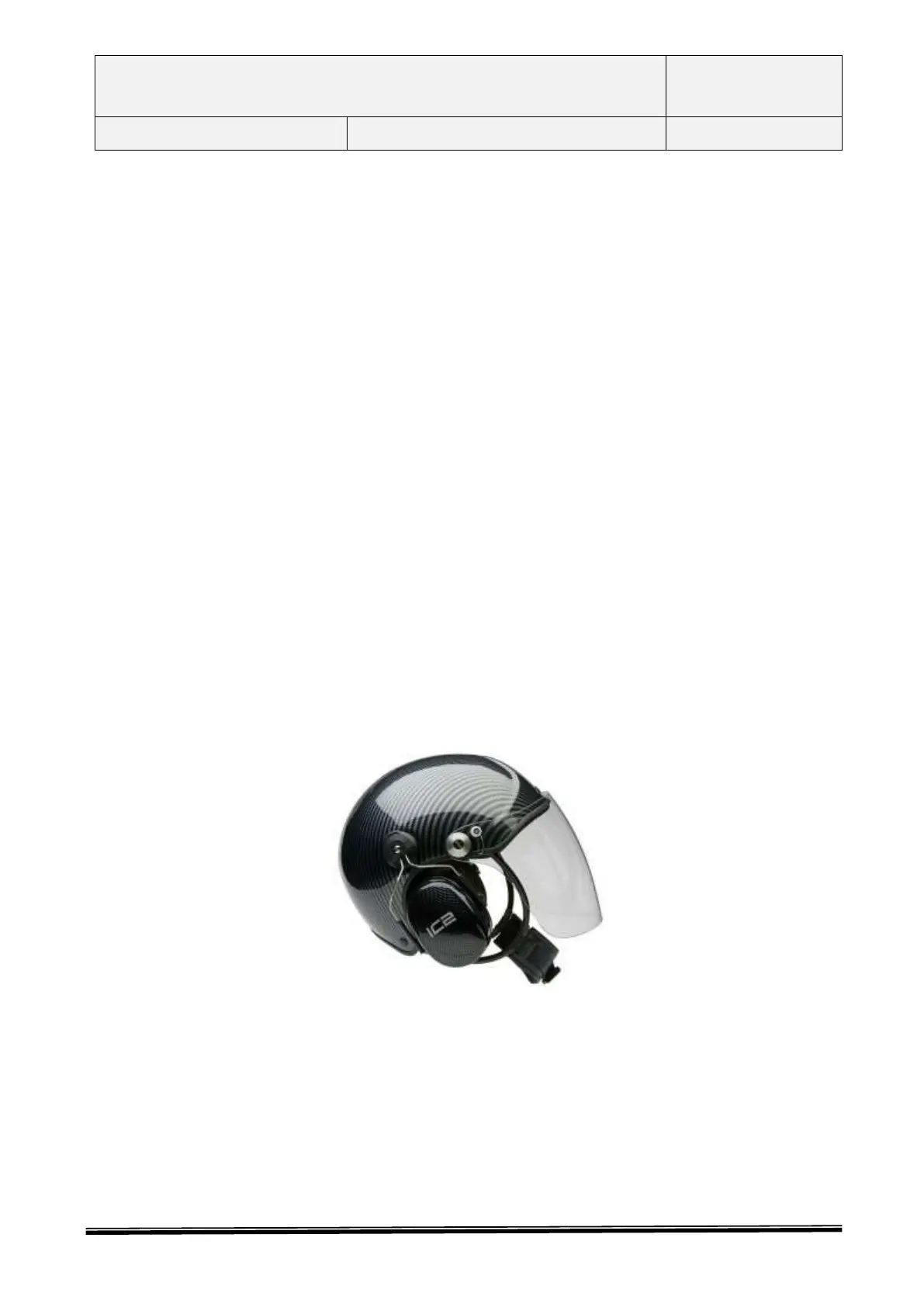
When you are trying on a helmet whose shell has an opening in correspondence with the ears, because they
are designed to be used with headsets (whether for noise reduction or radio communications), it is essential
to fasten the chinstrap correctly and position the headphone cups (swing them down into the closed
position) over the ears.
In fact, if these helmets are worn without headphones, a large portion of the contact surface, which contributes
considerably to the helmet’s stability on the head, is missing.
So if you try on the helmet with the headphone cups in the open position, the helmet will feel unstable.
In addition, the headphones are part of the certification, and so a helmet of this type worn without
headphones cannot be considered as certified.
Structure of the TZ helmet
Outer shell
TZ is made with an outer shell in 3mm polycarbonate to ensure the highest possible standards of safety.
Polycarbonate gives the outer shell high perforation resistance, elasticity, and lightness.
Crushable foam inner shell
The thick inner polystyrene shell enhances the safety and protection offered by TZ and ensures compliance
with the stringent penetration test that is part of EN 966 certification.
In the case of impact, it is likely that the inner shell will be deformed or damaged, and in this case the helmet
should be replaced. This is part of the helmet’s intrinsic function. In fact, polystyrene is easily deformable, and
in this context its function is to absorb shock by means of deformation and/or partial destruction. A more rigid
material would not have the effect of dissipating impact energy, and so it would transmit all the shock energy
to the head.


 To Next Page