Need help?
Do you have a question about the Icom IC-706 and is the answer not in the manual?
Position the base unit adapter, ensuring pogo pins align with the half holes on the edge.
Push the base unit adapter into place and fix it using the thumb screw.
Confirm that the pogo pins precisely connect to the edge connector of the base unit adapter.
Slide the head unit adapter in until it is secured by the original locking mechanism.
Insert the HDMI cable and then power on the device to complete the setup.
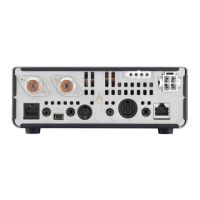
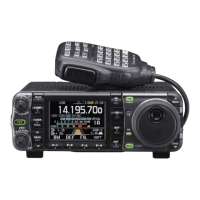
This document describes the DM5AL LAB ICOM IC-706-HDMI Separation Kit, a device designed to separate the display unit from the base unit of compatible ICOM transceivers. This separation allows for more flexible installation options, enabling the user to place the transceiver's main body in a convenient location while having the display unit accessible for operation. The kit facilitates this separation by converting the proprietary connection between the two units into a standard HDMI cable connection, offering a widely available and easy-to-use solution for extending the distance between the display and base units.
The primary function of this separation kit is to enable remote placement of the ICOM transceiver's display unit. By using a standard HDMI cable, users can position the display unit at a comfortable viewing and operating distance from the main transceiver body, which might be stored out of sight or in a less accessible location. This is particularly useful in mobile installations, cramped operating environments, or when integrating the transceiver into a larger radio setup where space is at a premium. The kit essentially acts as an interface, translating the signals between the transceiver's base unit and its display unit to be carried over an HDMI cable. This design choice leverages the widespread availability and robust nature of HDMI cables, making it easy for users to find suitable cables of various lengths to meet their specific installation needs.
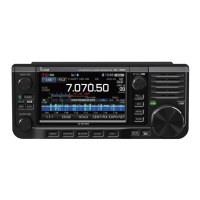
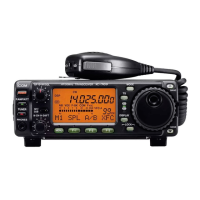
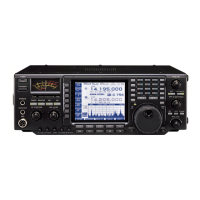
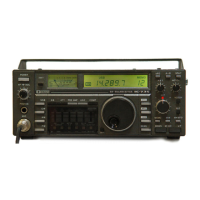
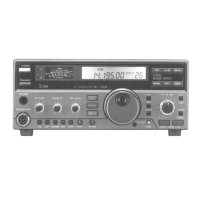
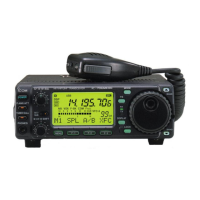
The kit is compatible with several ICOM transceiver models, specifically the ICOM IC-703, ICOM IC-703 Plus, IC-706, IC-706MkII, and IC-706MkIIG. This broad compatibility ensures that a range of ICOM users can benefit from the enhanced flexibility offered by the separation kit.
Key usage features of the DM5AL LAB ICOM IC-706-HDMI Separation Kit include its reliance on standard HDMI cable connectors. This is a significant advantage as HDMI cables are readily available in various lengths and are generally robust. The use of a standard cable type simplifies installation and replacement, as users do not need to source specialized or proprietary cables. However, the manual notes that the quality of the HDMI cable can affect transmit quality, with cheaper cables potentially introducing weak digital noise during transmission. This suggests that while standard cables are used, selecting a good quality HDMI cable is recommended for optimal performance, especially in transmit mode.
Another notable feature is the inclusion of an additional power button on the base unit adapter. This is a thoughtful addition that enhances usability, particularly when the base unit is installed in a less accessible location. Having a power button directly on the adapter means the user can power the transceiver on or off without needing to reach the main transceiver body, further contributing to the convenience of a separated setup. This small but significant detail improves the overall user experience by maintaining essential control functions at the point of interaction with the separated display unit.
The installation process for the separation kit is designed to be straightforward, though it requires careful attention to detail. The manual provides clear, step-by-step instructions accompanied by illustrative pictures to guide the user. The process begins with ensuring the transceiver's power is removed, a critical safety measure. The base unit adapter is positioned first, with specific instructions to align its pogo pins precisely with "half holes" on the edge of the adapter. This precise alignment is crucial for establishing proper electrical contact. Once positioned, the base unit adapter is secured with a thumb screw. The manual emphasizes checking the pogo pin alignment to ensure it points exactly to the edge connector of the base unit. Following this, the head unit adapter is inserted until it is fixed by the original locker mechanism of the transceiver's display unit. Finally, an HDMI cable is inserted to connect the two adapters, and the device can then be powered on. The visual aids in the manual are particularly helpful for ensuring correct alignment and secure fitting of the components.
Regarding maintenance, the manual primarily focuses on the correct installation procedure to ensure proper functioning. There are no specific maintenance features or routines described for the separation kit itself, implying that once correctly installed, it is designed to be a reliable, low-maintenance component. The main "maintenance" consideration highlighted is the impact of HDMI cable quality on performance. Users are advised that "weak digital noise may exist during transmission" with "some cheap HDMI cables." This suggests that if performance issues, particularly related to transmit quality, are observed, checking or upgrading the HDMI cable might be a relevant troubleshooting step. This implicitly guides users towards selecting a good quality HDMI cable during initial setup or as a potential solution if performance concerns arise. The robust nature of the components, once installed, suggests that ongoing maintenance is minimal, focusing more on the quality of the external HDMI cable chosen by the user. The design relies on standard connectors and a passive interface, which typically require little to no active maintenance beyond ensuring secure connections.
In summary, the DM5AL LAB ICOM IC-706-HDMI Separation Kit is a practical accessory for ICOM transceiver users seeking greater flexibility in their radio setups. It effectively separates the display from the base unit using readily available HDMI cables, enhancing installation options and user convenience. The inclusion of an additional power button on the base unit adapter further improves usability in a separated configuration. While installation requires careful alignment, the process is well-documented with visual aids. The primary "maintenance" consideration revolves around the quality of the HDMI cable used, which can impact transmit performance. Overall, the kit provides a straightforward and effective solution for remote display operation of compatible ICOM transceivers.
 General
| Antenna Impedance | 50 ohms |
|---|---|
| Supply Voltage | 13.8 V DC ±15% |
| Modes | SSB, CW, AM, FM |
| Current Drain Transmit | 20 A (max) |
| Sensitivity SSB/CW | 0.16 μV (10 dB S/N) |
| Sensitivity AM | 2.0 μV (10 dB S/N) |
| Selectivity SSB | 2.2 kHz/-6 dB, 4.5 kHz/-60 dB |
| Selectivity CW | 500 Hz/-6 dB |
| Selectivity AM | 6 kHz/-6 dB |
| Selectivity FM | 30 kHz/-60 dB |

 To Next Page