
 Need help?
Do you have a question about the IDEAL Mexico Super and is the answer not in the manual?
Instructions for safe gas operation and installation compliance.
Requirements for safe electrical connection, earthing, and fusing.
Crucial notes on compartment use, ventilation, and fault handling.
Required space around the boiler for safe operation and servicing.
Step-by-step guide to starting the boiler and pilot ignition.
Guidance for shutting down the boiler for short and long periods.
Steps to prevent boiler damage from freezing temperatures.
How to set and maintain desired central heating and hot water temperatures.
Procedure to restart the boiler after it has been shut down.
Function and reset procedure for the overheat safety device.
Checking system pressure and identifying potential water leaks.
Immediate actions for suspected gas leaks and safety precautions.
Guidelines for routine cleaning and annual maintenance by installers.
Guide to identifying and resolving common issues not related to product failure.
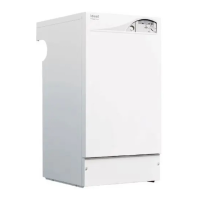
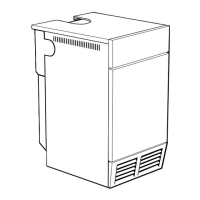
This document serves as a user guide for the Ideal Mexico Super FF4100 and FF4125 boilers, providing essential information for safe and efficient operation, maintenance, and troubleshooting. It emphasizes the importance of professional installation and servicing to ensure the appliance's longevity and adherence to safety standards.
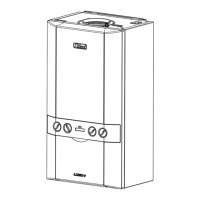
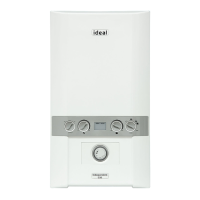
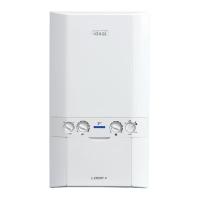
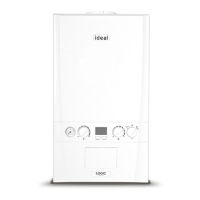
The Ideal Mexico Super FF4100 and FF4125 are natural gas-fired boilers designed to provide central heating and domestic hot water. They operate by igniting a pilot light, which then ignites the main burner to heat water circulating through the system. The boilers are equipped with controls that allow users to manage water temperature for both central heating and domestic hot water, as well as safety features to prevent overheating and detect system faults. The design incorporates a fan for combustion air and an intermittent spark ignition system for reliable startup. These models are suitable for installation in various settings, including compartments, provided adequate ventilation is maintained.
The user guide outlines a clear procedure for lighting the boiler. Before starting, users are instructed to ensure the electricity supply to the boiler is off and to open the control panel drop-down door. The boiler thermostat knob (G) should be in the OFF position. Once these checks are complete, the electricity supply to the boiler can be switched ON, and external controls like room thermostats should also be ON. To initiate heating, the boiler thermostat knob (G) is set to position 6. The fan will start, followed by the pilot solenoid valve opening and the intermittent spark. Once the pilot is established, the main burner will ignite smoothly.
For different heating needs, specific thermostat settings are recommended. For winter conditions, which include both central heating and domestic hot water, a setting of 5 or 6 is advised. For summer conditions, when only domestic hot water is required, a setting of 2 is suggested. These settings are general guidance, and users may find other settings preferable depending on their specific system or installer recommendations.
To shut down the boiler for short periods, users simply turn the boiler thermostat knob (G) to OFF. For longer periods, both the boiler thermostat knob (G) should be turned to OFF, and the electricity supply to the boiler should be switched OFF.
The guide also addresses frost protection. If no specific frost protection is in place and a short absence from home is anticipated, it's recommended to leave the heating controls (if fitted) at a reduced temperature setting. For longer absences, the entire system, including the domestic water supply, should be drained. If the system includes a frost thermostat, during cold weather, the boiler should only be turned OFF at the time switch (if fitted), with the mains supply left ON and the boiler thermostat in its normal running position.
The boiler is equipped with an overheat thermostat for sealed systems. In the event of overheating, this safety device will shut down the boiler. To reset it, users must allow the boiler to cool, then press the reset button (J) on the overheat thermostat before relighting the boiler using the standard procedure.
The document strongly emphasizes the importance of regular maintenance. It states that the appliance should be serviced at least once a year by a CORGI registered installer or, in Ireland, a competent person. This regular servicing is crucial for ensuring the boiler's safe and efficient operation, as well as its longevity.
For general cleaning, users are advised to simply dust the boiler with a dry cloth. For more stubborn marks and stains, a damp cloth can be used, followed by a dry cloth. It is explicitly stated that abrasive cleaning materials should NOT be used, as they could damage the appliance's surfaces.
The guide also provides troubleshooting steps for common non-product faults, encouraging users to check these before contacting a service engineer. For instance, if the boiler is not working for central heating or hot water, users should check if the boiler thermostat (G) is turned up and if the overheat thermostat reset button (J) has been pressed and released. For sealed systems, checking the system pressure gauge is important; it should read a minimum of 1 bar. If the pressure is low, the system should be re-pressurized via the filling loop. If the boiler fails to light after ignition sequence, checking the gas supply is recommended.
If the boiler operates for domestic hot water but not central heating, users should check if an external programmer's central heating channel is "on" and if the room thermostat is set to the required temperature. Similarly, if central heating works but domestic hot water does not, the domestic hot water channel on the programmer should be checked, along with the cylinder thermostat setting. A specific symptom of crossed polarity (live and neutral supply being reversed) is described: the pilot light is lit, but the igniter continues to spark, and the main burner does not ignite. In such cases, users are instructed to contact their installer to correct the wiring, as this is not a boiler fault.
The document highlights that all CORGI registered installers carry an ID card and have a registration number, which should be recorded in the Benchmark Log Book. Users can verify their installer by contacting CORGI directly. The Benchmark initiative, which Ideal Boilers supports, aims to improve installation and commissioning standards for central heating systems in the UK and promotes regular servicing for safety and efficiency. The Log Book should be completed after each service and kept with these instructions.
Finally, the guide includes a caution regarding handling sheet steel components during installation, servicing, or cleaning to prevent injury. It also advises using only genuine Ideal spare parts for replacements to ensure safety and performance, explicitly warning against reconditioned or unauthorized copy parts.
 General
| Mounting | Wall-mounted |
|---|---|
| Type | Condensing |
| Max Working Pressure | 3 bar |
| Dimensions (H x W x D) | 700mm x 400mm x 300mm |
| Weight | 32 kg |
| Fuel Type | Natural Gas |


 To Next Page