21
4 OPERATION OF
RAMPS AND DOORS
4.1 REAR RAMP OPERATION
DANGER. To avoid the possibility
of being injured in the event that
the ramp drops down, always stand to the side
of the ramp when operating the latches and
when lowering or raising the ramp. The rear
ramp may be subjected to a fallen horse against
it or to kicking from any horse onboard.
4.1.1 UNDERSTANDING
YOUR REAR RAMP
Your rear ramp also can operate
as a side hinging door.
The weight of the ramp is
counterbalanced by gas springs to
help reduce the effort required to raise
and lower the ramp. Note the counterbalance
force is not constant, so the weight of the
ramp will change as it is raised or lowered.
4.1.2 OPENING THE
REAR RAMP
1. Position the trailer on firm level ground
and apply the vehicle and trailer
handbrake.
2. Lower the rear prop stands if fitted.
Caution. If the trailer is facing up hill, nose
up, when opening the rear ramp, the ramp
may start to drop as soon as the catches
are released.
3. Before opening the ramp look inside for
anything leaning against the ramp and
remove if possible.
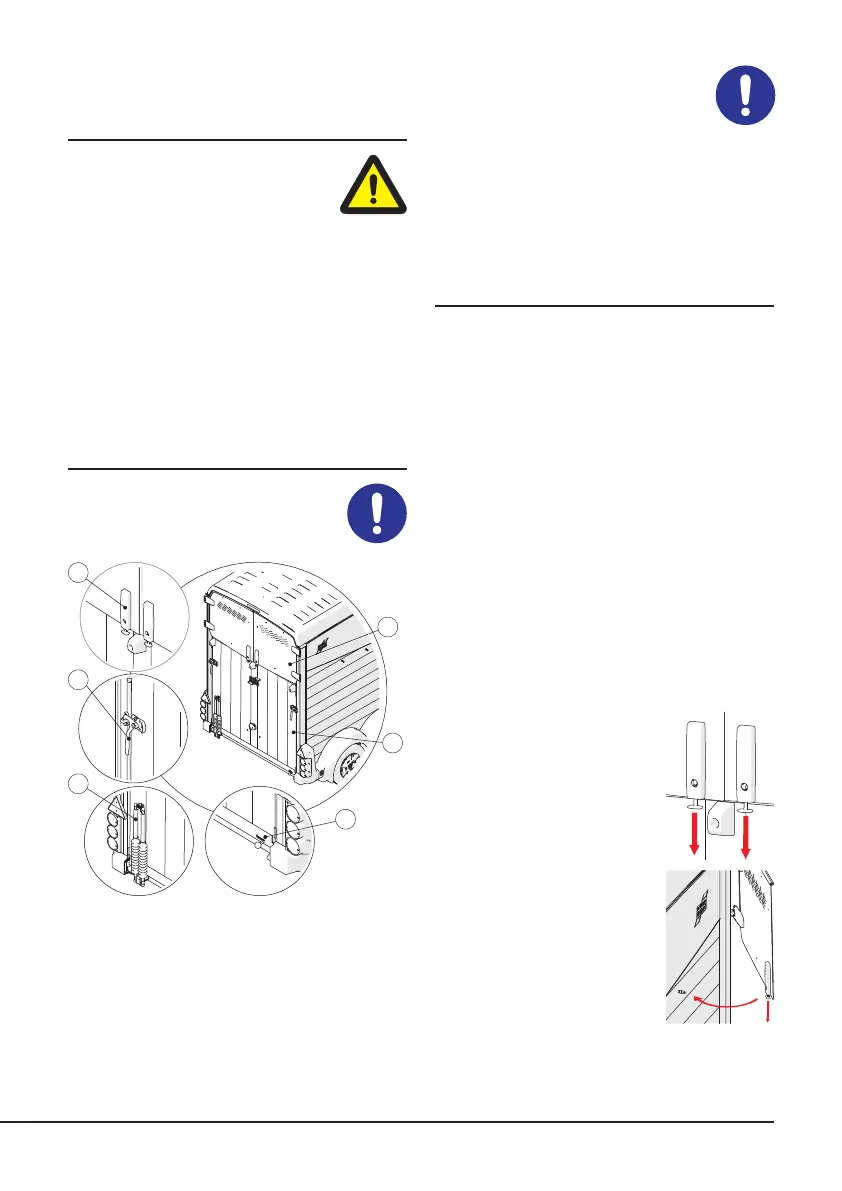
4. Check that the side hinging release bolt
is fully engaged (item 6 Lower Right-
Hand Side).
5. Open top doors:
i. Pull down the spring-loaded
T-bar to release the top door.
ii. Swing both doors all of
the way until they meet
the sides of the trailer and
latch against the side of
the trailer, again using the
spring-loaded T-bar to latch
in place. This catch will be
damaged if you attempt to
close by slamming the door,
ensure the T-bar is pulled
down to engage.
6. Unlatch each side of the ramp in turn as
follows:
4
1. Ramp.
2. Ramp handle/latch.
3. Gas springs.
4. Top door latch.
5. Top doors.
6. Side hinging
release bolt.
3
2
1
5
6




 To Next Page