Page | 10
• It is recommended that Personal Protection Equipment such as safety boots and gloves be
worn when operating the trailer.
• It is recommended that new users practice operating the tipping mechanism with the trailer
empty to ensure familiarity with the controls.
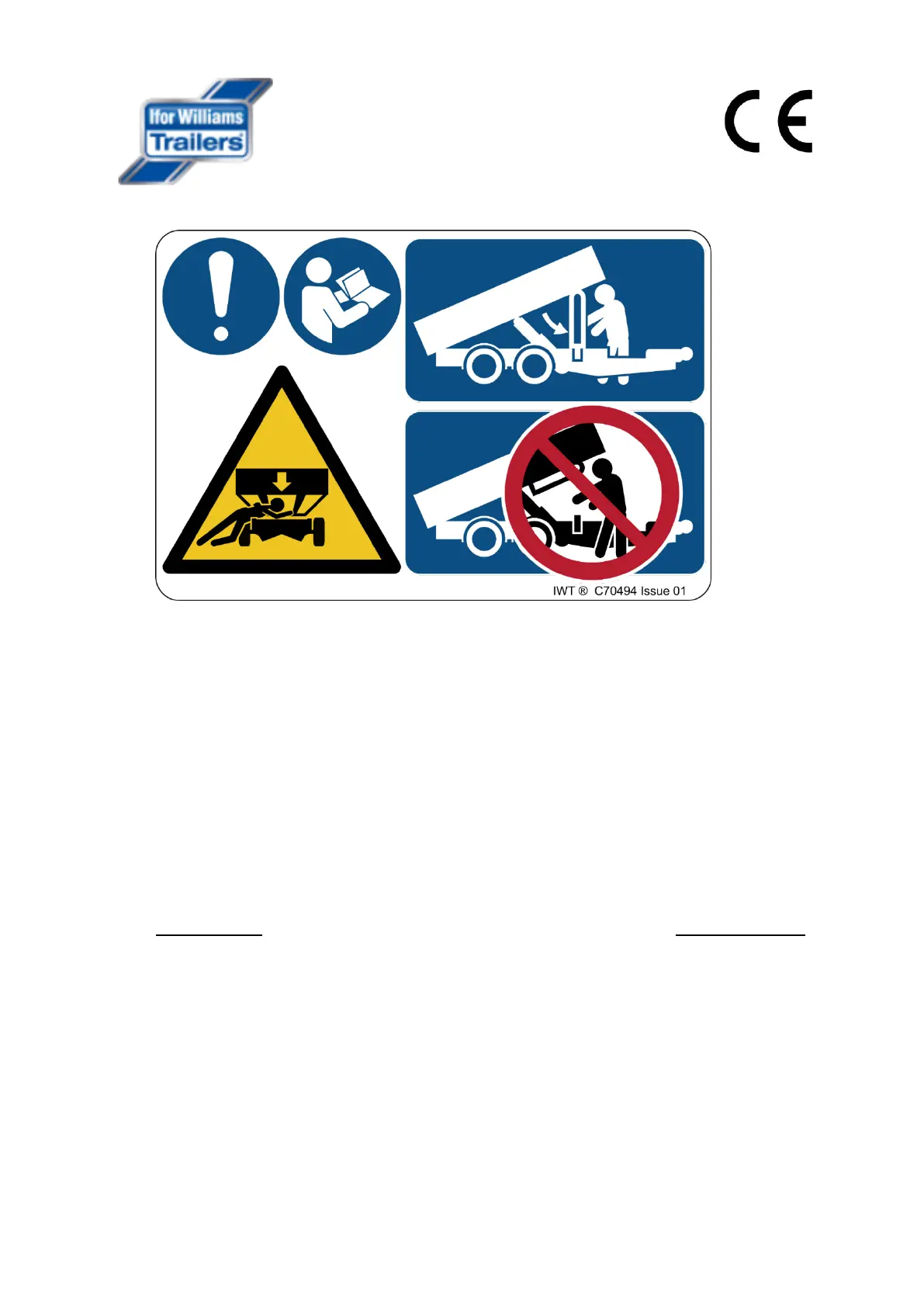
• By cordoning off, or by some other means, prevent encroachment of people and, so far as
possible property, into the “working area”. This may be defined as 2m behind and 3m either
side of a Tipping Trailer.
• Ensure lighting is adequate.
• The trailer lighting could be obscured when tilting/tipping. Ensure that measures are taken to
compensate for this when operating on a public road, such as placing a warning tri-angle or
lights behind the vehicle.
• Tipping Trailers must be stationary, coupled to the towing vehicle with the handbrake applied.
• Do not open the tailboard while trailer body is raised. Tailboards must be opened before
tipping commences.
• Tipping results in the centre of gravity being elevated with consequent risk of rollover. This
risk increases dramatically if the trailer has an initial side-slope or is on soft ground. Tipping
should not be attempted if the initial side-slope exceeds 5 degrees (90mm in 1m) or the
surface beneath the wheels is not sufficiently firm to prevent “sinking in” on one side as the
load transfers to one side or the other.
• If the load slides out the rear but sticks in the front – as is often the case with wet sand and
earth – be aware that the centre of gravity is now higher than before any load discharged and
the trailer is now in its least stable condition. Providing the trailer is still level it is safe to go on
tipping until the load at the front discharges.




 To Next Page