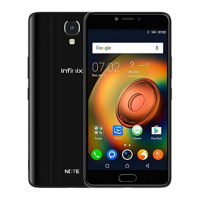
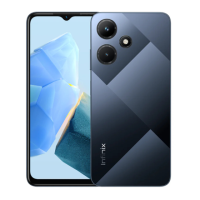
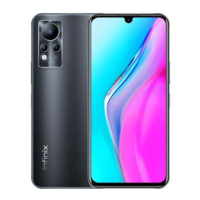
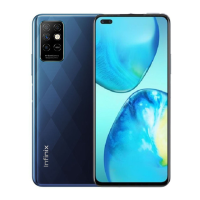
This document outlines the features and usage of an Android mobile phone, providing a comprehensive guide for users to understand and operate their device effectively.
The phone is designed to perform many functions similar to a computer, offering flexibility for users to customize it to their needs. Key functionalities include adding and deleting applications, enhancing functionality, downloading apps and games from the Android market, and integrating applications with personal data and online accounts for tasks like appointment tracking and social networking.
Getting Started
To begin using the phone, users must first insert the SIM card and memory card. This involves switching off the phone, removing the rear cover, inserting the SIM card into the designated slot, and then replacing the rear cover.
Charging
To charge the battery, connect the charger to the phone's USB interface and plug the other end into an AC power socket. The battery symbol on the screen indicates the charging status. Once fully charged, the charger should be disconnected from the phone or the power socket.
Key Tips
The phone features several keys with distinct functions:
- Power/Lock key: Press and hold to turn the phone on or off. When the phone is on, pressing and holding this key brings up options such as Power off, Reboot, and Airplane mode. To save battery or prevent accidental touches, press this key to put the touch screen to sleep. To wake the screen, press it again and drag the lock icon to unlock.
- Volume keys: Used to adjust the volume. When playing music or videos, these keys control media volume.
- Menu key: Opens a menu with options related to the current screen or application. Not all screens have menu options.
- Home key: Closes any menu or app and returns to the Home screen. If viewing an extended Home screen, it opens the central Home screen. Pressing the Recent key allows viewing recently used applications.
- Back key: Returns to the previous screen.
Touch Interactions
The phone supports various touch interactions:
- Touch & hold: Used to select an icon or option, or to open special functions/additional options. For example, in the Music library, touching and holding an artist, song, or album reveals additional options.
- Drag: Used to scroll through lists or move items slowly across the touchscreen. For instance, dragging on the Home screen or in the contacts list.
- Slide: Involves moving a finger quickly left or right across the screen to scroll through lists or move quickly.
- Double-touch: Quickly touching the screen twice to lock it.
Screen Overview
The Home screen is the central hub, displaying the latest information and serving as the gateway to the phone's main features. It can be customized with shortcuts, widgets, folders, and wallpapers. Users can slide the Home screen left or right to view more content on other panels.
- Notifications: Dragging down the status bar opens the notification panel, providing information such as missed calls and running applications (e.g., music player).
- Toolkits: These allow quick access to common applications like Bluetooth and WLAN. The Notifications panel can be opened by dragging down from the top of the screen.
Status Icons
Various icons appear on the screen to indicate status:
- SIM Network signal level
- Headset is inserted
- Indicates battery capacity
- Bluetooth
- Unread message
- WLAN is connected
- Missed calls
- Airplane mode is activated
- Alarm is activated
- USB is connected
- Vibrate
- Silent
Options menus provide tools relevant to the current screen or application. They are accessed by pressing the Menu key. Not all screens have options menus.
Widgets are small applications on the Home screen that display information (e.g., Analog clock, Music) and can be used directly.
- Adding a widget: Touch and hold the Home screen, select the WIDGETS tab, then touch and hold a widget icon and drag it to the desired location on the Home screen.
- Removing a widget: Touch and hold the widget icon until it vibrates, then drag it to the remove tab.
Arranging the Home Screen
- Moving an item: Touch and hold an item until it vibrates, then drag it to the desired position.
- Organizing apps with folders: Stack one app on top of another to create a new folder.
- Naming a folder: Touch the apps stack, then touch "Unnamed Folder" to edit the name.
- Moving shortcuts to a folder: Touch and hold a shortcut until it vibrates, then stack it on top of another app to create a folder.
- Moving shortcuts out of a folder: Touch and hold an item in a folder until it vibrates, then drag it out.
Changing the Background
Users can select wallpapers from Live wallpaper, Gallery, Internal Wallpaper, or Downloaded Wallpapers. Touch and hold the Home screen to access wallpaper options. Photos taken with the camera can also be set as wallpaper.
The Application menu contains all installed applications. It extends beyond the screen length, requiring users to slide up and down to view all content.
- Opening the menu: On the Home screen, touch the Launcher icon, then the APPS tab.
- Uninstalling an application: Touch and hold the shortcut icon on the Home screen until it vibrates, then drag it to the Uninstall tab.
Communication
- Phone: Touch the Phone icon on the Home screen. In the dial interface, input a number and touch the Dial icon to make a call.
- Answering an incoming call: Drag the indicated icon towards the right.
- Rejecting an incoming call: Slide the indicated icon towards the left.
- Call options: During a call, options include going to the Dial pad, turning the speaker on/off, muting the microphone, placing a call on hold, dialing a second call, recording the call, and ending the call.
- Messages: Users can compose, send, and receive text and multimedia messages (pictures, videos, audios). Messages are displayed as conversations, grouping all messages to and from a particular person.
- Writing a message: From the Home screen or Application menu, touch the Messages icon. Touch the contact selection icon to choose recipients or manually enter phone numbers. After selecting contacts, touch the checkmark, then type the message. To insert media, touch the plus icon and select an attachment. Finally, send the message and select the SIM.
- Deleting a message: Touch and hold the message, select the conversations to delete, then touch Delete in the pop-up menu.
- Forwarding a message: Touch the conversation, then touch and hold the message to forward. Select Forward, add recipients, and then send.
- Contacts: The Contacts application stores and manages all contacts.
- Adding a contact: From the Home screen or Application menu, touch the Contacts icon. Touch the plus icon, select a storage path or add a new account, enter contact information, and touch the checkmark to save.
- Searching a contact: Touch the search icon, input the first character of the name, and matching records will be displayed.
- Contact groups: Contacts can be assigned to groups (e.g., VIP, schoolmate, friends) for quicker access.
- Creating a new group: Touch the menu icon, then the Groups tab. Touch the add group icon, input group information, and touch the checkmark.
- Assigning a contact to a group: Touch the menu icon, then the Groups tab. Touch the desired group, then the edit icon. Touch "Type person's name" to input the contact's name, select the contact, and touch the checkmark.
- Camera: The phone's camera can take photos and record videos, horizontally or vertically. Photos and videos can be shared or uploaded.
- Functions include: Previewing pictures/videos, taking photos, recording videos, switching camera modes, switching between front and back cameras, and accessing settings.
- Gallery: Allows viewing photos and playing videos downloaded or taken with the phone camera. Content can be shared via messages, Bluetooth, or email.
- To view content, touch an album, then a picture or video.
- Options when viewing a picture include delete, slide show, edit, crop, details, and print.
- Music: The Music library offers various categories: All Songs, Last added, Most, Favorites, Albums, Genres, Artists, Records, Folders, and New (to create a new list).
- Function bar: Tapping the drop-down arrow reveals a function bar with options: Add to playlist, Set as Ringtone, View song details, Share (Bluetooth, Email, Messaging), Search songs, and Delete music.
- Music player: Controls include Play/Pause, Previous/Next, Rewind/Forward, Volume adjust, Now playing, Shuffle, and Repeat (all songs or current song). Additional options like Library, Party shuffle, and Add to playlist are available.
- FM radio: The phone has a built-in FM Radio. Users need to plug in an earphone (which acts as the antenna) to listen to FM radio stations and add them to a channel list. Listening is possible through earphones or the phone speaker.
- Functions include: Radio on/off, Record, Channel list, Fine-tune FM frequency, and Search for the next effective frequency.
- Calendar: Manages time schedules and tracks important events.
- Setting calendar view: From the Home screen, touch the Launcher icon, then Calendar. Touch the date on the left corner of the screen and select day, week, month, or agenda.
- Adding an event: Touch New, enter event details (name, location, time, description), select a reminder, and touch the checkmark.
- Clock: Displays time and date, and includes Alarm, World Time, Timer, and Stopwatch functions.
- Calculator: Provides basic arithmetic functions (addition, subtraction, multiplication, division). Access by touching the Launcher icon, then Calculator from the Application menu. Calculations are performed using the number pad.
WLAN Networks
WLAN (Wi-Fi) provides internet access up to 100 meters.
- Connecting to WLAN: Touch the Launcher icon, then Settings, then Wi-Fi. Check WLAN to turn it on. The phone scans for available networks. Touch a network to connect. If secured, enter a password.
- Notifications: When WLAN is on, notifications appear in the status bar for open WLAN networks. To stop these, turn on WLAN, go to the WLAN list screen, press Menu key for Advanced options, and uncheck Network notification.
- Maintenance: Turn off WLAN when not in use to extend battery life.
Bluetooth
Bluetooth enables short-range wireless communication between devices (up to 10 meters).
- Turning Bluetooth On/Off: Touch the Launcher icon, then Settings, then Bluetooth. Check or uncheck Bluetooth to toggle it. Ensure Bluetooth is checked for the phone to be detectable by other devices.
- Pairing with Bluetooth Devices:
- Touch the Launcher icon, then Settings, then Bluetooth.
- If Bluetooth is off, check it to turn it on. The phone scans for available devices.
- If the desired device is not listed, touch SEARCHING.
- Touch the ID of the desired device to pair.
Precaution and Maintenance
- Safe Power On: Do not use the phone where forbidden or where it might cause disturbance/danger.
- Safe Transportation: Observe local laws and regulations. Do not use while driving.
- Hospital Use: Turn off in hospitals and near medical instruments.
- Airplane Mode: Follow limitations; do not use on an airplane.
- Exposure Areas: Turn off near areas where explosions can occur (e.g., gasoline stations, around fuels/chemicals).
- Service: Only qualified technicians should install or repair the phone. Contact an authorized service center for failures.
- Proper Use: Use the phone only in correct locations. Avoid touching the antenna area.
- Waterproof: The phone is not waterproof; keep it away from water.
- Connecting to Other Devices: Read user manuals for detailed security instructions. Do not connect to incompatible products.
- Accessories and Batteries: Use only authorized accessories and batteries. Do not connect to incompatible manufacturers or products.
- Backup: Regularly back up important information.
- SOS Emergency Calls: Ensure the phone is on and in a service area. In idle mode, input the SOS number and press the Dial Key. Advise your location and do not hang up without permission.
Battery and Device Care:
- Battery Replacement: Risk of explosion if the battery is replaced incorrectly. Dispose of used batteries according to instructions.
- Volatile Oil: Do not use the phone around volatile oil to prevent fire or damage.
- Disassembly: Do not disassemble the phone, battery, charger, or internal components.
- Long-Term Storage: If not using the phone for a long time, remove the battery to prevent moisture damage.
The device complies with FCC rules. Changes or modifications not expressly approved may void the user's authority to operate the equipment. The SAR limit is 1.6 W/kg. The highest SAR value reported for body-worn operation is 0.913W/kg, and for head is 0.501W/kg. Simultaneous RF exposure is 1.089W/kg. For body-worn operations, the handset should be kept 10mm from the body. Accessories like belt clips and holsters should not contain metallic components and must maintain a 10mm separation distance.
FCC Compliance Note:
This equipment has been tested and complies with Class B digital device limits. It generates and radiates radio frequency energy. If not installed and used according to instructions, it may cause harmful interference. If interference occurs, users are encouraged to try reorienting the receiving antenna, increasing separation between equipment and receiver, connecting equipment to a different circuit, or consulting a technician. The device and its antenna(s) must not be co-located or operate in conjunction with any other antenna or transmitter.

 Need help?
 General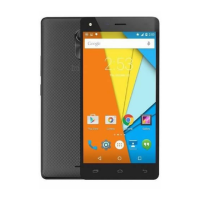

 To Next Page