EasyManua.ls Logo

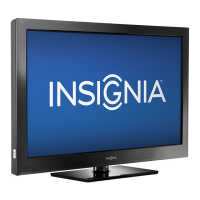
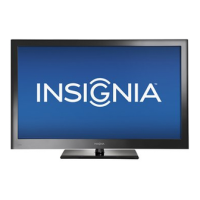
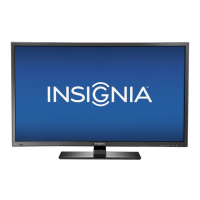
Insignia NS-40D40SNA14 - User Manual

Insignia NS-40D40SNA14
79 pages
Print Icon
To Next Page IconTo Next Page
Loading...
NS-40D40SNA14
User Guide
40" LED TV
Before using your new product, please read these instructions to prevent any damage.

Table of Contents

Other manuals for Insignia NS-40D40SNA14

Questions and Answers

  • A
    Alan WhiteSep 23, 2025
    Why won't my Insignia NS-40D40SNA14 remote control the device?
    • S
      Sarah HooperSep 23, 2025
      If your Insignia TV’s remote control does not control the device, make sure that there are no obstructions between the remote control and the remote control sensors on your TV and the device. If the device is not an Insignia device, all the buttons may not work. Make sure that the INlink feature is turned on. If you are trying to control the volume on an HDMI CEC audio receiver using your TV remote control, make sure that the TV Speakers option on the Audio menu is set to On. If you are trying to control the volume on an HDMI CEC audio receiver using your TV remote control, make sure that the Audio Receiver option on the INlink menu is set to On. The device may not support this feature.
  • V
    Valerie BlakeAug 25, 2025
    How to fix Insignia NS-40D40SNA14 remote not working?
    • J
      Joshua SkinnerAug 25, 2025
      If your Insignia TV remote isn't working, ensure the power cord is correctly connected to the TV and a power outlet. Also, make sure there are no obstructions between the remote and the TV's sensor. Point the remote directly at the sensor, verify the batteries are correctly installed, and replace dead batteries with new ones.
  • L
    Lisa CalderonAug 25, 2025
    What to do if my Insignia NS-40D40SNA14 says no signal?
    • D
      Dwayne StarkAug 26, 2025
      If your Insignia TV displays a 'No Signal' error message, press the INPUT button to select the correct input for your device. If using a cable or satellite box, use its remote to change channels and ensure you've selected the correct input on your TV to view those channels.
  • B
    Becky NealAug 27, 2025
    Why does my Insignia TV have good picture but no sound?
    • C
      Christina GuerreroAug 27, 2025
      If your Insignia TV has good picture but no sound, first increase the volume and make sure the sound isn't muted. Ensure headphones are disconnected, as they disable the TV speakers. Verify the correct audio mode is selected and that all audio cables are securely connected. Also, confirm that your antenna or cable TV is properly connected. If using an antenna, check the digital channel signal strength. A bad audio cable may also be the cause, so try a new set.
  • K
    Kevin HopkinsSep 23, 2025
    Why doesn't my device turn off when I turn off my Insignia NS-40D40SNA14 TV?
    • A
      Aaron MontgomerySep 23, 2025
      If your device does not turn off when you turn off your Insignia TV, make sure that the INlink feature is turned on. Also, make sure that Device Auto Power Off is set to On on the INlink menu. The device may not support this feature.
  • D
    Danielle AllenSep 13, 2025
    How to reset parental control password on Insignia TV?
    • B
      boyleelizabethSep 13, 2025
      If you have lost the password for your Insignia TV, enter 9999 to access parental controls, then set a new password.
  • M
    michaelsmithSep 12, 2025
    Why are there no channels on my Insignia NS-40D40SNA14 after auto channel search?
    • O
      ogoldenSep 12, 2025
      If, after performing an Auto Channel Search on your Insignia TV, there are no channels, contact your cable or satellite TV provider, as reception can vary by channel depending on the broadcast power level of a given station. Make sure that the antenna or cable/satellite TV is connected securely to your TV. Try replacing the cable between the antenna/cable or cable/satellite box and your TV.
  • P
    paulmarshallSep 12, 2025
    Why are some channels not displaying on my Insignia TV?
    • B
      Briana SchmidtSep 12, 2025
      If one or more channels do not display on your Insignia TV, make sure that the channels are not blocked. Also, make sure that the channels are not hidden. If you are using a cable or satellite box, use the remote that came with that box to change channels. Make sure that you have the correct input selected to view channels from the cable or satellite box. If you are using an antenna, the digital channel signal may be low.
  • S
    Sarah JimenezSep 4, 2025
    Why are there lines on my Insignia TV screen?
    • L
      Laura FisherSep 4, 2025
      If you see dotted lines or stripes on the screen of your Insignia TV, make sure that the antenna or cable TV is connected correctly and securely. If you are using an antenna, the digital channel signal may be low. If the signal strength is low, adjust the antenna or use a highly directional outdoor antenna or set-top antenna with a built-in amplifier. Make sure that the video cables are connected securely to your TV. The video cables may be bad, so try a new set. Other devices may be interfering with your TV, so try turning off one device at a time to determine which device is causing interference and move it further from the TV.
  • M
    martinezdeborahSep 2, 2025
    Why is there no color on my Insignia NS-40D40SNA14 TV?
    • V
      vjamesSep 2, 2025
      If there is no color, the picture is dark, or the color is incorrect on your Insignia TV, try switching to another channel, as the station may be experiencing problems. Also, adjust the color settings. Make sure that the video cables are connected correctly and securely to your TV. Ensure that the antenna or cable TV is connected correctly and securely. If you are using an antenna, the digital channel signal may be low. If the signal strength is low, adjust the antenna or use a highly directional outdoor antenna or set-top antenna with a built-in amplifier.

Summary

Child Safety

Tune Into Safety

General advice for TV placement to prevent tip-overs and ensure safe use.

Wall Mounting Safety

Guidelines for secure and safe TV wall mounting to prevent accidents.

Important Safety Instructions

Handling the LCD Panel

Precautions for safely interacting with the TV's glass screen to avoid injury.

Replacement Parts

Guidance on using correct parts for repairs to maintain safety.

Introduction

INlink Feature

Introduces HDMI CEC for seamless device communication and control.

Installing the Stand

Installing a Wall-Mount Bracket

Package Contents

Front Panel Components

Side Panel Ports

Back Panel Ports

Remote Control Overview

Connection Options Guide

Connecting a Cable or Satellite Box

Using HDMI (best)

Steps for connecting a box via HDMI for optimal video and audio quality.

Using DVI (same as HDMI but requires an audio connection)

Steps for connecting a box via DVI, including necessary audio connections.

Using Component Video (better)

Steps for connecting a box via component video for improved quality.

Using Composite Video (good)

Steps for connecting a box via composite video for standard quality.

Using Coaxial Cable (good)

Steps for connecting a box via coaxial cable for basic signal reception.

Connecting an Antenna or Cable TV (no box)

Connecting a DVD or Blu-ray Player

Using HDMI (best)

Steps for connecting a player via HDMI for optimal audio and video.

Using DVI (same as HDMI but requires an audio connection)

Steps for connecting a player via DVI, including audio setup.

Using Component Video (better)

Steps for connecting a player via component video for enhanced quality.

Using Composite Video (good)

Steps for connecting a player via composite video for standard output.

Connecting a Game Console

Using HDMI (best)

Steps for connecting a console via HDMI for high-quality gaming.

Using Component Video (better)

Steps for connecting a console via component video for improved visuals.

Using Composite Video (good)

Steps for connecting a console via composite video for basic gaming.

Connecting a Computer

Using VGA (most common)

Steps for connecting a computer via VGA for display output.

Using HDMI (best)

Steps for connecting a computer via HDMI for optimal display.

Using DVI (same as HDMI but requires an audio connection)

Steps for connecting a computer via DVI with necessary audio setup.

Connecting a USB Flash Drive

Connecting Headphones

Connecting a Basic Home Theater System

Using Digital Audio

Steps for connecting a system via digital optical audio for sound.

Using Analog Audio

Steps for connecting a system via analog audio for sound.

Connecting Multiple Devices to Home Theater

Connecting Power

Using the Remote Control

Installing Remote Control Batteries

Guide for properly inserting batteries into the remote control.

Initial TV Setup

Menu Language Selection

Setting the language for the TV's on-screen menus.

Time and Date Settings

Configuring the TV's clock, time zone, and daylight saving.

Viewing Environment Mode

Choosing between Home Use and Store Display modes for optimal viewing.

TV Source Selection

Setting the input source for TV channels (Antenna, Cable, Satellite).

Understanding the Basics

Turning TV On or Off

How to power the TV on, off, and into standby mode.

Selecting Video Input Source

How to switch between connected devices and inputs.

Adjusting the Picture

Adjusting TV Picture Settings

Fine-tuning picture quality parameters like brightness, contrast, and sharpness.

Setting Power-On Picture Mode

Configuring the default picture mode when the TV turns on.

Adjusting Computer Image

Adjusting Sound Settings

Selecting Analog Closed Captioning Mode

Selecting Digital Closed Captioning Mode

Playing TV Audio Only

Changing Channel Settings

Automatically Scanning for Channels

Performing a channel scan to find and store available broadcasts.

Hiding Channels

Setting Up a Favorite Channel List

Viewing a Favorite Channel

Adding or Changing a Channel Label

Checking Digital Signal Strength

Automatically Adjusting Aspect Ratio

Setting Parental Controls

Setting or Changing the Password

Establishing or modifying the parental control password.

Locking Control Buttons

Blocking Unrated TV

Setting Parental Control Levels

USA Parental Locks

Setting rating restrictions for US content based on age and content type.

Canadian Parental Locks

Setting rating restrictions for Canadian content based on age and content type.

Downloading Rating Information

RRT5 Settings

Using Closed Captioning

Turning Closed Captioning On or Off

Enabling or disabling text display for TV program audio.

Selecting Analog Closed Captioning Mode

Selecting Digital Closed Captioning Mode

Customizing Digital Closed Captioning Settings

Adjusting Time Settings

Setting the Clock

Manually or automatically setting the TV's clock and date.

Setting the Sleep Timer

Adjusting Menu Settings

Selecting the Menu Language

Changing the language of the TV's on-screen menus.

Turning Input Sensor On or Off

Labeling an Input Source

Using INlink

Turning INlink On or Off

Enabling or disabling HDMI CEC control for connected devices.

Turning Device Auto Power Off On or Off

Turning TV Auto Power On On or Off

Turning Audio Receiver On or Off

Displaying INlink-Compatible Devices

Waking INlink-Compatible Devices

Opening INlink-Compatible Device Menu

Using a USB Flash Drive

Switching to USB Mode

Selecting the USB input source to access connected drives.

Browsing Photos

Viewing images stored on the USB drive.

Viewing Favorite Photos

Viewing Photos in a Slideshow

Customizing Slideshow Settings

Maintaining Your TV

Cleaning the TV Cabinet

Instructions for cleaning the TV exterior with a soft cloth.

Cleaning the TV Screen

Instructions for cleaning the TV screen with a soft cloth.

Troubleshooting Overview

Restoring Settings to Defaults

Resetting the TV to factory settings to resolve issues.

Viewing System Information

Accessing TV software and hardware details for troubleshooting.

Video and Audio Troubleshooting

Picture Quality Troubleshooting

Sound and Remote Troubleshooting

Sound Issues

Troubleshooting no sound or speaker problems.

Remote Control Issues

Diagnosing and fixing remote control problems.

General Troubleshooting

Power and Signal Issues

Solutions for power problems and 'no signal' messages.

Channel and Password Issues

Troubleshooting missing channels and lost passwords.

INlink (CEC) Device Troubleshooting

Remote Control and Volume Troubleshooting

Technical Specifications

Programming Universal Remote Controls

Legal Notices

One-Year Limited Warranty

Insignia NS-40D40SNA14 Specifications

General IconGeneral
Screen Size40 inches
Resolution1920 x 1080
Display TypeLED
HDMI Ports3
USB Ports1
Refresh Rate60Hz
Smart TVYes

Related product manuals