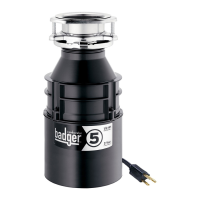
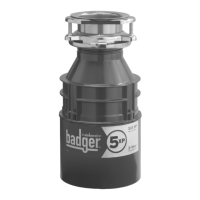
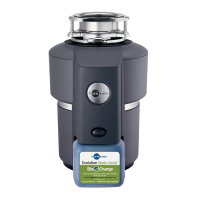
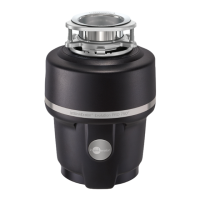
12.5). Work the wrenchette back and
forth until it turns one full revolution.
Remove wrenchette.
3. Reach into the disposer with tongs
and remove object(s). Allow the
disposer motor to cool for 3 - 5
minutes and lightly push red reset
button on the disposer underside
(see Figure 12.6). (If the motor
remains inoperative, check the
service panel for tripped circuit
breakers or blown fuses.)
IMPORTANT SAFETY INSTRUCTIONS
12
12
When using electronic appliances,
basic precautions are always to be
followed, including:
• If the air switch or wall switch fails
to shut off or turn on disposer,
unplug power cord plug and
contact your qualied trade person.
• This product is designed to
dispose of normal household food
waste; inserting materials other
than food waste into disposer
could cause personal injury and/
or property damage. To reduce
the risk of injury, do not use the
sink containing the disposer
for purposes other than food
preparation (such as baby bathing
or washing hair).
• This appliance can be used by
children aged from 8 years and
above and persons with reduced
physical, sensory or mental capabilities
or lack of experience and knowledge
if they have been given supervision
or instruction concerning use of the
appliance in a safe way and understand
the hazards involved. Children shall not
play with the appliance. Cleaning and
user maintenance shall not be made by
children without supervision.
• When attempting to loosen a jam in
the food waste disposer, switch off or
unplug the appliance before attempting
to free a jammed rotor. Use a self
service wrenchette as described in the
Releasing Disposer Jam section.
• Use long-handled tongs or pliers to
remove objects from disposer.
• To reduce the risk of injury by materials
that are expellable by a waste disposer,
do not operate Evolution disposers
without the sound bafe in place
(see Figure 8.4). Place stopper in sink
opening as shown in Figure 12.2 or
12.4. Do not put the following into a
disposer: clam or oyster shells, caustic
drain cleaners or similar products,
glass, china, or plastic, large (whole)
bones, metal (such as bottle caps, steel
shot, tin cans, or utensils), hot grease or
other hot liquids.
• Replace sound bafe/mounting gasket/
splash bafe when worn to help prevent
entry or ejection of material and water.
• When not using disposer, leave stopper
in place to reduce risk of objects falling
into disposer. Make sure disposer
power switch is turned off.
• Before pressing reset button,
attempting to clear jam, or removing
objects from inside disposer, make sure
disposer power switch is turned off.
• Do not insert hands or ngers into
di s pose r.
• FIRE HAZARD: Do not store ammable
items such as rags, paper, or aerosol
cans near disposer. Do not store or use
gasoline or other ammable vapors and
liquids in vicinity of disposer.
• LEAK HAZARD: Regularly inspect
disposer and plumbing ttings for
leaks, which can cause property
damage and could result in
personal injury.
• Do not dispose of the following in the
disposer: paints, solvents, household
cleaners and chemicals, automotive
uids, plastic wrap.
OPERATING INSTRUCTIONS
(EVOLUTION MODELS AND MODEL66)
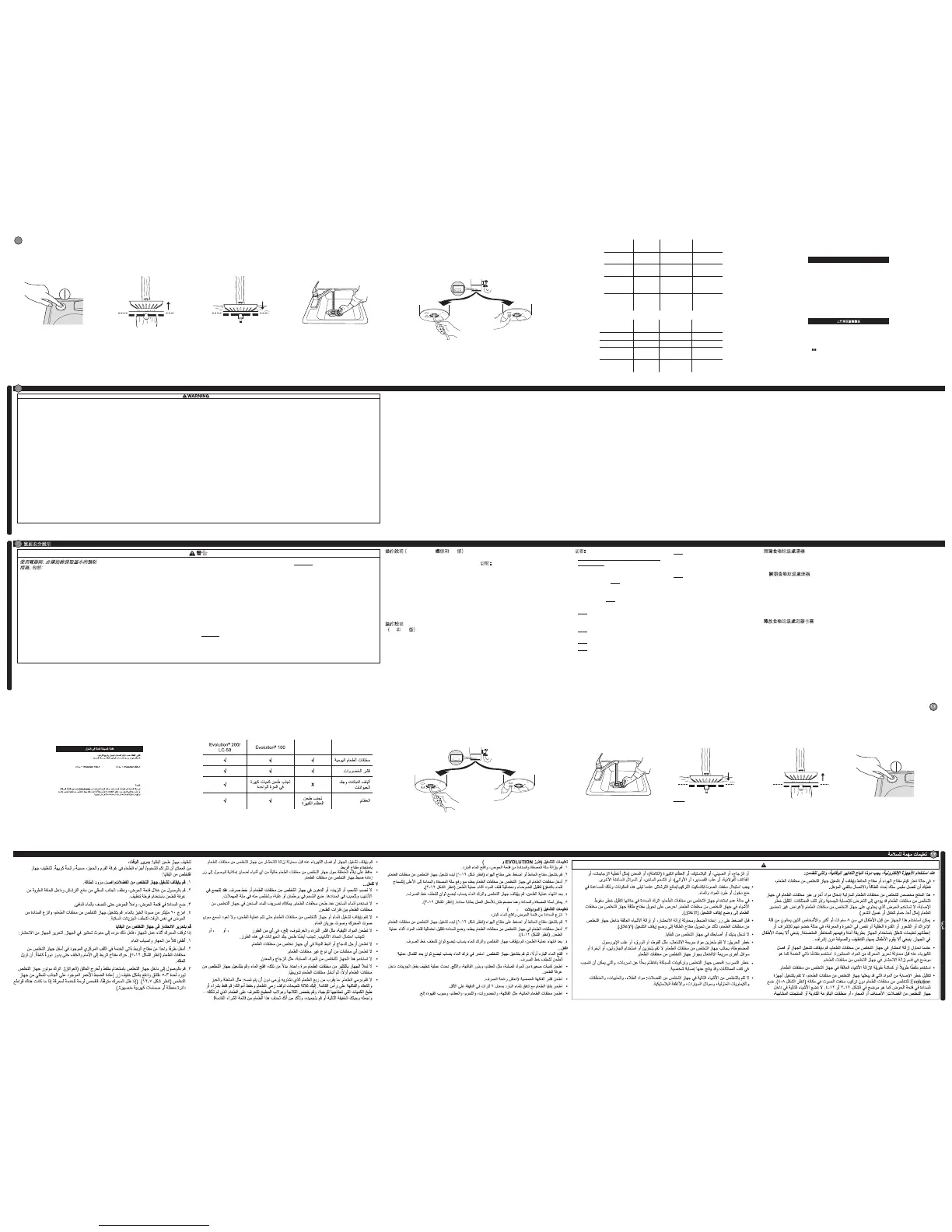
1. Remove strainer basket and plug from
sink opening and run cold water.
2. Turn on wall switch or press air switch
(see Figure 12.1) to start disposer.
3. Slowly insert food waste into disposer
and position strainer basket and plug
in upright position (allowing water to
run through) to minimize noise and
possible ejection of material while
grinding (See Figure 12.2).
4. After grinding is complete, turn
disposer off and run water for a few
seconds to ush drain line.
5. Strainer basket and plug also acts as
a stopper in the lower position.
(See Figure 12.3)
OPERATING INSTRUCTIONS
(MODELS 56, 46)
1. Remove stopper from sink opening
and run cold water.
2. Turn on wall switch or press air switch
(see Figure 12.1) to start disposer.
3. Slowly insert food waste into disposer
and position stopper to minimize
possible ejection of material while
grinding. (See Figure 12.4)
4. After grinding is complete, turn
disposer off and run water for a few
seconds to ush drain line.
DO...
• First turn on cold water and then turn
on the disposer. Continue running
water for a few seconds after grinding
is completed to ush the drain line.
• Grind small amounts of hard material
such as bones, fruit pits, and ice.
A scouring action is created by the
particles inside the grind chamber.
• Grind peelings from citrus fruits to
freshen up drain smells.
• Grind food waste with minimum cold
water ow of 6 liters per minute.
• Grind common food waste, such as
fruits, vegetables, meats, bones, coffee
grounds, etc.
• Switch off or unplug the appliance
before attempting to free a jammed
disposer with the wrenchette.
• Maintain the area around the disposer
free of any objects to be sure you have
access to the disposer reset button.
Models
46/56/66
Evolution
®
100
Evolution
®
200/LC-50
Everyday
food waste
√ √ √
Vegetable
peels
√ √ √
Plant bre,
animal skins
X
Avoid grinding
large amounts at
once
√
Bones
Avoid
grinding
large bones
√ √
DON’T...
• DON’T POUR GREASE, OIL OR FAT
DOWN YOUR DISPOSER OR ANY
DRAIN. It can build up in pipes and
cause drain blockages. Put grease in a
jar or can and dispose in the trash.
• DON’T use hot water when grinding
food waste. It is OK to drain hot
water into the disposer between
grinding periods.
• DON’T turn off water or disposer until
grinding is completed and only sound
of motor and water running is heard.
• DON’T grind brous materials like corn
husks, artichokes, etc., in any Model
66, 56 or 46 to avoid possible pipe
blockage. Also avoid grinding animal
skins in these models.
• DON’T grind raw chicken or duck feet
in any disposer.
• DON’T grind non-food waste of
any kind.
• DON’T use this appliance to dispose of
hard materials such as glass and metal.
• DON’T ll disposer with a lot of food
waste all at once. Instead, turn the
water and disposer on rst and then
feed the food waste in gradually.
• DON’T waste food. Nearly a quarter
of the food we buy is thrown away
untouched: salad, bread and cakes
and fruit head the list. Three tips to
stop waste and save you money: only
buy, or cook, the portions you need
for the meal; check the fridge and
cupboard for food you haven’t eaten
– make it your next snack or freeze it;
and make sure you leave that food off
your next shopping list!
IN-HOME FULL SERVICE GUARANTEE
Warranty i s determined by the u nit serial numbe r and the date of
installa tion. Purchase or in stallation rec eipt may be require d to verify
warranty status.
SERVICE
If servic e is required, con tact an InSinkEra tor Authorized Se rvice
Center (Se e enclosed list) or y our dealer. Guarant ees are void if you
remove your di sposer after ins tallation and at tempt to repair it, or i f the
disposer is used for commercial purposes.
Evolution 20 0-1: 6 years
Model 66 -1: 4 y ears
Model 46-1, -1 A/S: 2 yea rs
Evolution 100 -1: 5 years
Model 56-1: 3 years
Model LC- 50-13: 1 year
CLEANING DISPOSER
Over time, grease/food particles may
accumulate in the grind chamber and
bafe, causing an unpleasant odor. To
clean the disposer:
1. Turn off disposer and disconnect
power supply.
2. Reach through sink opening and clean
underside of splash bafe and inside
upper lip of grind chamber with
scouring pad.
3. Place stopper in sink opening and ll
sink halfway with warm water.
4. Mix 60 ml baking soda with water. Turn
disposer on and remove stopper from
sink at same time to wash away loose
particles.
RELEASING DISPOSER JAM
If the motor stops while the disposer is
operating, the disposer may be jammed.
To release jam:
1. Turn disposer power and water off.
2. Insert one end of the self-service
wrenchette into the center hole on the
underside of the disposer (see Figure
ENGLISH


 To Previous Page
 Loading...