EFFECTS OF LOW PRESSURE AND TEMPERATURE
ON PURE WATER PRODUCTION
Each stage of filtration serves a particular function. It is good to understand that the first four
stages of filtration (UVO
3
, Carbon, 5 Micron and Softener) are in place to protect the RO
membrane. The RO membrane is in turn, is in place to reduce the workload of the PPM filter,
and the PPM filter is in place to reduce the workload of the PPB filter.
The RO Membrane is the filter where there is a restrictive back-pressure.
A minimum mains feed pressure of 4.2 bars or 60 PSI is required in order
for the system to function correctly. Should the feed pressure drop below
this limit, damage to the RO membrane may occur. In low-pressure areas
a fast fill/boost pump option is strongly recommend ed . Low pressure feed
will result in premature failure of the RO. This will be due to membrane
blockage, as the reject water will fail to flow rejected dissolved solids to
drain.
Temperature has a major effect on pure water production.
Industry standards for pure water production through an
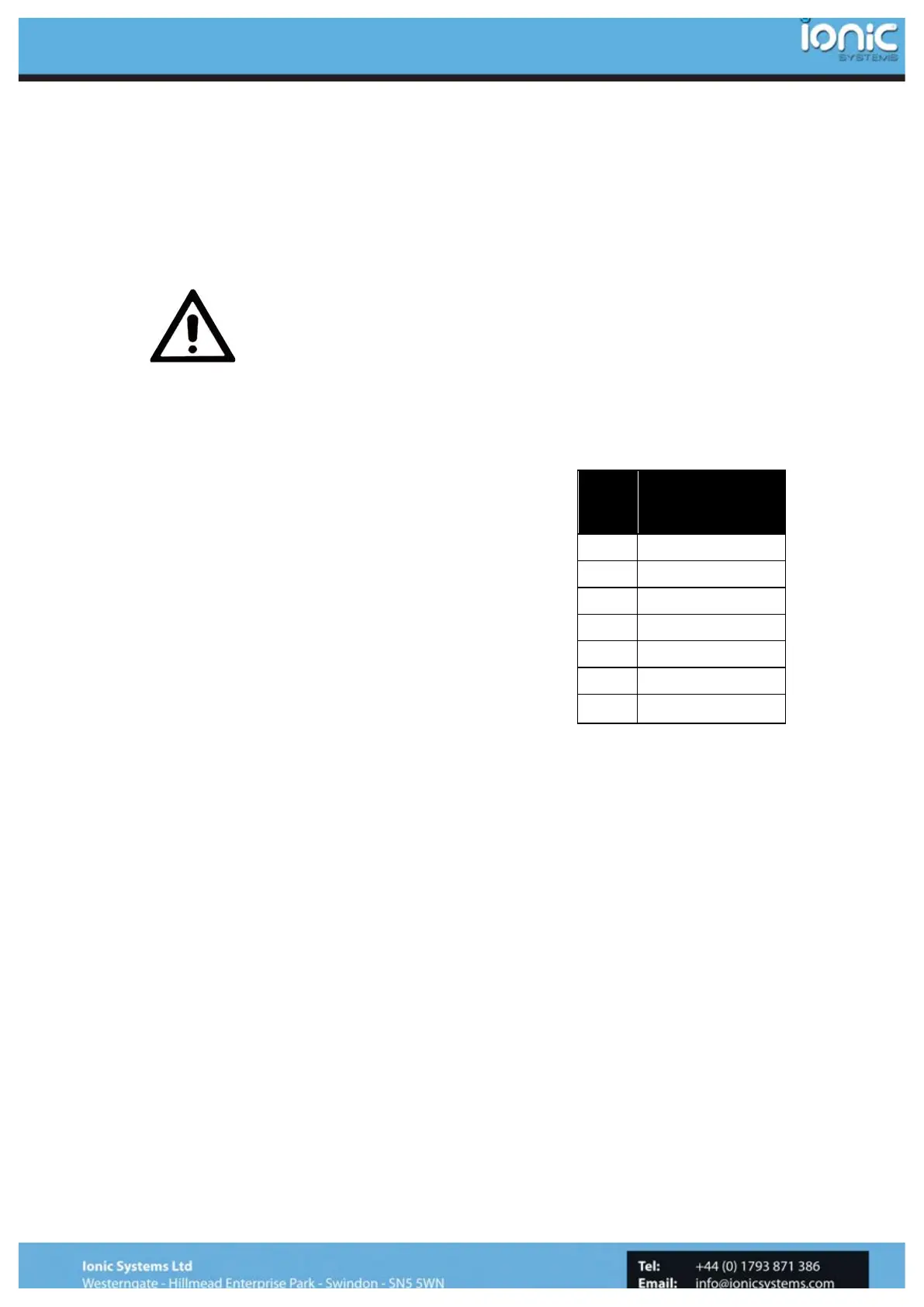
RO membrane are referenced at 25°C the following table
gives guidance to temperature correction figures
(When the water temperature drops to 4°C the correction
factor is 0.48 so pure water production is nearly halved)
The lower the temperature of the feed water, the slower pure water production will be.
Therefore, the three most important factors to consider for RO water production are;
1. Feed Temperature
2. Feed Pressure
3. Feed TDS
Each machine is tested at manufacture and pure water production values are recorded as
part of a comprehensive testing regime.
As filter life is used up over time, pure water production speed and quality degenerates.
Degeneration is determined by the factors listed above.
Machine performance can only be maintained by filter replacement dictated by local water
conditions.



 To Next Page