FOR A LIST OF RELEVANT PATENTS
AND TRADEMARKS PLEASE SEE
CHENTRONICS.COM/LEGAL-NOTICES
THIS DRAWING OWNED BY CHENTRONICS. IT IS
CONDITIONALLY LOANED AND IS TO BE RETURNED UPON
REQUEST. THE BORROWER BY RECEIVING IT HAS AGREED
NOT TO REPRODUCE NOR COPY IT IN WHOLE OR IN PART NOR
TO FURNISH INFORMATION FROM IT TO OTHERS NOR TO
MAKE ANY USE OF IT THAT IS OR MAY BE INJURIOUS TO
CHENTRONICS. FOR MORE INFORMATION PLEASE CONTACT
CHENTRONICS AT +1.607.334.5531.
TOLERANCE NOTES
FABRICATED TOLERANCES
≥ 2 ft (610 mm) ± 0.250 in (6.4 mm)
< 2ft (610 mm) ± 0.125 in (3.2 mm)
MACHINED TOLERANCES
± 0.050 DECIMAL DIM (1 PLACE)
± 0.010 DECIMAL DIM (2 PLACES)
± 0.005 DECIMAL DIM (3 PLACES)
4.3 Product Features
4.3.1 Programmability
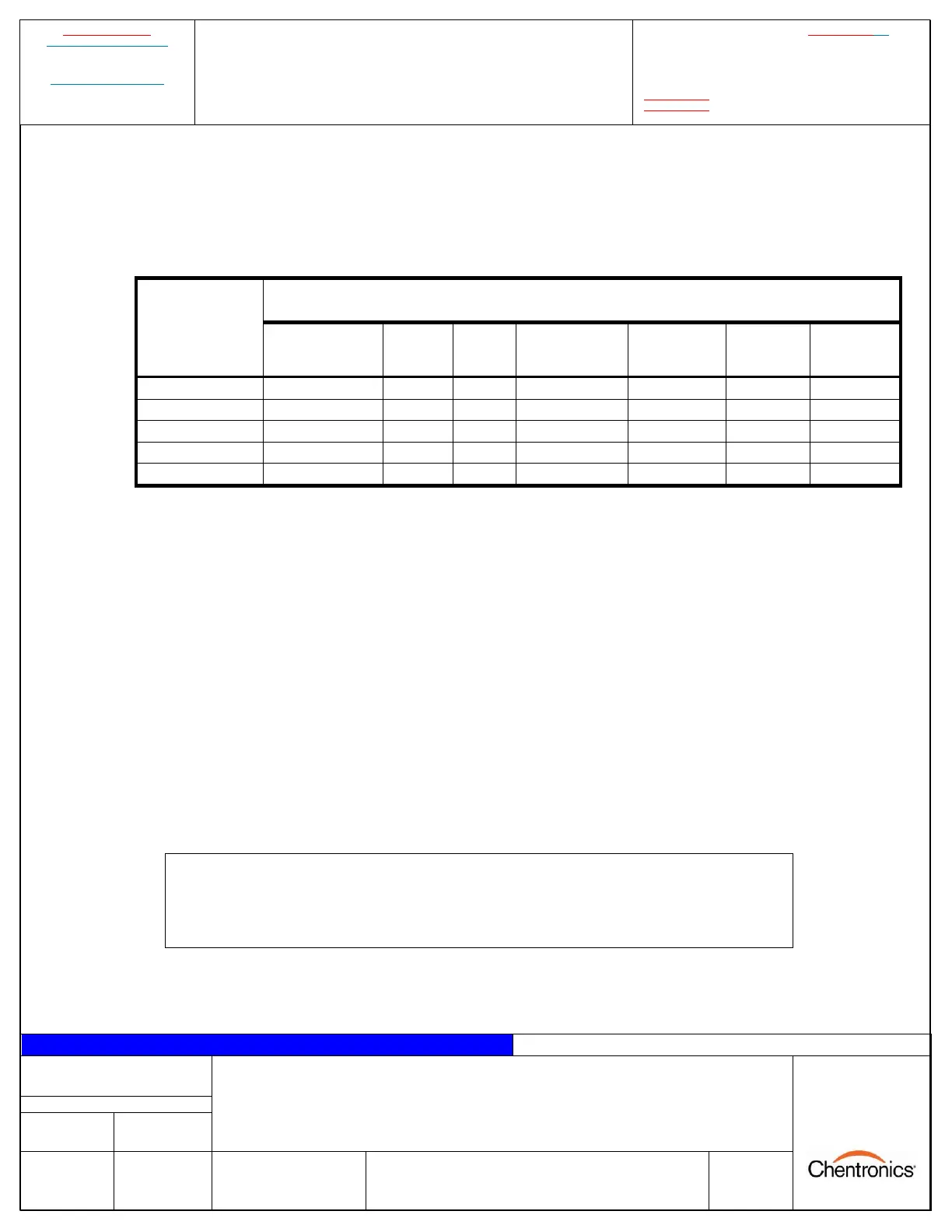
Using iScan Software , the SB models have limited programmability (intended for single burner
applications). MB models have a high degree of programmability, as outlined in the table below:
For instructions on how to program the scanner, please reference the iScan Software manual.
4.3.2 Digital Signal Processing with Self Check
The iScan2 is a DSP (digital signal processor) based instrument. The flame scanner uses a solid-state optical
detector to generate an analog signal. The optical detector operates in ultraviolet and infrared light
spectra. The processor uses DSP techniques to determine if a flame is present.
The flame scanner incorporates a self-check system that tests all critical components every 20 seconds. A
self-check failure will automatically de-energize the internal flame relay (relays if configured in Redundant
Flame Relay Mode) and energize the fault relay (if configured in the Independent Flame/Fault Relay
Mode).
4.3.3 Electronically Assisted Sighting Indicator (EASI)
Non-Hazardous models of the iScan2 include the EASI (Electronically Assisted Sighting Indicator) feature,
which assists in optimum sighting of the flame and providing quick diagnostics of the scanner’s status.
4.3.4 Configurable Flame Relays
Non-Hazardous models have two relays which can be configured in one of the following two modes:
Redundant Flame Relay Mode: Two relays are connected in series
-OR –
Independent Flame/Fault Relay Mode: Two relays are connected in parallel


 To Next Page