●
Inspect the product for defects regularly.
●
In the event of any defects, switch off the
unit and contact your installer or service
organisation.
●
Regularly operate the safety group to test
that it is not blocked by a build-up of dirt.
●
Only use those parts specified by Itho
Daalderop when replacing parts.
●
Take the following steps before carrying
out work on an open appliance:
-
Switch the power off.
-
Make sure that the power cannot be
switched back on accidentally.
-
Avoid contact with electrical
components when power is required for
working. Risk of electric shock.
*) The Netherlands:
A qualified installer is an installer employed by a central heating or
mechanical installation company registered with the Chamber of
Commerce and listed in the SEI accreditation register (Foundation for
Accreditation of Installation Companies) or which has a Sterkin
accreditation.
Belgium
A qualified installer is a technician employed by an HVAC or electrical
installation company registered with the Crossroads Bank for Enterprises
with a valid VAT number.
1.2. Water quality requirements
WATER QUALITY
Acidity (pH) 7–8.5
Iron content (Fe) ‹ 0.2 mg/l
Chlorine content (Cl) ‹ 150 mg/l
Conductivity ‹ 125 mS/m
Hardness
3-12 °dH / 5-22 °fH /
0.53-2.14 mmol/l CaCO
3
Chemical additives Not permitted
A softening filter must be used in areas where the water hardness
exceeds the values stated in the table. You can contact your water
supplier to find out the water hardness level.
1.3. Recycling
This product was manufactured using sustainable materials. It
should be disposed of in a responsible manner at the end of its life
cycle. Your local authorities can provide you with information on how
to do so.
The product's packaging can be recycled. These materials should
be disposed of in a responsible manner in accordance with
government regulations.
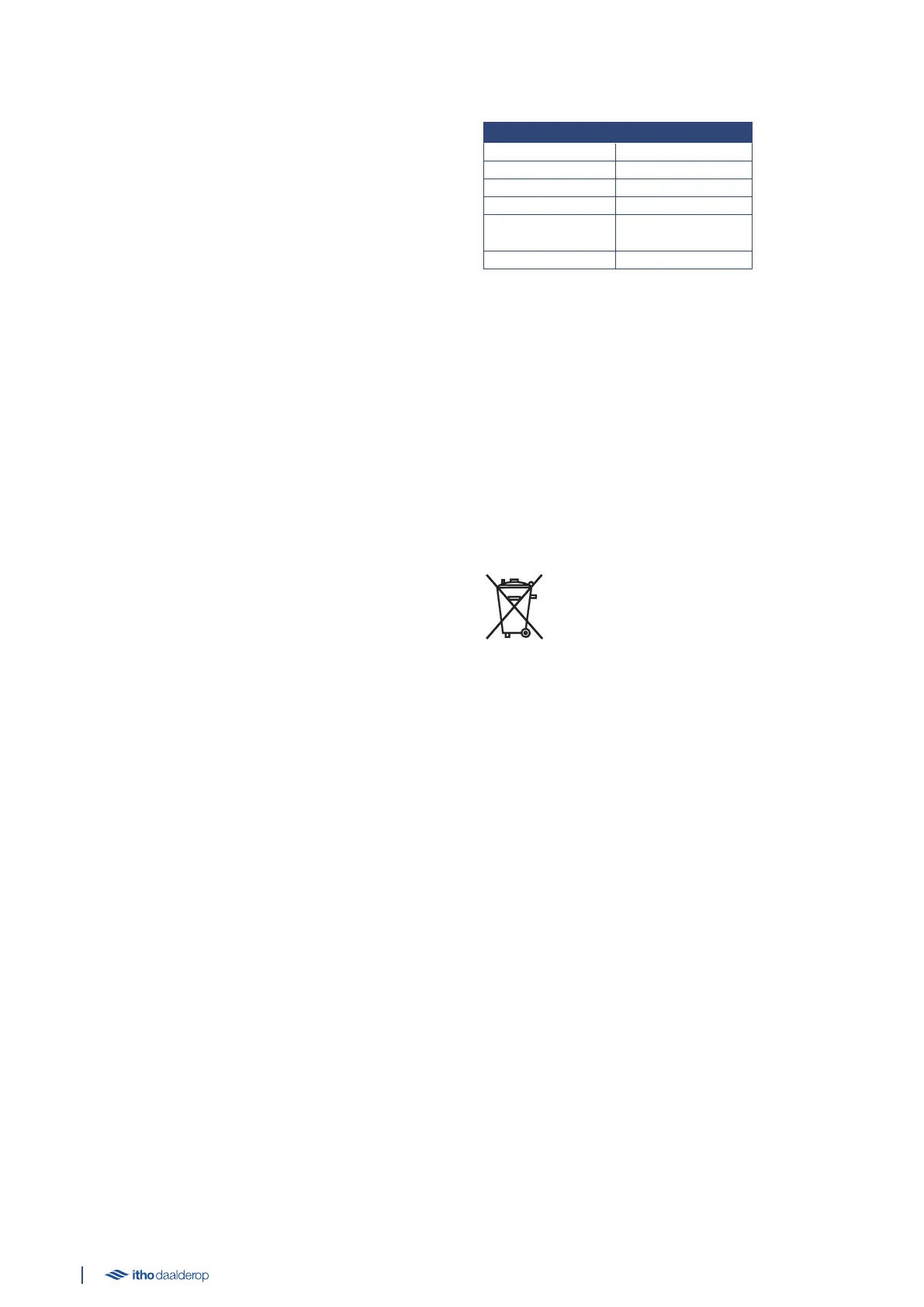
As a reminder of the need to dispose of batteries and electrical
household appliances separately, the product features a symbol
consisting of a crossed-out wheeled bin. This means that the
product should not be disposed of with the rest of your domestic
waste at the end of its life cycle. It must be taken either to a special
separate waste collection centre operated by the local council or to
an outlet specified by this service.
Any adverse effects on the environment and human health are
minimised by handling batteries and household appliances
separately. This ensures that the materials comprising the
appliance can be recycled, thereby saving a significant amount of
energy and raw materials.
6



 To Next Page