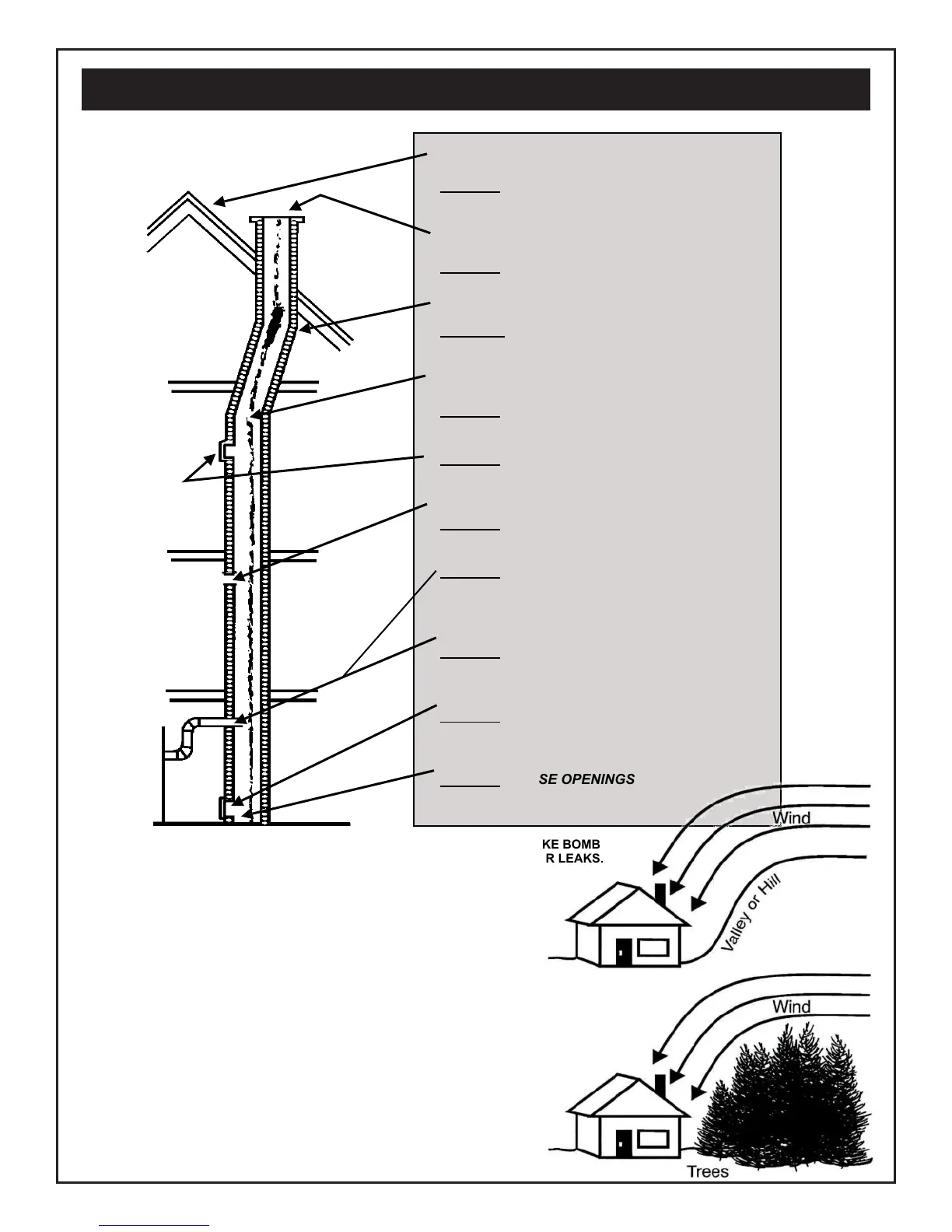
TOP OF CHIMNEY LOWER THAN
SURROUNDING OBJECTS
REMEDY: EXTEND CHIMNEY ABOVE
ALL OBJECTS WITHIN 30 FEET
CHIMNEY CAP PUSHED OVER FLUE OR
FLUE OBSTRUCTED BY A VENTILATOR
REMEDY: REMOVE OBSTRUCTION
ACCUMULATION OF SOOT OR DEBRIS
IN OFFSET
REMEDY: REMOVE
AIR LEAKS THROUGH CRACKS IN
FLUE AND CHIMNEY DISCLOSED BY
SMOKE TEST
REMEDY: CLOSE LEAKS WITH CEMENT
FLUE CAP RUSTY AND LEAKY
REMEDY: CLOSE LEAKS
ANOTHER STOVE OR HEATER PIPE
CONNECTED TO SAME FLUE
REMEDY: REMOVE & SEAL OPENING
VENT PIPE PUSHED INTO FLUE
REMEDY: MAKE END FLUSH WITH
INSIDE OF FLUE
LOOSELY FITTED VENT PIPE
DISCLOSED BY SMOKE TEST
REMEDY: CLOSE WITH CEMENT
LOOSELY FITTED CLEAN OUT DOOR
DISCLOSED BY SMOKE TEST
REMEDY: CLOSE LEAKS WITH CEMENT
OPENING BETWEEN FLUES DISCLOSED BY
SMOKE TEST
REMEDY: CLOSE OPENINGS
TO MAKE A SMOKE TEST, USE A SPECIAL SMOKE BOMB
AND WITH TOP OF CHIMNEY CLOSED, LOOK FOR LEAKS.
Home located on side of hill: When the wind blows over a hill toward your
home, the wind will fall. This could cause a down-draft into your chimney.
Some common solutions to correct down-drafts are to add a chimney cap
with a weather vane (wind direction cap), add height to the chimney or add
a power venter.
Tall trees near your home: If you have trees that are near to and higher
than your home, a down-draft can occur when the wind blows. Correct the
same way as if you live on the side of a hill or in a valley.
Maintenance
45


 To Next Page