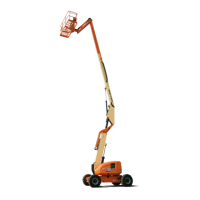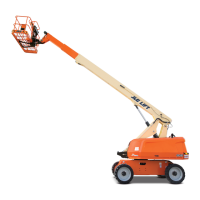
EasyManua.ls Logo

JLG 600S - Service Manual

JLG 600S
334 pages
Print Icon
To Next Page IconTo Next Page
Loading...
Service and Maintenance Manual
Models
600S
600SJ
660SJ
S/N 0300080000
to 0300171769
P/N - 3121202
February 26, 2014

Table of Contents

Other manuals for JLG 600S

Questions and Answers

  • M
    mcdonaldwalterJul 27, 2025
    How to troubleshoot a JLG Lifting Systems that won’t shift or is slow to start?
    • F
      farrellmatthewJul 27, 2025
      If your JLG Lifting System won’t shift or is slow to start, it could be due to obstructed or restricted flow through the servo control signal lines, which could result in slow shift or no shift motor conditions. Ensure the signal lines are not obstructed or restricted and that the signal pressure is adequate to shift the motor. Also, supply and drain orifices determine motor shift, and obstruction increases shift times. Ensure proper control orifices are installed in the motor and are not obstructed; clean or replace them if necessary.
  • R
    Russell BeckAug 2, 2025
    Why is my JLG 600S system operating hot?
    • J
      jason03Aug 3, 2025
      Your JLG Boom Lifts system might be running hot due to several reasons. It could be due to an insufficient amount of hydraulic fluid, which fails to meet the system's cooling demands. In this case, fill the reservoir to the proper level. Another cause might be a failing or obstructed heat exchanger, which also prevents adequate cooling. Make sure the heat exchanger is receiving enough air flow and is in good condition; repair or replace it if needed. Finally, a system relief valve that's unseated for too long or malfunctioning could cause overheating. Repair or replace any faulty relief valves and check that the machine's loads aren't too high.
  • Z
    zkellyAug 8, 2025
    Why is there excessive noise and vibration in my JLG Lifting Systems?
    • H
      hojohnAug 8, 2025
      Excessive noise and vibration in JLG Lifting Systems can stem from several issues. Insufficient hydraulic fluid may cause cavitation. To resolve this, fill the reservoir to the correct level and ensure the oil supply to the motor is adequate and unobstructed. Trapped air in system lines or the motor can also lead to cavitation; ensure all system lines and components are purged of air. A loose or incorrect shaft coupling will produce vibrations; ensure the correct coupling is used and properly fitted on the shaft. Misaligned shafts create frictional vibration; ensure shafts are properly aligned. Finally, if the viscosity is above acceptable limits, it will result in cavitation; replace the hydraulic oil with the appropriate fluid for the operating conditions.
  • K
    Kathleen BruceAug 14, 2025
    What to do if my JLG Lifting Systems are operating hot?
    • N
      nsimmonsAug 15, 2025
      A JLG Lifting System may overheat due to several reasons. An insufficient amount of hydraulic fluid will not meet system cooling demands, so ensure you fill the reservoir to the proper level. Also, if the heat exchanger is failing or obstructed, it may not meet system cooling demands. Make sure the heat exchanger is receiving adequate airflow and is in good operating condition; repair or replace it as necessary. Finally, if a system relief valve becomes unseated for an extended period or fails, the system could overheat. Repair or replace any malfunctioning relief valves and verify loads on the machine are not excessive.
  • D
    Duane RogersAug 20, 2025
    How to fix excessive noise and vibration in JLG Boom Lifts?
    • J
      Jeff MartinezAug 20, 2025
      Excessive noise and vibration in your JLG Boom Lifts can stem from several issues. Insufficient hydraulic fluid can cause cavitation, leading to system noise; ensure the reservoir is filled to the correct level and that oil supply to the motor is adequate and unobstructed. Trapped air in system lines or the motor can also cause cavitation; make sure all system lines and components are purged of air. A loose or incorrect shaft coupling can produce vibrations; verify the correct coupling is used and fits properly. Misaligned shafts create frictional vibration; ensure shafts are properly aligned. Finally, hydraulic oil viscosity above acceptable limits can cause cavitation; replace the hydraulic oil with the appropriate fluid for your operating conditions.

Summary

SECTION A. INTRODUCTION - MAINTENANCE SAFETY PRECAUTIONS

A GENERAL

Contains general safety precautions for aerial platform maintenance.

B HYDRAULIC SYSTEM SAFETY

Details safety precautions for high-pressure hydraulic systems.

C MAINTENANCE

Lists essential safety precautions to follow during maintenance.

SECTION 1 - SPECIFICATIONS

1.1 CAPACITIES

Lists fluid capacities for various machine components.

1.2 COMPONENT DATA

Provides detailed specifications for engine, drive system, tires, etc.

1.3 PERFORMANCE DATA

Outlines travel speeds, gradeability, and machine weights.

1.4 FUNCTION SPEEDS

Details time required for various boom and drive functions.

1.5 TORQUE REQUIREMENTS

Lists torque values for critical fasteners and components.

1.6 LUBRICATION

Specifies recommended lubricants and intervals for machine components.

1.7 PRESSURE SETTINGS

Lists hydraulic system pressure settings for various functions.

1.8 CYLINDER SPECIFICATIONS

Provides bore, stroke, and rod diameter for cylinders.

1.9 MAJOR COMPONENT WEIGHTS

Lists approximate weights of major machine components.

1.10 CRITICAL STABILITY WEIGHTS

Details critical weights for machine stability.

1.11 LUBRICATION AND OPERATOR MAINTENANCE

Details lubrication points and maintenance schedules.

1.12 SERIAL NUMBER LOCATIONS

Identifies locations of serial number plates on the machine.

SECTION 3 - CHASSIS & TURNTABLE

3.1 TIRES & WHEELS

Covers tire inflation, damage, replacement, and wheel installation.

3.2 DRIVE TORQUE HUB

Details roll, leak, and brake testing procedures for torque hubs.

3.3 FREE WHEELING OPTION

Explains how to engage/disengage drive motors and brakes for towing.

3.4 DRIVE MOTOR (S;N 75606 TO PRESENT)

Describes the drive motor's operation and components.

3.5 OSCILLATING AXLE BLEEDING PROCEDURE AND LOCKOUT TEST

Provides steps for bleeding lockout cylinders and performing tests.

3.6 STEER ADJUSTMENTS

Details procedures for adjusting steering stops on the machine.

SECTION 3 - CHASSIS & TURNTABLE

3.7 SWING HUB

Covers adjustment procedures, disassembly, and assembly of the swing hub.

3.8 SWING BEARING

Details checks, wear tolerance, and replacement of the swing bearing.

3.9 SWING BRAKE - MICO

Outlines disassembly, inspection, and assembly of the swing brake.

3.10 ROTARY COUPLING

Procedure for installing the rotary coupling seal kit.

3.11 GENERATOR

Maintenance schedule for generator brushes and slip rings.

3.12 SPARK ARRESTER CLEANING INSTRUCTIONS

Instructions for cleaning the spark arrester component.

3.13 GLOW PLUGS

Explains the operation of glow plugs and indicator lamp.

3.14 FORD EFI ENGINE

Provides guidance on performing diagnostic checks for the Ford EFI engine.

SECTION 3 - CHASSIS & TURNTABLE

3.15 FORD LPG SYSTEM

Details the LPG system components and operation.

3.16 DEUTZ EMR 2 (S;N 84827 TO PRESENT)

Explains the EMR2 system and its components.

3.17 BIO FUEL IN DEUTZ ENGINES

Provides guidelines for using bio-fuels in DEUTZ engines.

3.18 GM ENGINE GENERAL MAINTENANCE

Covers maintenance of the drive belt and electrical system.

SECTION 3 - CHASSIS & TURNTABLE

3.19 GM ENGINE DUAL FUEL SYSTEM

Explains the operation and diagnosis of the GM dual fuel system.

SECTION 4 - BOOM & PLATFORM

4.1 BOOM ROPE TORQUING PROCEDURES

Details the procedure for torquing boom rope adjustment nuts.

4.2 WEAR PADS

Covers wear pad inspection, replacement, and adjustment.

4.3 WIRE ROPE

Provides guidelines for inspecting wire ropes for damage and wear.

4.4 BOOM MAINTENANCE

Outlines the removal and disassembly of boom sections and components.

4.5 ARTICULATING JIB BOOM

Details the removal, disassembly, inspection, and assembly of the articulating jib.

SECTION 4 - BOOM & PLATFORM

4.6 LIMIT SWITCHES AND CAM VALVE ADJUSTMENT

Describes how to adjust limit switches and cam valves.

4.7 BOOM CLEANLINESS GUIDELINES

Provides guidelines for maintaining internal boom cleanliness.

4.8 PLATFORM

Details the procedure for replacing platform sections.

4.9 ROTATOR - HELAC (PRIOR TO S;N 0300130779)

Outlines the disassembly procedure for the Helac rotator.

4.10 ROTARY ACTUATOR (S;N 0300130779 TO PRESENT)

Explains theory of operation, required tools, and disassembly of the rotary actuator.

4.11 FOOT SWITCH ADJUSTMENT

Details the procedure for adjusting the foot switch.

SECTION 5 - HYDRAULICS

5.1 CYLINDERS - THEORY OF OPERATION

Explains the function of double-acting and holding valve cylinders.

5.2 CYLINDER CHECKING PROCEDURE

Outlines procedures to check cylinders for leaks and proper operation.

5.3 CYLINDER REMOVAL AND INSTALLATION

Details the removal and installation of boom cylinders.

SECTION 5 - HYDRAULICS

5.4 CYLINDER REPAIR

Provides general procedures for cylinder disassembly and cleaning.

5.5 VARIABLE DISPLACEMENT PUMP (M46 SERIES)

Covers troubleshooting and gauge installation for the variable displacement pump.

5.6 VALVES - THEORY OF OPERATION

Explains the function of solenoid control valves and relief valves.

SECTION 5 - HYDRAULICS

5.7 PRESSURE SETTING PROCEDURES

Details how to adjust main relief, steer, swing, lift, and platform pressures.

5.8 HYDRAULIC COMPONENT START-UP PROCEDURES AND RECOMMENDATIONS

Provides guidelines for starting up hydraulic components.

5.9 HYDRAULIC PUMP W;HAYES PUMP DRIVE COUPLING LUBRICATION

Instructions for lubricating the hydraulic pump drive coupling.

SECTION 6 - JLG CONTROL SYSTEM

6.1 INTRODUCTION

Provides an overview of the JLG control system and its benefits.

6.2 TO CONNECT THE JLG CONTROL SYSTEM ANALYZER

Steps for connecting the analyzer to the control system.

6.3 USING THE ANALYZER

Instructions on navigating and using the analyzer display.

6.4 CHANGING THE ACCESS LEVEL OF THE HAND HELD ANALYZER

Procedure for accessing different levels and entering passwords.

6.5 ADJUSTING PARAMETERS USING THE HAND HELD ANALYZER

Explains how to adjust personality settings and parameters.

6.6 MACHINE SETUP

Details how to adjust machine digit items and select options.

6.7 LEVEL VEHICLE DESCRIPTION

Instructions for calibrating the level sensor.

6.8 MACHINE PERSONALITY SETTINGS

Provides ranges and defaults for machine personality settings.

6.9 ANALYZER DIAGNOSTICS MENU STRUCTURE

Outlines the structure and navigation of the analyzer's diagnostic menus.

SECTION 7 - BASIC ELECTRICAL INFORMATION & SCHEMATICS

7.1 GENERAL

Basic electrical information for locating and correcting problems.

7.2 MULTIMETER BASICS

Explains common multimeter measurements and usage.

7.3 APPLYING SILICONE DIELECTRIC COMPOUND TO ELECTRICAL CONNECTIONS

Procedure for applying dielectric compound to electrical connections.

7.4 AMP CONNECTOR

Details applying silicone dielectric compound to AMP connectors.

7.5 DEUTSCH CONNECTORS

Procedures for assembling and disassembling Deutsch connectors.

HD30;HDP20 Series Assembly

Procedure for assembling HD30/HDP20 series connectors.

HD30;HDP20 Series Disassembly

Procedure for disassembling HD30/HDP20 series connectors.

JLG 600S Specifications

General IconGeneral
Platform Height60 ft / 18.29 m
Platform Capacity500 lbs
Weight22, 800 lb / 10, 342 kg
Platform Capacity - Unrestricted500 lbs
Gradeability - 4 Wheel Drive45%
Maximum Platform Height60 ft
Machine Height9.83 ft / 3 m
EngineDiesel
Working Height66 ft
Swing360 Degrees Continuous
Platform Size36 x 96 in
Stowed Height9.83 ft / 3 m
Ground Clearance1 ft
Drive Speed - 4 Wheel Drive4.5 mph / 7.24 km/h
Engine Power74 hp
Drive Speed4.5 mph / 7.24 km/h

Related product manuals