EasyManua.ls Logo

Johnson Controls System 350 - User Manual

Johnson Controls System 350
8 pages
Print Icon
To Next Page IconTo Next Page
Loading...
FANs 930, 125
Product/Technical Bulletin S350
Issue Date 0300
© 2000 Johnson Controls, Inc.
1
Part No. 24-7664-1, Rev. D www.johnsoncontrols.com
Code No. LIT-930080
System 350™
S350A Temperature, S351A Humidity,
and S352A Pressure Stage Modules
The S350A, S351A, and S352A Stage Modules are
intended to be used with System 350™ controls. Each
of these stage modules plugs into the respective
control module to add multiple-stage capability. These
stage modules have Single-Pole, Double-Throw
(SPDT) relay output with Light-Emitting Diode (LED)
indication.
As are all System 350 products, the stage modules are
housed in NEMA 1, high-impact thermoplastic
enclosures. The modular design provides easy,
plug-together connections for quick installation and
future expandability.
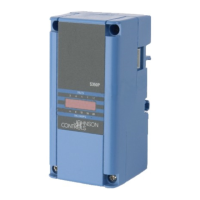
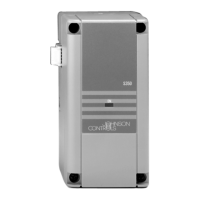
Figure 1: System 350 Stage Module
Features and Benefits
Modular Design
Permits system to be configured to
equipment, with convenient, future expansion
made easy
Plug-together Connectors
and 35 mm DIN Rail
Mounting
Eliminates wiring between modules and
reduces installation costs
Selectable Mode of
Operation
Provides independent relay energization,
either above or below setpoint, for
cooling/heating (S350A),
dehumidification/humidification (S351A), or
direct acting/reverse acting (S352A)
Adjustable Differential
Enables user to match the range of
temperature, humidity, or pressure stage
modules to specific application requirements
Adjustable Offset
Allows multiple stage sequencing of 1-30F°
(0.5-17C°) (S350A), 2-30% RH (S351A), or
2-50 psi (S352AA-2)
Question and Answer IconNeed help?

Do you have a question about the Johnson Controls System 350 and is the answer not in the manual?

Johnson Controls System 350 Specifications

General IconGeneral
BrandJohnson Controls
ModelSystem 350
CategoryControl Unit
LanguageEnglish

Summary

Features and Benefits

Modular System Design

Permits flexible system configuration and easy future expansion with plug-together connections.

DIN Rail Mounting and Wiring

Features plug-together connectors and 35 mm DIN rail mounting for reduced installation costs.

Selectable Operation Modes

Provides independent relay energization for cooling, heating, dehumidification, humidification, or direct/reverse acting modes.

Adjustable Differential and Offset

Allows matching stage module ranges to application requirements and controls sequencing via adjustments.

Application and System Integration

Module Integration

Modules connect to System 350 control modules, receiving power, setpoint, and sensor input for multistage control.

Stage Capacity and Configuration

Maximum system stages depend on the control module type and stage module design used.

Operation and Control

Offset Adjustment

Determines the offset from the control setpoint at which the stage module relay de-energizes.

Differential Adjustment

Defines the difference in units (degrees, % RH, psi) between relay energization and de-energization.

Operation Mode Selection

Uses jumpers to select modes like Cooling/Heating, Dehumidification/Humidification, or Direct/Reverse Acting.

Dimensions and Mounting

Module Dimensions

Physical dimensions of the stage module are provided in inches and millimeters for installation planning.

Mounting Options

Modules are designed for 35 mm DIN rail mounting or surface mounting using key-slot holes.

Adjustment Procedures

Setting Differential

Adjust the DIFF potentiometer to set the desired difference between relay energization and de-energization.

Setting Offset

Adjust the OFFSET potentiometer to set the offset from the setpoint for relay de-energization.

Wiring Instructions

Wiring Guidelines

Follow guidelines and wiring diagrams for proper connections at terminal strips and harness connections.

System Checkout and Troubleshooting

Checkout Procedure

Verify installation, wiring, and observe at least three complete operating cycles before leaving the installation.

Troubleshooting Common Issues

Diagnose problems by checking power, settings, and relay status using troubleshooting tables.

Repairs and Replacements

Do not perform field repairs; contact representatives for sensors and replacement controls.

Ordering Information

Product Codes and Descriptions

Lists product code numbers and detailed descriptions for various stage modules.

Technical Specifications

Electrical and Environmental Ratings

Covers input voltage, power consumption, relay ratings, and ambient operating conditions.

Material and Mounting Details

Details enclosure material, mounting type, and agency listing information for the modules.

Related product manuals