Interoperability Now!
1 General Information
1.1 Scope
This instruction manual provides the information necessary to install and operate the NXU-2A
Network Extension Unit.
1.2 Description
1.2.1 NXU General
NXU stands for Network Extension Unit. NXU units connect communications equipment to a
digital network using VoIP (Voice over Internet Protocol) technology. NXU units use JPS’
proprietary technology, embodied in a family of hardware and software products that enable
voice communications devices to be interconnected via a network across the room or around
the world. VoIP is a means of digitizing voice signals and transmitting them over a digital
network, such as a LAN, WAN, or even the Internet itself.
1.2.1.1 Advantages of NXU Technology
➢ Enables the design of low cost, extremely flexible radio communications networks.
➢ Multiplexes voice audio and data over a standard Ethernet network.
➢ Uses existing network infrastructure eliminating the need for leased lines and
microwave sites.
➢ Eliminates the requirement for pilot tones and other in-band signaling.
➢ Facilitates centralized control of a communications network from a single computer.
1.2.2 NXU-2A Description
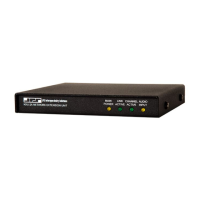
The NXU-2A is intended for use with radio communications consoles, communications radios,
and JPS products such as the ACU-1000 Interconnect Unit. A general-purpose stand-alone
device interfaces full duplex audio, one RS-232 port, and three status bits onto an Ethernet
network. A pair of NXU-2As can form a simple system that creates a transparent
communications link between the two. The NXU-2A at one end (usually the equipment end) is
the server; the one at the other end (usually the operator end) is the client. The audio, RS-232,
and status bits are transparently transferred between the server and the client.
Any NXU-2A can be set up as a server or as a client depending on system needs. The RS-232
interface allows for different baud rates between the server and the client.
The NXU-2A monitors its network connection and adjusts its parameters automatically to
provide optimum performance under varying network conditions. Front panel indicators
display the unit’s status. Initial configuration is done through the NXU-2A’s serial port, but


 To Next Page