
 Need help?
Do you have a question about the KAAZ V360 and is the answer not in the manual?
Explains safety alert symbols and signal words like WARNING, CAUTION, NOTE for safe operation.
Details required PPE like safety glasses, hearing protection, headwear, gloves, and footwear for safe operation.
Covers safe work area inspection, correct attachment installation, and general operational safety.
Addresses safety during starting, operation, and stopping the engine, including hot parts and vibration warnings.
Outlines precautions for transporting the unit safely and storing it properly after operation.
Provides detailed specifications including drive system, blade speed, noise levels, and engine details.
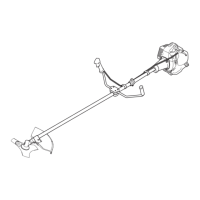
Identifies key parts of the machine, such as blades, guards, and transmission components.
Provides instructions for securely installing the machine's handle.
Details the installation of the cutting attachment guard, emphasizing blade sharpness and safety.
Guides on the proper installation of the cutting attachment, including blade and guard assembly.
Explains how to use the harness with a quick release device for safety during emergencies.
Outlines essential preparation steps before starting the engine, ensuring fuel system integrity and correct fuel mixture.
Details how to adjust the throttle wire play for optimal engine performance and starting.
Instructs to set the engine switch to the "I" (start) position to begin the starting process.
Explains how to set the throttle lock to ensure the engine can be pull-started correctly.
Warns against rapid RPM increases due to poor lubrication and the risks of high RPM operation.
Instructs to move the throttle to low speed and warm up the engine for about one minute for smooth acceleration.
Warns against touching hot engine parts and cautions about fuel leakage from the tank cap in summer.
Details steps to stop the engine, including releasing the throttle and turning the switch to STOP.
Advises evacuating fuel and running the engine until it stops for storage preparation, making subsequent startups easier.
Lists cutter types and warns against using them on wood or twigs, emphasizing manufacturer-designated cutters.
Lists essential PPE and emphasizes safe handling of sharp edges and maintaining distance from feet.
Provides instructions for nylon cutters and blades, including preparation and clearing jams.
Explains efficient mowing techniques, checking for blade damage after impacts, and maintaining safe distances.
Warns about hot engine parts, damaged parts, and liability for improper maintenance.
Recommends adherence to the maintenance schedule and details specific procedures like idle speed adjustment.
Explains when carburetor adjustment is needed and how to adjust the idle speed screw for optimal performance.
Lists items requiring inspection and maintenance, categorized by frequency and condition.
Details maintenance procedures for specific parts like the throttle trigger, engine switch, guard, and fuel tank.
Covers maintenance for the air filter and carburetor, including cleaning, adjustment, and replacement.
Provides instructions for daily maintenance of the rotary blade and screws, including sharpening and checking tightness.
Outlines the procedure for lubricating the angle transmission every 50 hours of operation.
Provides step-by-step instructions for cleaning the air filter, including washing and replacement.
Details the process of cleaning the fuel filter, including replacement if extremely dirty.
Explains how to clean and adjust the spark plug, including carbon deposit removal and electrode gap setting.
Instructs on removing carbon deposits from engine parts like muffler, cylinder, and piston, requiring special tools and expertise.
Lists checks for when the machine fails to start, including fuel contamination and intake issues.
Addresses problems with engine speed not increasing or power output being insufficient.
Lists checks for when the machine gradually slows down and stops during operation, like fuel vent or system blockages.
Provides detailed steps for long-term storage, including cleaning, oiling, fuel evacuation, and proper storage location.

 To Next Page
 General