Select Options
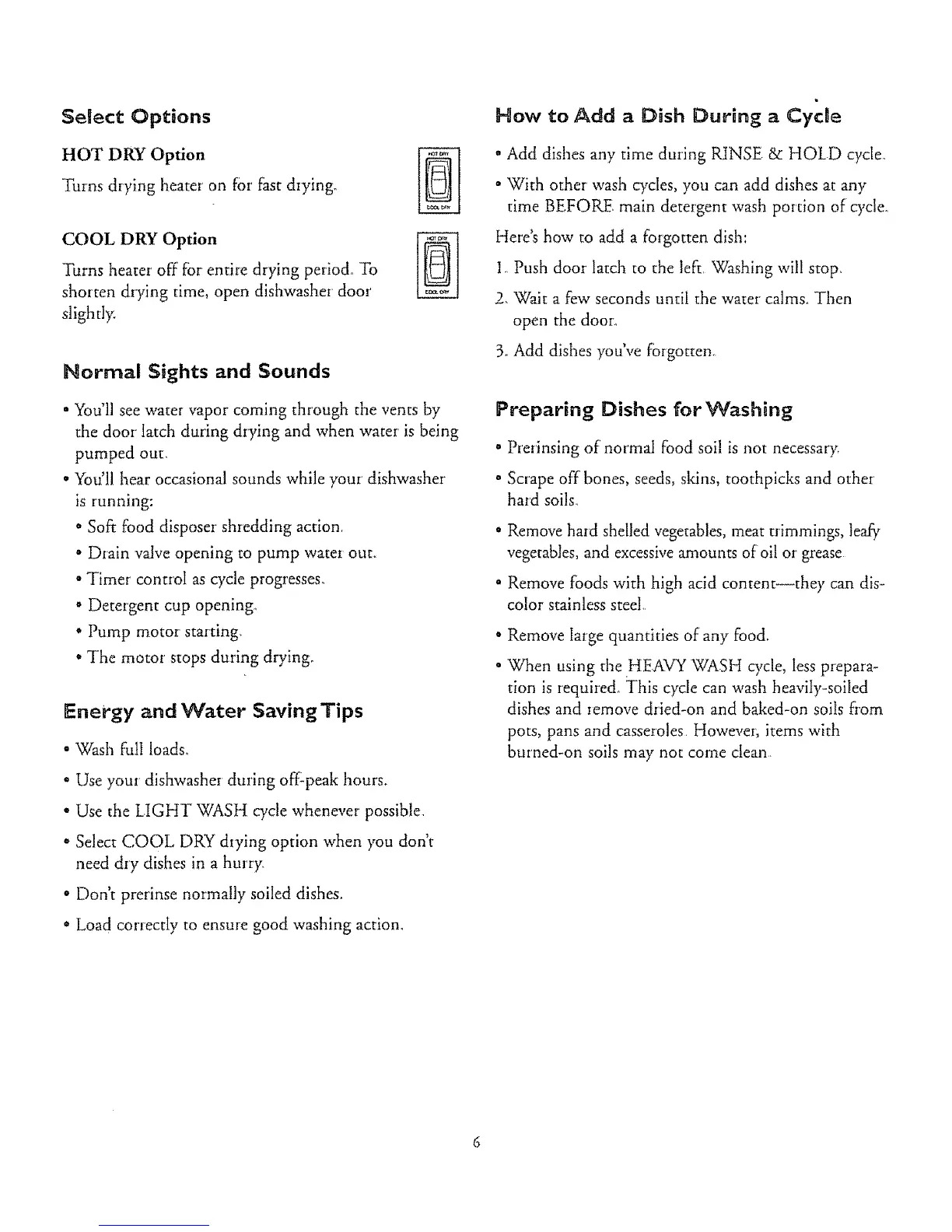
HOT DRY Option
Turns drying heater on for fast drying.
COOL DRY Option
Turns heater off for entire drying period° To
shorten drying time, open dishwashet door'
slightly.
Normal Sights and Sounds
. You'll see water vapor coming through the vents by
the door' latch during drying and when water' is being
pumped out.
• You'll hear occasional sounds while your' dishwasher
is running:
• Soft food disposer shredding action,
• Drain valve opening to pump watet out.
° Timer control as cycle progresses°
o Detergent cup opening,
• Pump motor starting.
° The motor stops during drying.
Energy and Water SavingTips
• Wash full loads.
• Use your dishwasher during off-peak hours.
" Use the LIGHT WASH cycle whenever possible,
o Select COOL DRY drying option when you don't
need dry dishes in a hurry.
° Don't prerinse normally soiled dishes.
° Load correctly to ensure good washing action.
How to Add a Dish During a Cycle
° Add dishes an}, time during RINSE. & HOLD cycle.
° With other wash cycles, you can add dishes at any
time BEFORE. main detergent wash pm'tion of wcle..
Here's how to add a forgotten dish:
1. Push door larch to the left. Washing will stop.
2. Wait a few seconds until the water calms_ Then
open the door,
3. Add dishes you've fmgotten.
Preparing Dishes for Washing
° Prerinsing of' normal food soil is not necessar}_
• Scrape off bones, seeds, sldns, toothpicks and other
hard soils..
. Remove hard shelled vegetables, meat trimmings, leafy
vegetables, and excessive amounts of oil or' grease
o Remove foods with high acid content--they can dis-
co!or stainless steel.
• Remove large quantities of any food.
° When using the HEAVY WASH cycle, less prepara-
tion is required This cycle can wash heavily-soiled
dishes and remove dried-on and baked-on soils fiom
pots, pans and casseroles. However, items with
burned-on soils may not come clean



 To Next Page