12
Surface Cooking
Selecting Surface Cooking Cookware
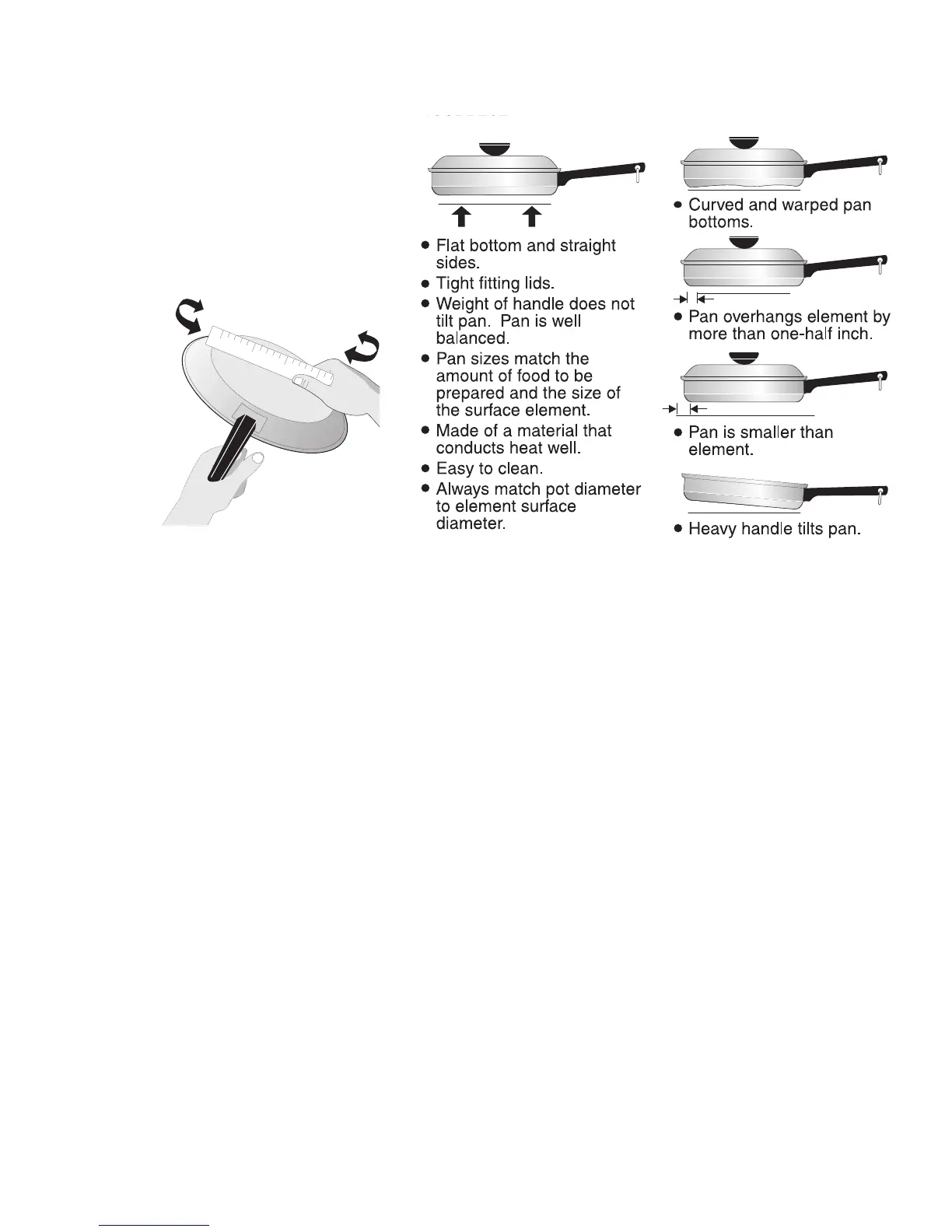
Fig. 2
Cookware should have flat bottoms that make
good contact with the entire surface heating
element. Check for flatness by rotating a ruler
across the bottom of the cookware (See Figure 2).
Be sure to follow the recommendations for using
cookware as shown in Figure1.
Note: The size and type of cookware used will
influence the setting needed for best cooking
results.
Fig. 1
Cookware Material types
The cookware material determines how evenly and quickly heat is transferred from the surface element to the pan bottom. The
most popular materials available are:
ALUMINUM - Excellent heat conductor. Some types of food will cause it to darken (Anodized aluminum cookware resists
staining & pitting). If aluminum pans slide across the ceramic glass cooktop, they may leave metal marks which will resemble
scratches. Remove these marks immediately.
COPPER - Excellent heat conductor but discolors easily. May leave metal marks on ceramic glass (see Aluminum above).
STAINLESS STEEL - Slow heat conductor with uneven cooking results. Is durable, easy to clean and resists staining.
CAST IRON - A poor heat conductor however will retain heat very well. Cooks evenly once cooking temperature is reached.
Not recommended for use on ceramic cooktops.
PORCELAIN-ENAMEL on METAL - Heating characteristics will vary depending on base material. Porcelain-enamel coating
must be smooth to avoid scratching ceramic cooktops.
GLASS - Slow heat conductor. Not recommended for ceramic cooktop surfaces because it may scratch the glass.
Correct Incorrect



 To Next Page
 Loading...