
 Need help?
Do you have a question about the Keysight E5081A ENA-X Series and is the answer not in the manual?
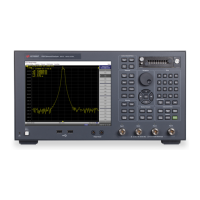
The E5081A ENA-X Series Vector Network Analyzer is a sophisticated instrument designed for precise measurement and analysis of RF and microwave circuits. It serves as a crucial tool for engineers and researchers in various fields, including telecommunications, aerospace, and defense, where accurate characterization of components and systems is paramount.
The primary function of the E5081A is to measure the scattering parameters (S-parameters) of a device under test (DUT) over a wide frequency range. S-parameters describe how linear electrical networks respond to incident and reflected waves, providing comprehensive information about a device's transmission, reflection, and isolation characteristics. This capability allows users to analyze and optimize the performance of passive and active components such as filters, amplifiers, antennas, and cables.
Beyond basic S-parameter measurements, the E5081A offers advanced analysis features. It can perform time-domain analysis, which is essential for characterizing cables, connectors, and other components with distributed parameters. This allows for the identification of discontinuities and impedance mismatches along a transmission line. The analyzer also supports various calibration techniques, ensuring high measurement accuracy across different test setups and environmental conditions. Its ability to perform complex measurements makes it indispensable for design validation, quality control, and troubleshooting in RF and microwave engineering.
While specific frequency ranges and dynamic ranges are not detailed in the provided document, the mention of "high-stability frequency standard" (Option 1E5) highlights a key technical aspect. This option significantly improves the frequency accuracy and stability of the E5081A, which is critical for demanding applications requiring precise frequency control and long-term measurement consistency. The integration of a BNC adapter for connecting the 10 MHz REF OVEN and 10 MHz REF IN connectors on the rear panel further underscores the importance of this stability.
The ventilation requirements provide insight into the physical and operational constraints of the device. A minimum clearance of ≥ 180 mm at the back and ≥ 60 mm on both the right and left sides is necessary. These specifications are crucial for ensuring proper heat dissipation and preventing overheating, which could compromise the analyzer's performance and longevity. Adhering to these ventilation guidelines is a fundamental aspect of maintaining the instrument's operational integrity.
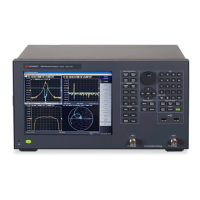
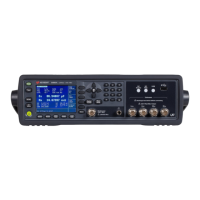
The E5081A is designed with user-friendliness in mind, offering clear indicators and a straightforward startup process. The standby switch, located on the front panel, serves as the primary control for powering the device ON and OFF. The color of this button provides immediate visual feedback on the analyzer's status:
The startup sequence involves pressing the standby switch once, which changes its color to green and initiates the self-test process. A successful self-test, without any error messages, confirms that the analyzer is ready for normal operation. To power off the device, users can either press the standby switch again or send a shutdown command from an external controller. This process transitions the E5081A into standby mode, with the button turning orange.
Initial registration of the Windows operating system is required upon the first startup. This involves agreeing to the Windows agreement message, after which the remaining registration steps proceed automatically. This streamlined process ensures that the operating system is properly configured for the analyzer's functions.
Maintenance of the E5081A primarily revolves around ensuring proper environmental conditions and careful handling. The ventilation requirements are a critical maintenance consideration, as adequate airflow prevents thermal stress on internal components. Users must ensure that the specified clearances are maintained around the device to facilitate efficient heat dissipation.
The manual also emphasizes the importance of ESD (Electrostatic Discharge) precautions. When handling and operating the E5081A, users are advised to take necessary measures to prevent electrostatic discharge, which can damage sensitive electronic components. This typically involves using anti-static mats, wrist straps, and proper grounding techniques.
A crucial warning regarding power supply interruption is provided: "Under normal use, never directly interrupt the power supply to the power cable receptacle on the rear panel when the power supply is turned ON." This highlights the need for a controlled shutdown process to prevent potential damage to the instrument or data corruption. Directly pulling the power cable while the device is operating can lead to unexpected system behavior or hardware failure.
Furthermore, the document advises against turning on the power switch if the exterior of the analyzer appears damaged during transport. This precaution is vital for user safety, as damaged equipment could pose an electric shock hazard. Instead, any damage should be reported and addressed before attempting to power on the device.
The availability of additional information resources, such as product information, manuals, troubleshooting guides, and technical support contacts, serves as a comprehensive maintenance and support feature. These resources empower users to resolve issues independently, access detailed operational instructions, and seek expert assistance when needed, contributing to the long-term reliability and usability of the E5081A.
 General
| Brand | Keysight |
|---|---|
| Model | E5081A ENA-X Series |
| Category | Measuring Instruments |
| Language | English |



 To Next Page