18
AC Wired Interconnect Model Capability
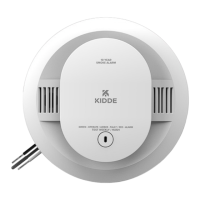
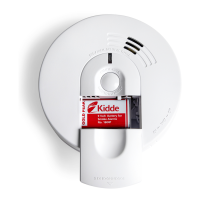
This model has AC hardwire interconnect capability. When one hardwired interconnect unit sounds an
alarm, all other compatible hardwire or interconnected units will also alarm. NOTE: AC wiring must be
completed properly and the AC quick connector must be attached to the unit for the hardwire intercon-
nect function to work.
The following models can be interconnected using the standard AC wiring interconnect: i12020,
i12020A, i12040, i12040A, i12060, i12060A, i12080, i12080A, i4618A, i4618AC, KN-SMFM-I,
RF-SM-ACDC, PE120, P12040, Pi2000, Pi2010, KN-COSM-I, KN-COSM-IB, KN-COSM-IBA,
KN-COPE-I, KN-COB-IC, SL177i, SLED177i, HD135F, SM120X, i12010S, i12010SCO, P4010ACSCO,
P4010ACSCO-W, P4010LACS-W, P4010ACS, P4010ACS-W, P4010ACLEDS, P4010ACLEDS-2,
P4010ACLEDSCO, P4010ACLEDSCO-2, 3050-VAS10-A, 3050-VASC10-A, P4010ACS-WF,
P4010ACSAQ-WF, P4010ACSCO-WF, P4010ACSCOAQ-WF, 900-CUAR, 900-CUAR-V, 20SAR,
20SA10, 20SA10-V, 30CUAR, 30CUAR-V, 30CUA10, 30CUA10-V.
The alarm is now activated! After installation / activation, test your alarm as described in Operation and
Testing section
.
WARNING: FAILURE TO PROPERLY CONNECT AC POWER AND INSTALL BATTERIES IN THE
CORRECT ORIENTATION WILL PREVENT PROPER OPERATION OF THIS ALARM AND WILL PRE
VENT ITS RESPONSE TO FIRE HAZARDS.
10. Operation And Testing
This model meets the latest residential smoke alarm standards, which includes enhanced resistance
to nuisance alarms from cooking.
Operation
The alarm is operating once it is activated and testing is complete (see “TESTING” below). When
products of combustion (smoke) are sensed, the unit sounds a loud alarm. See Section 1 for alarm
signal descriptions.
Testing
WARNING: Do not attempt to test this unit with retail “canned smoke” products. Those products
are intended for use by trained professionals and produce inconsistent results when misused.
Over-application of canned smoke can permanently damage the alarm.
SELFTESTING
This model is equipped with internal, self-testing components that are always checking to ensure the
device is operating as expected. (Weekly manual testing is still required. See below.)
MANUAL TESTING
NOTE: When pushing the Test button, use only your finger or thumb. Using any other instrument(s)
(such as a broom handle) is strictly prohibited, as it may damage the alarm.
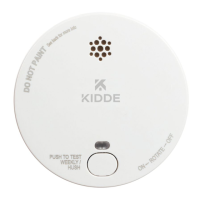
Test your alarm weekly by pressing and releasing the button quickly. A quick beep will confirm the button
has been pushed followed by the test sequence. See Other Alarm Visual and Audible Indicators table. The
alarm (and any interconnected units) will sound if the electronic circuitry, horn, and batteries are working. If
the alarm does not sound, or gives erratic or low volume sound, the unit must be replaced.


 To Next Page