19
WARNING: DUE TO THE LOUDNESS OF THE ALARM, ALWAYS STAND ABOUT 2.5 FEET
AWAY FROM THE UNIT OR USE EAR PROTECTION WHEN TESTING.
WARNING: DO NOT USE AN OPEN FLAME TO TEST YOUR ALARM, YOU COULD DAMAGE
THE ALARM OR IGNITE COMBUSTIBLE MATERIALS AND START A STRUCTURE FIRE.
Chirping
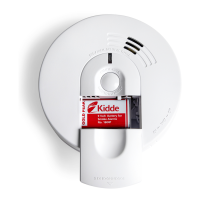
When End of Unit Life or Low Battery chirping begins, you can temporarily silence these chirps
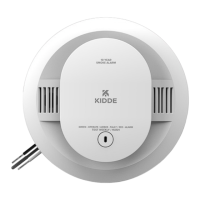
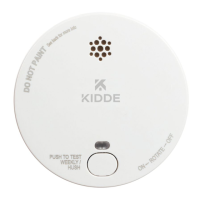
by pressing the button. Other fault/error chirps cannot be silenced. Take appropriate action as
described in the Troubleshooting Guide.
WARNING: REPLACE UNIT AS SOON AS POSSIBLE WHEN IN END OF UNIT LIFE. SEVEN 7
DAYS AFTER END OF UNIT LIFE BEGINS, THE NOTIFICATIONS CANNOT BE SILENCED, AND
SMOKE DETECTION CANNOT BE GUARANTEED. REPLACE IMMEDIATELY!
11. Recognizing Nuisance Alarms
Smoke Nuisance
This model meets the latest residential smoke alarm standards, which includes enhanced resistance
to nuisance alarms from cooking.
HUSH
TM
: If you know why the alarm is sounding, and you can verify that it is not a life threatening sit-
uation, you can push the button on the initiating unit to silence the alarm for 8-10 minutes. If the smoke
is not too dense, that unit, and all interconnected units will silence. After the Hush
TM
period, the smoke
alarm will automatically reset and sound the alarm if particles of combustion are still present. You can
use Hush
TM
repeatedly until the air has been cleared of the condition causing the alarm.
NOTE: Dense smoke will override Hush
TM
and sound a continuous alarm. If no fire is present,
check to see if one of the reasons listed in “Locations to avoid” may have caused the alarm. If a
fire is discovered, get out and call the fire department or 911.
Cigarette smoke will not normally cause the unit to alarm, unless the smoke is blown directly into the
alarm. Combustion particles from cooking may set off the alarm if it is located too close to a cooking
appliance. Large quantities of combustible particles are generated from spills or when broiling. Using
the fan on a range hood which vents to the outside (non-recirculating type) will also help prevent nui-
sance alarms from occurring by removing these combustible products from the kitchen.
Carbon Monoxide (CO) Nuisance
WARNING: This unit does not detect CO, but it will transmit a CO alarm signal from an intercon-
nected CO or Smoke/CO combination alarm. It is impossible to determine the source of a CO alarm
using sight or smell. Always consider a CO alarm event as dangerous.
•
Pushing the button on the initiating CO or Smoke/CO combination alarm will silence that alarm and all
compatible interconnected units.
• Pushing the button on any hard-wire smoke alarm will do nothing to silence an interconnected CO alarm.


 To Next Page