EasyManua.ls Logo

KIRLOSKAR KC72 - User Manual

KIRLOSKAR KC72
58 pages
Print Icon
To Next Page IconTo Next Page
Loading...
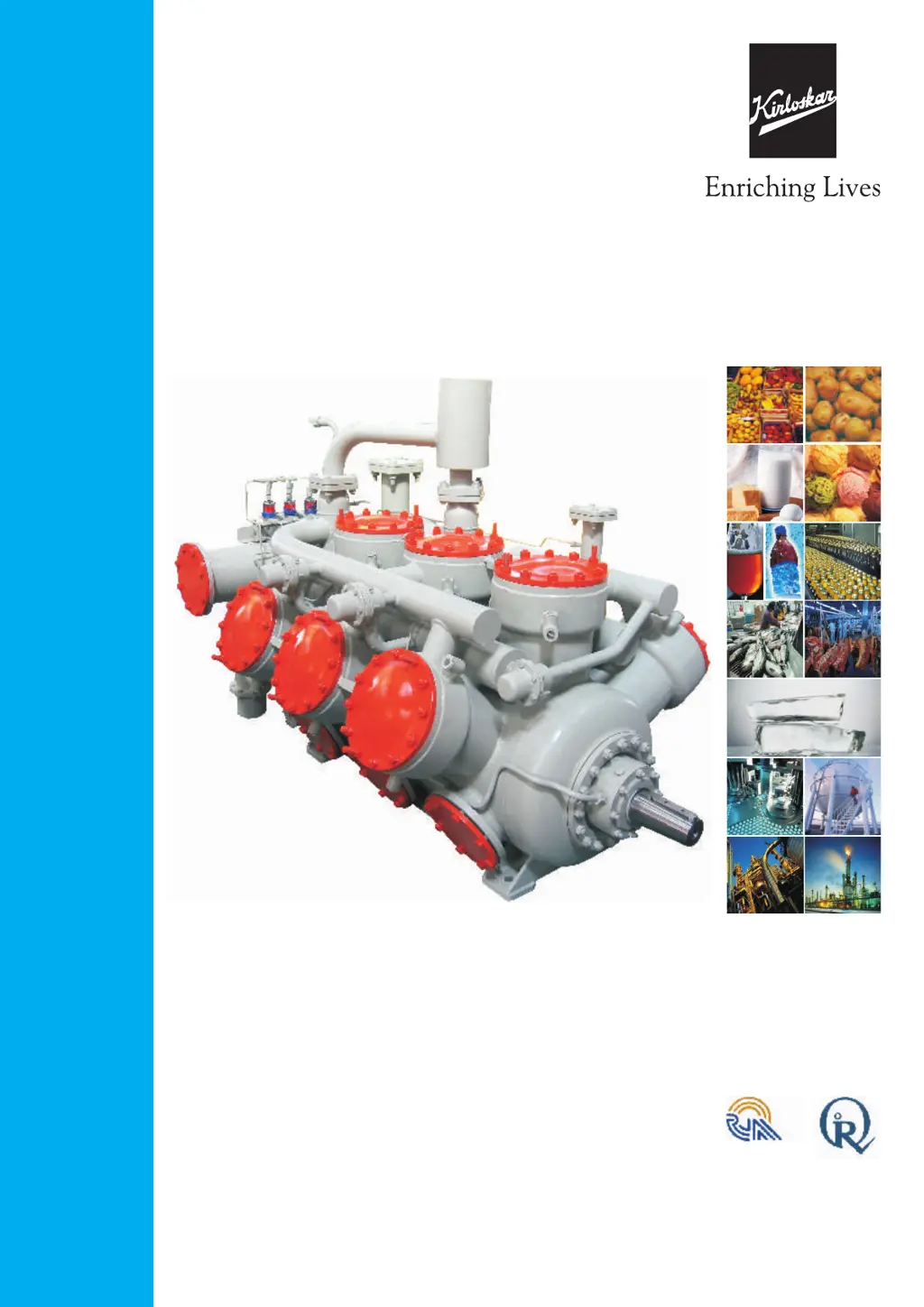
Kirloskar KC Series Refrigeration Compressors
Instruction and
Operation Manual
Versions:
Single Stage : KC2, KC3, KC4, KC6, KC9, KC12
Two Stage : KC21, KC31, KC42, KC51, KC63, KC72, KC84,
KC93 & KC102
KIRLOSKAR
KIRLOSKAR PNEUMATIC CO. LTD.
Kirloskar Refrigeration
INDIAN REGISTER
©
OF SHIPPING 1993
MGMT. SYS.
RvA C 071
ISO 9001 : 2000

Questions and Answers

  • K
    Kenneth WrightAug 17, 2025
    Why is the delivery pressure too high in my KIRLOSKAR KC72?
    • D
      Dylan CarrAug 17, 2025
      The delivery pressure might be too high due to several reasons: * The delivery stop valve is not open wide enough. Open it fully. * There is less or too warm cooling water. Increase the water supply. * The gas suction pressure is too high (during starting-up period only). Partially close the suction stop valve. * The suction pressure is higher than normal. Refer to fault No. 9.3. * There is too much refrigerant in the condenser. Open the liquid control valve further or release some liquid from the system. * The condenser tubes are blocked or dirty. Clean the condenser. * There is air in the system. Purge the system. * The delivery pressure gauge is defective. Repair it.
  • Q
    qhowardAug 20, 2025
    What causes leakage of shaft seal in KIRLOSKAR KC72 Air Compressor and how to fix it?
    • D
      Devin RoachAug 20, 2025
      Leakage of the shaft seal can occur due to several reasons: * Worn out 'O' rings: Replace them. * Scratch marks on sealing faces: Lap the faces up to 2 light bands or replace sealing faces. * Dirty oil: Change the oil, and also clean the seal assembly and seal chamber. * Excessive axial thrust: Adjust axial thrust. * Scratch marks on shaft seal areas of the crankshaft: Lap shaft on seal area. * Losing of spring effect: Replace springs. * Oil flow inadequate to shaft seal cooling: Check the oil pump and its piping for blocking the oil passage. Adjust recommended oil pressure on the pressure regulator.
  • R
    Robert PageAug 22, 2025
    What to do if delivery pressure is too low in KIRLOSKAR KC72 Air Compressor?
    • R
      Rebecca GarrettAug 22, 2025
      If the delivery pressure is too low, consider the following possible causes: * The H.P. safety valve is leaking: Repair or renew it. * The suction stop valve is not open wide enough: Open it fully. * The suction pressure is lower than normal: Refer to fault No. 9.4. * The delivery pressure gauge is faulty: Repair or renew it. * The delivery valve is defective: Replace it.
  • R
    Robert WashingtonAug 26, 2025
    Why is the suction pressure too high in my KIRLOSKAR Air Compressor?
    • S
      stevetaylorAug 26, 2025
      A high suction pressure can be caused by: * The liquid control valve being open too wide: Readjust the setting. * A leaking H.P. safety valve: Repair or replace it. * A defective pressure gauge: Repair or replace it. * The capacity control being out of order (if fitted): Inspect and repair it. * Defective suction or delivery valves: Renew them. * Excessive leakage past the piston: Replace the piston rings.
  • P
    Paige KrauseAug 28, 2025
    What causes malfunctioning of loading/unloading operation of compressors KIRLOSKAR?
    • B
      biancagardnerAug 28, 2025
      Malfunctioning of loading/unloading operation of compressors could happen because: * Solenoid valve not functional well due to: 1. Chattering of valve coil, 2. Valve top and bottom seat damaged or blocked. 3. Plunger neoprene seat swelled excessively: Check continuity of coil and wiring to solenoid valve. * No sufficient actuating pressure to unloader assembly: Repair or place valves seat part. * Capacity control piston 'O' ring and piston ring worn out: Replace or cut excessive swelled portion of neoprene seat. * Blockage of control lines: Check oil control lines for blockage and repair/replace.
  • T
    tracyclarkAug 30, 2025
    How to fix low suction pressure in KIRLOSKAR KC72?
    • Y
      ypatelAug 30, 2025
      Low suction pressure can occur due to: * The suction stop valve not being open wide enough: Open it fully. * The liquid control valve not being open wide enough: Open it further. * The refrigerant suction strainer being chocked: Clean it. * There being less refrigerant in the system: Top up with refrigerant.
  • D
    Daniel KramerSep 2, 2025
    What causes high oil consumption in KIRLOSKAR Air Compressor?
    • R
      rwhiteSep 2, 2025
      Excessive oil consumption in your air compressor can stem from: * A defective or chocked automatic oil return valve from the oil separator: Repair or replace/clear it. * Worn piston rings: Fit new piston rings. * Defective oil return valve(s) in cylinder jackets: Replace them.
  • B
    Brittany EatonSep 5, 2025
    What is liquid stroke in KIRLOSKAR KC72 and how to prevent it?
    • R
      Richard HarrisonSep 5, 2025
      Liquid stroke can be caused by: * The liquid control valve being open too wide: Readjust the setting. * The capacity control being out of order (if fitted): Inspect and repair it. * A defective evaporator float (if fitted): Inspect and repair or replace it.
  • B
    brenda93Sep 8, 2025
    Why is oil pressure too low in my KIRLOSKAR KC72 Air Compressor?
    • M
      melissabutlerSep 8, 2025
      Low oil pressure can be attributed to: * The oil pressure differential pressostat probably operates: Repair/Readjust it. * The oil pressure regulator is defective: Top up with oil. * Insufficient oil in the crankcase: See fault No. 9.4. * Suction pressure too low: Clean it. * The oil suction and/or delivery strainer is blocked: Clean out or repair it. * The oil return pipe between the crankcase and oil suction strainer is blocked: Refit it. * Slack bearings: Clean-out.
  • G
    Gregory HaneySep 12, 2025
    What causes high oil pressure during running in KIRLOSKAR Air Compressor?
    • D
      dwigginsSep 12, 2025
      High oil pressure during running can be caused by: * The oil pressure regulator being defective or maladjusted: Repair or readjust it. * A defective pressure gauge: Repair or renew it.

Summary

Compressor Safety Guidelines

Safety Program Review

Review safety program for hazards from rotating machinery.

Electrical and Fluid Hazards

Consider hazards from electrical power, hot oil, high pressure, and gases.

Maintenance Safety Precautions

Special precautions to prevent power application during maintenance.

Regulatory Compliance

Ensure design and operation abide by local safety and environmental laws.

Safe Operation Practices

Recommended Actions (Dos)

Instructions for correct operation, maintenance, and checks.

Prohibited Actions (Do Nots)

Prohibitions during operation and maintenance.

Initial Compressor Operations and Checks

Pre-Start Checklist

Verify tightness, alignment, oil level, safety cutouts, and gauges.

Compressor Priming

Pour oil into shaft seal cover and filter housings before starting.

Valve Operation Preparation

Apply oil and grease to glands before mounting stop valves.

Air Run Trial Procedure

Run compressor on air for five minutes to check oil pressure and loading.

Single Stage Startup

Start on reduced load, then load gradually using CCSV.

Two Stage Startup

Run on direct cylinder, then load capacity steps as temperature drops.

Critical Operating Warning

Intermediate pressure must not exceed 4 Kg/cm²g.

Mandatory Initial Maintenance

Change oil, filters, strainer after initial hours (4, 8, 50, 100 hrs).

Technical Data and Specifications

Single Stage Model Specifications

Provides technical data for KC2 to KC12 models.

Two Stage Model Specifications

Provides technical data for KC21 to KC102 models.

Salient Features of Compressor Construction

Cylinder Liner and Suction Valve Design

Describes interchangeable liners, fine boring, and hydraulic lifting mechanism.

Lubrication System and Filter Details

Explains forced lubrication, pressure regulator, and filter elements.

Discharge Valve Assembly Design

Features concentric rings, sinusoidal springs, and identical parts.

Piston and Connecting Rod Assembly

Details die cast pistons, rings, and drilled connecting rods.

Crankshaft and Main Bearings

Describes ground crankshaft, white metal bearings, and dynamic balancing.

Welded Steel Crankcase Features

Highlights low weight, heat dissipation, and gas-tight construction.

General Operating Instructions

Compressor Operation Basics

Covers suction valves, oil pump, high pressure supply, and no-load starting.

Liquid Stroke Hazards

Details risks of liquid refrigerant and protection device function.

Ammonia Safety Rules

Covers ammonia characteristics, safe storage, and leakage precautions.

Safety, Preparation, and Oil Charging

Freon Safety Rules

Details Freon characteristics, storage, leakage, and ventilation.

Compressor Room Requirements

Specifies exits, fireproofing, ventilation, accessibility, and noise control.

Initial Operation Preparation

Steps for installing and filling the compressor with oil.

Oil Charging Procedure

Details on pouring oil into the strainer and checking oil return.

Oil Pressure and Refrigerant Charging

Adjusting Oil Pressure

Procedure to set oil pressure regulator to 1.5 kg/cm² above suction pressure.

Plant Operations and Controls

Parallel Compressor Operation

Periodical Maintenance and Schedule

Component Maintenance Procedures

Lubrication Maintenance Importance

Emphasizes checking oil pressure/level and not mixing oils.

Operational Records and Maintenance Schedule

Comprehensive Maintenance Schedule

Summary of periodic checks and replacements based on operating hours.

Compressor Accessories and Safety Devices

Pressure Switches (Pressostats)

Explains function of pressure switches for safety in the control circuit.

High Pressure Pressostat Function

Details protection against excessive delivery pressure.

Low Pressure Pressostat Function

Details protection against minimum suction pressure.

Oil Pressure Differential Pressostat

Explains protection against low oil pressure.

Combined HP;LP Pressostat

Covers the single unit for high and low pressure protection.

Troubleshooting Common Faults

Fault Diagnosis and Remedies (Part 1)

Lists common faults, their causes, and suggested remedies.

Fault Diagnosis and Remedies (Part 2)

Continues listing common faults, their causes, and suggested remedies.

Troubleshooting Chart (Continued)

Fault Diagnosis and Remedies (Part 3)

Lists common faults, their causes, and suggested remedies.

Malfunctioning Loading;Unloading

Addresses issues with solenoid valves and capacity control.

Preventing Compressor Failures

Identifying Sources of Contamination

Pinpoints system areas where dirt can enter the compressor.

Contamination Prevention Methods

Covers flushing the system and using strainers with cloth bags.

Compressor Prevention Steps

Outlines pre-start checks, initial run, oil drain, and strainer cleaning.

Safe Compressor Restart Procedure

Details using new oil, checking suitability, and verifying oil pressure.

Safety During Compressor Operation

Emphasizes avoiding hot surfaces, guards, and referring to the manual.

Important Installation Checks

Crankshaft Rusting Prevention

Methods to prevent crankshaft rusting during installation phase.

Coupling and Pulley Fitment

Procedures for fitting coupling, flywheel, and pulley on the shaft.

Base Frame Installation

Ensures correct base frame, leveling, and proper stud usage.

KIRLOSKAR KC72 Specifications

General IconGeneral
ModelKC72
TypeReciprocating Air Compressor
Motor Power2 HP
Power SourceElectric
Power Rating1.5 kW
Maximum Pressure175 PSI
Noise Level82 dB(A)
StagesTwo Stage
Voltage220 V

Related product manuals