EasyManua.ls Logo

KIRLOSKAR KC2 - User Manual

KIRLOSKAR KC2
58 pages
Print Icon
To Next Page IconTo Next Page
Loading...
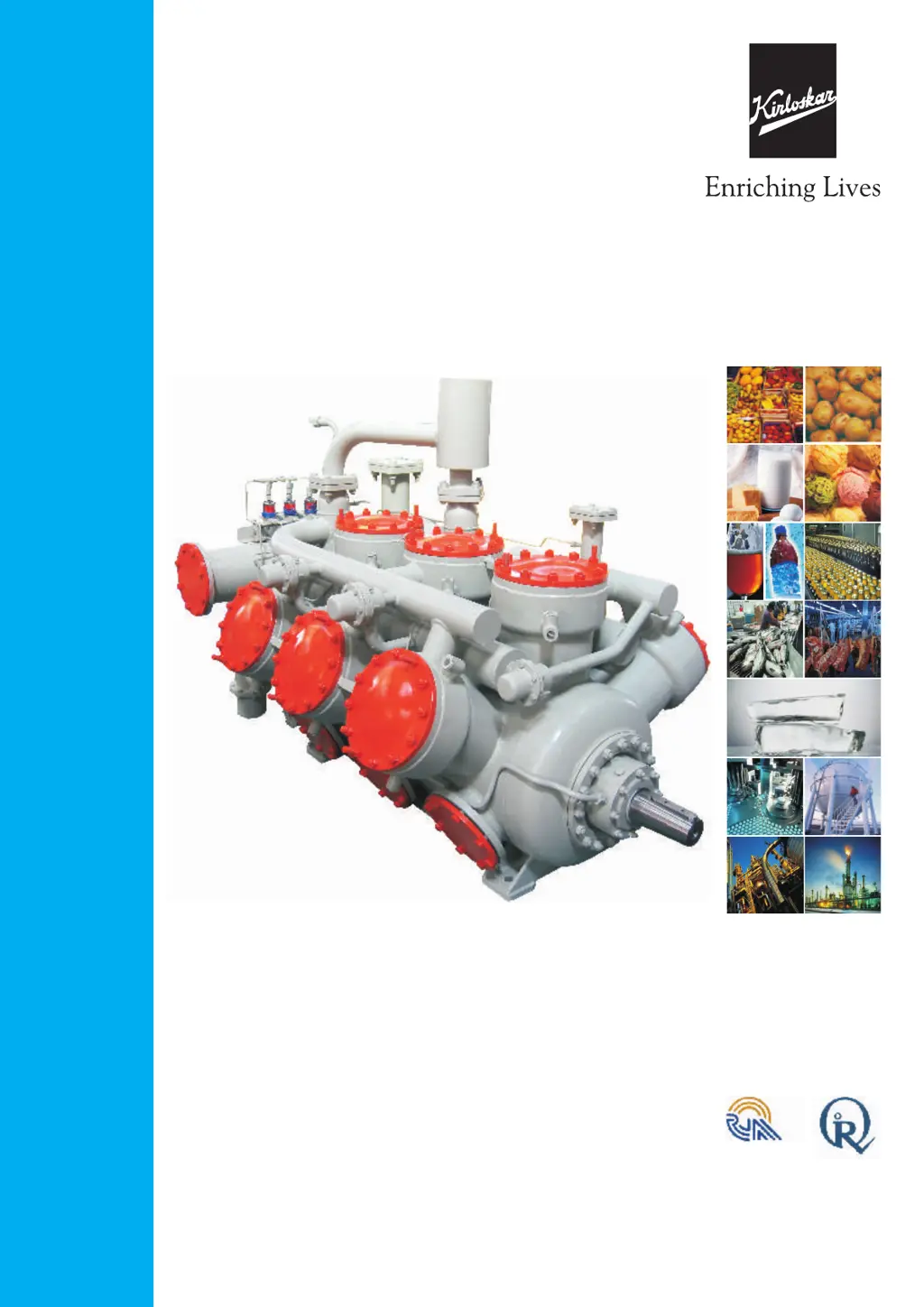
Kirloskar KC Series Refrigeration Compressors
Instruction and
Operation Manual
Versions:
Single Stage : KC2, KC3, KC4, KC6, KC9, KC12
Two Stage : KC21, KC31, KC42, KC51, KC63, KC72, KC84,
KC93 & KC102
KIRLOSKAR
KIRLOSKAR PNEUMATIC CO. LTD.
Kirloskar Refrigeration
INDIAN REGISTER
©
OF SHIPPING 1993
MGMT. SYS.
RvA C 071
ISO 9001 : 2000

Questions and Answers

  • D
    Dennis SimsAug 17, 2025
    Why is the delivery pressure too high in my KIRLOSKAR KC2 Air Compressor?
    • S
      Steven SantosAug 17, 2025
      The delivery pressure might be too high due to several reasons: * The delivery stop valve is not open wide enough. Open it fully. * There is less or too warm cooling water. Increase the water supply. * The gas suction pressure is too high (during starting-up period only). Partially close the suction stop valve. * The suction pressure is higher than normal. Refer to fault No. 9.3. * There is too much refrigerant in the condenser. Open the liquid control valve further or release some liquid from the system. * The condenser tubes are blocked or dirty. Clean the condenser. * There is air in the system. Purge the system. * The delivery pressure gauge is defective. Repair it.
  • R
    Robert BrennanAug 20, 2025
    What causes leakage of shaft seal in KIRLOSKAR KC2 Air Compressor and how to fix it?
    • B
      Breanna CastilloAug 20, 2025
      Leakage of the shaft seal can occur due to several reasons: * Worn out 'O' rings: Replace them. * Scratch marks on sealing faces: Lap the faces up to 2 light bands or replace sealing faces. * Dirty oil: Change the oil, and also clean the seal assembly and seal chamber. * Excessive axial thrust: Adjust axial thrust. * Scratch marks on shaft seal areas of the crankshaft: Lap shaft on seal area. * Losing of spring effect: Replace springs. * Oil flow inadequate to shaft seal cooling: Check the oil pump and its piping for blocking the oil passage. Adjust recommended oil pressure on the pressure regulator.
  • J
    Jill GreenAug 22, 2025
    What to do if delivery pressure is too low in KIRLOSKAR KC2?
    • R
      Robert WashingtonAug 23, 2025
      If the delivery pressure is too low, consider the following possible causes: * The H.P. safety valve is leaking: Repair or renew it. * The suction stop valve is not open wide enough: Open it fully. * The suction pressure is lower than normal: Refer to fault No. 9.4. * The delivery pressure gauge is faulty: Repair or renew it. * The delivery valve is defective: Replace it.
  • N
    Nicole McguireAug 26, 2025
    Why is the suction pressure too high in my KIRLOSKAR KC2?
    • J
      Jessica JonesAug 26, 2025
      A high suction pressure can be caused by: * The liquid control valve being open too wide: Readjust the setting. * A leaking H.P. safety valve: Repair or replace it. * A defective pressure gauge: Repair or replace it. * The capacity control being out of order (if fitted): Inspect and repair it. * Defective suction or delivery valves: Renew them. * Excessive leakage past the piston: Replace the piston rings.
  • V
    Valerie LeeAug 28, 2025
    What causes malfunctioning of loading/unloading operation of compressors KIRLOSKAR?
    • E
      Elizabeth ClarkAug 28, 2025
      Malfunctioning of loading/unloading operation of compressors could happen because: * Solenoid valve not functional well due to: 1. Chattering of valve coil, 2. Valve top and bottom seat damaged or blocked. 3. Plunger neoprene seat swelled excessively: Check continuity of coil and wiring to solenoid valve. * No sufficient actuating pressure to unloader assembly: Repair or place valves seat part. * Capacity control piston 'O' ring and piston ring worn out: Replace or cut excessive swelled portion of neoprene seat. * Blockage of control lines: Check oil control lines for blockage and repair/replace.
  • T
    Timothy GomezAug 31, 2025
    How to fix low suction pressure in KIRLOSKAR Air Compressor?
    • D
      Dale PerryAug 31, 2025
      Low suction pressure can occur due to: * The suction stop valve not being open wide enough: Open it fully. * The liquid control valve not being open wide enough: Open it further. * The refrigerant suction strainer being chocked: Clean it. * There being less refrigerant in the system: Top up with refrigerant.
  • T
    Tanya KingSep 3, 2025
    What causes high oil consumption in KIRLOSKAR KC2 Air Compressor?
    • D
      David TaylorSep 3, 2025
      Excessive oil consumption in your air compressor can stem from: * A defective or chocked automatic oil return valve from the oil separator: Repair or replace/clear it. * Worn piston rings: Fit new piston rings. * Defective oil return valve(s) in cylinder jackets: Replace them.
  • J
    Jordan MartinSep 5, 2025
    What is liquid stroke in KIRLOSKAR Air Compressor and how to prevent it?
    • U
      usalazarSep 5, 2025
      Liquid stroke can be caused by: * The liquid control valve being open too wide: Readjust the setting. * The capacity control being out of order (if fitted): Inspect and repair it. * A defective evaporator float (if fitted): Inspect and repair or replace it.
  • M
    Mark HarveySep 8, 2025
    Why is oil pressure too low in my KIRLOSKAR KC2?
    • H
      Holly CarlsonSep 8, 2025
      Low oil pressure can be attributed to: * The oil pressure differential pressostat probably operates: Repair/Readjust it. * The oil pressure regulator is defective: Top up with oil. * Insufficient oil in the crankcase: See fault No. 9.4. * Suction pressure too low: Clean it. * The oil suction and/or delivery strainer is blocked: Clean out or repair it. * The oil return pipe between the crankcase and oil suction strainer is blocked: Refit it. * Slack bearings: Clean-out.
  • T
    toddmathewsSep 12, 2025
    What causes high oil pressure during running in KIRLOSKAR KC2 Air Compressor?
    • D
      Donald WilliamsSep 12, 2025
      High oil pressure during running can be caused by: * The oil pressure regulator being defective or maladjusted: Repair or readjust it. * A defective pressure gauge: Repair or renew it.

Summary

Safety Precautions

General Safety Guidelines

Outlines essential safety considerations for operating and maintaining the equipment safely.

Refrigeration Compressor Preservation

Preservation Measures

Details on how to preserve the compressor's internal and external parts during long-term storage.

Technical Data and Dimensions

Single Stage Compressor Specifications

Detailed technical specifications for single-stage KC compressors.

Two Stage Compressor Specifications

Detailed technical specifications for two-stage KC compressors.

Compressor Component Details

Oil Pump Operation

Explains the gear pump, differential pressure regulator, and hydraulic time delay.

Lubrication System Details

Lubrication Diagram and System

Illustrates the oil circuit, pump operation, and lubrication flow paths.

Compressor Operation and Maintenance Details

Lubricating Chart

Lists recommended lubricants for KC series compressors and their suitability.

General Operating Instructions

Compressor Operation

Step-by-step guide on how to start, operate, and load the compressor.

Liquid Stroke Prevention

Explains the risks of liquid stroke and measures to prevent compressor damage.

Ammonia Safety Rules

Safety guidelines related to ammonia handling, storage, and potential hazards.

Safety and Preparation Procedures

Freon Safety Rules

Safety guidelines for handling Freon refrigerant, including leak detection.

System Charging and Pressure Adjustment

Oil Charging Procedure

Detailed steps for filling the compressor with the correct type and amount of oil.

Oil Pressure Adjustment

Instructions on how to adjust the oil pressure regulator for optimal lubrication.

Refrigerant Charging

Procedures for safely charging the refrigeration system with refrigerant.

System Evacuation and Operation Start-up

Evacuation Procedures

Steps for evacuating Freon and Ammonia systems using the compressor.

Start-up and Operation Supervision

Guidelines for starting the compressor, monitoring its operation, and stopping procedures.

Capacity Control System - Single Stage Compressor

Two Stage Compressor Operating Instructions

Starting and Loading Two Stage Compressors

Detailed steps for starting and increasing the load on two-stage compressors.

Parallel Compressor Operation

Periodical Maintenance and Schedule

Compressor Component Maintenance

Maintenance Schedule

Comprehensive Maintenance Schedule

A comprehensive schedule for routine maintenance tasks based on operating hours.

Accessories and Controls

Pressure Switches (Pressostats)

Explains the function and importance of various pressure switches for safety and operation.

Oil Pressure Differential Pressostat

Explains the pressostat that monitors oil pressure for lubrication safety.

Troubleshooting Guide

Common Faults and Causes

Lists common compressor faults, their potential causes, and suggested remedies.

Oil Pump and Filter Assembly Parts

Oil System Component Parts

Valve and Gauge Components

Precautions to Prevent Failures

Source of Contamination Entry

Identifies common sources of dirt and contamination that can cause compressor failure.

System Flushing and Cleaning

Procedures for flushing and cleaning the system to prevent contamination.

Compressor-Specific Prevention

Specific preventive measures for the compressor, including initial checks and oil changes.

Restart Procedures

Guidelines for safely restarting the compressor after maintenance or shutdown.

General Operation Precautions

KIRLOSKAR KC2 Specifications

General IconGeneral
BrandKIRLOSKAR
ModelKC2
CategoryAir Compressor
LanguageEnglish

Related product manuals